
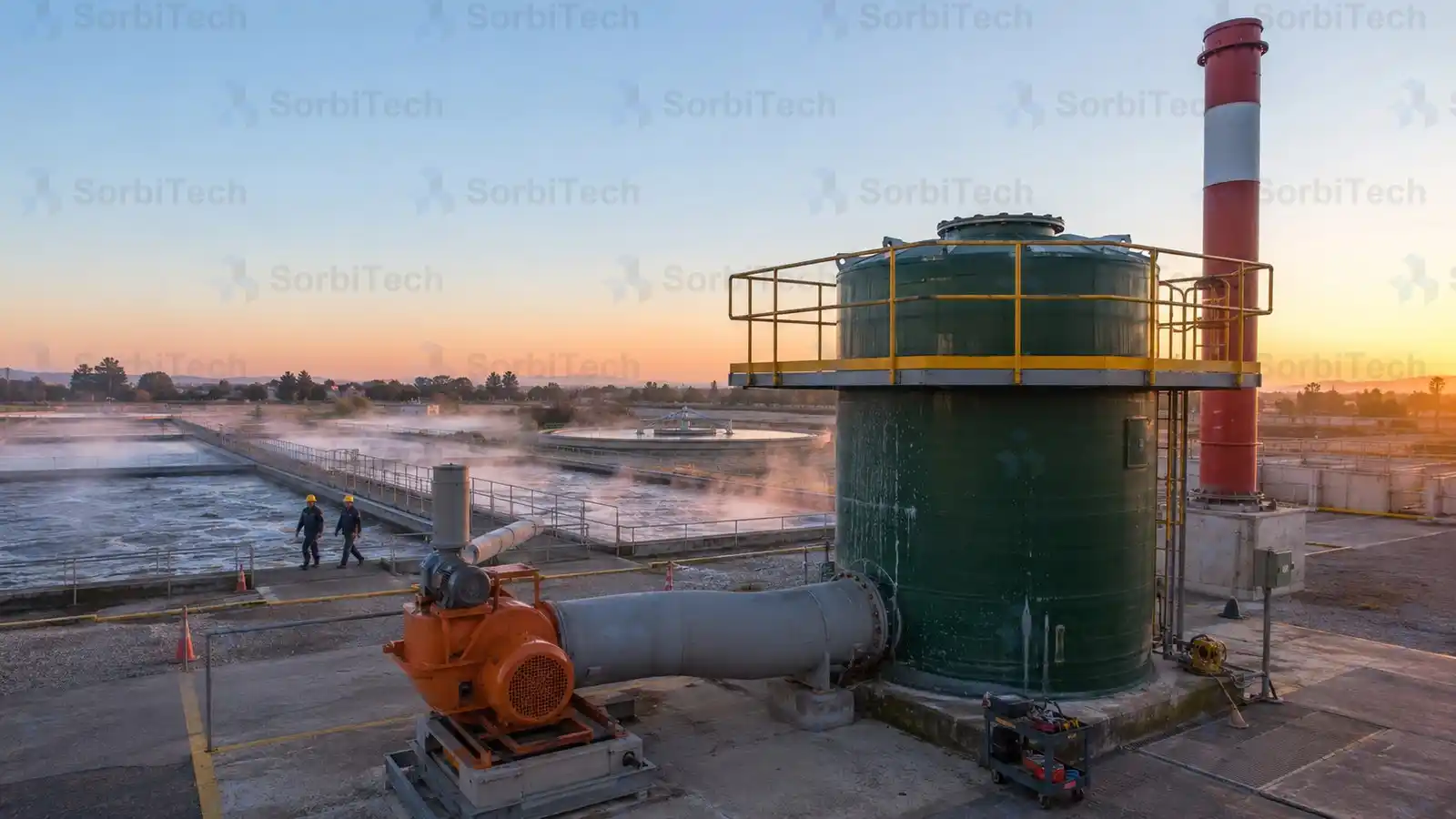
Industrial Odor and Air Stream Carbon Filtration
Pellet and impregnated activated carbon filters for industrial odor control on wastewater treatment plant vents, sewage pumping stations, food processing exhausts, and manufacturing odor abatement.
Industrial odor and air stream carbon filtration removes hydrogen sulphide, mercaptans, volatile fatty acids, ammonia, amines, and the wider odorant family from industrial vent streams. Pellet activated carbon, with impregnation specific to the target odorant, captures the compounds before discharge to the atmosphere.
Odor Compounds and Community Pressure
Industrial vent streams from wastewater treatment plants, sewage pumping stations, food processing exhausts (rendering, slaughter, fish meal), and manufacturing facilities (paint, rubber, paper) carry odorant compounds at low concentration but high human perception. The community detects hydrogen sulphide at 0.5 ppb, mercaptans at 1 ppb, ammonia at 1 ppm. Community complaints drive regulator attention and increasingly drive operating restrictions on the affected sites.
Impregnated Carbon Targets Specific Odorants
The SorbiTech odour control system uses pellet activated carbon with impregnation matched to the target odorant family:
- Caustic (KOH) impregnated: acid gas odorants: H₂S, mercaptans, organic acids
- Acid (H₃PO₄) impregnated: basic odorants: ammonia, amines
- Standard activated carbon: general volatile organic odorants
- Combined media beds: multi component odorant streams
Bed Sizing and Service Life
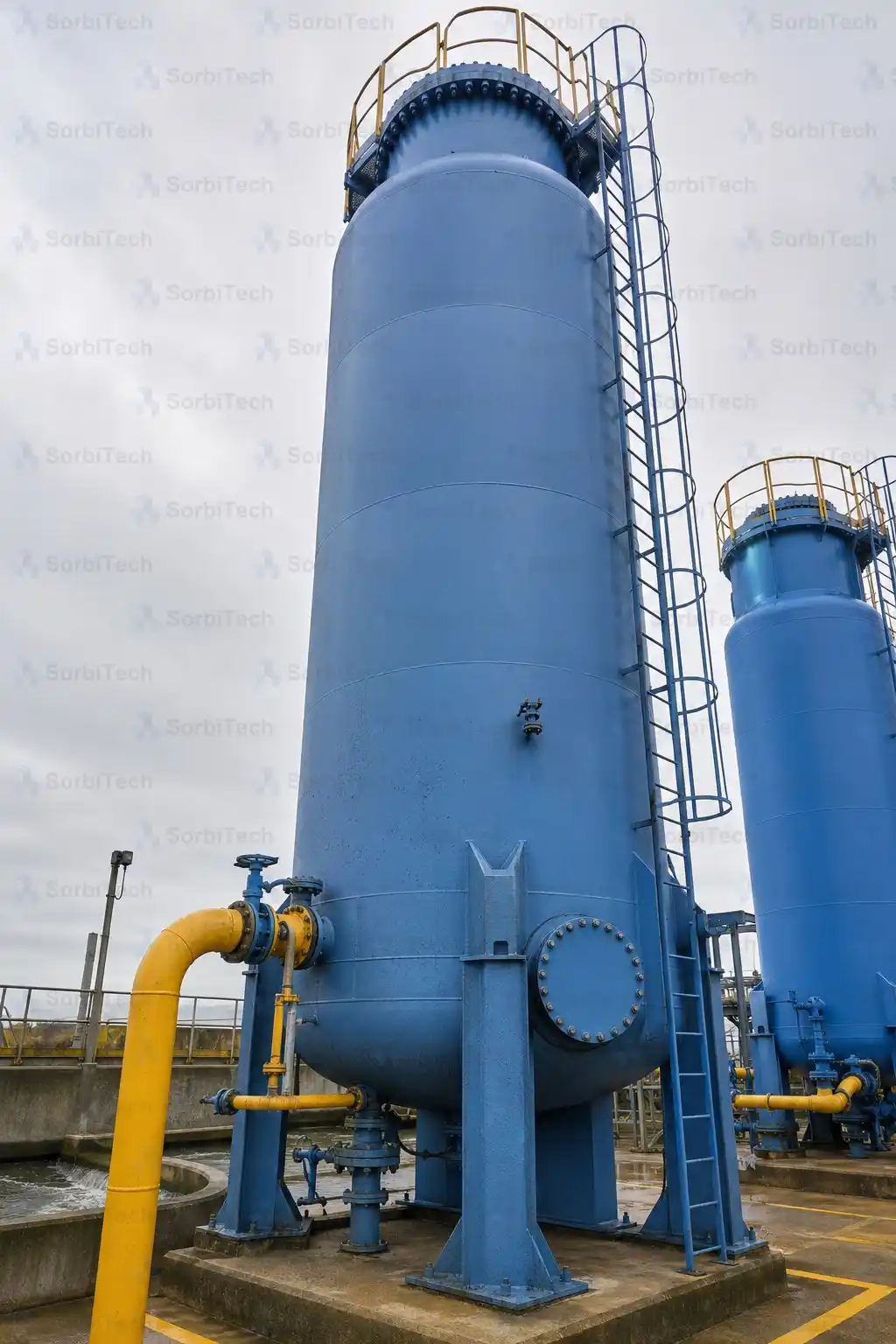
SorbiTech sizes the bed for the contracted residence time at the design face velocity (typically 1 to 4 seconds residence at 0.5 m/s face velocity). Service life depends on the odorant load: impregnated carbons are single use (chemisorption reaction not reversed by regeneration), with typical bed life 6 to 24 months depending on the load.
Delivery and Service Contract
Delivered as packaged odour control units by SorbiTech or as a SorbiTech media supply contract for an existing carbon vessel. SorbiTech maintains the spent media collection schedule and the licensed disposal route. Sector coverage spans municipal water, food and beverage, and petrochemicals.
Selection Guidance
Pellet activated carbon for general organic odorants. Caustic impregnated carbon (KOH) for acid gas odorants (H₂S, mercaptans). Acid impregnated carbon (H₃PO₄) for amine odorants (ammonia, amines). Sized for the contracted residence time (typically 1 to 4 seconds).
A Specified, Verified Solution
Define the duty
We capture your process conditions: flow, composition, pressure, temperature, and the target outlet specification.
Select media & configuration
Our engineers recommend the adsorbent grade and system type that meet the duty with margin.
Size & engineer
Bed sizing, vessel design, and cycle parameters are engineered to your case and documented for approval.
Commission & verify
We support loading, start up, and performance verification against the guarantee.
Recommended Products & Systems
Adsorbents & Media
-
01
 Adsorbent
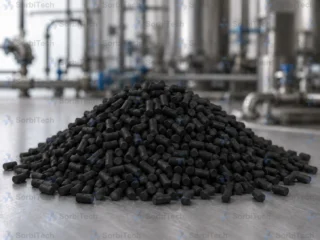
Pellet Activated Carbon
Extruded pellet carbon for gas phase duties: solvent recovery, vapour recovery, odour control, and mercury guard beds.
Form
3 mm or 4 mm extruded pellets
Adsorbent
Pellet Activated Carbon
Extruded pellet carbon for gas phase duties: solvent recovery, vapour recovery, odour control, and mercury guard beds.
Form
3 mm or 4 mm extruded pellets
-
02
 Adsorbent
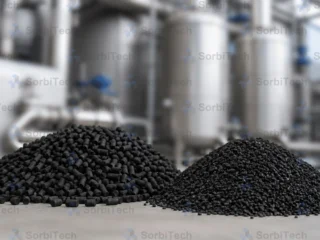
Impregnated Activated Carbon
Sulfur, KI, or KOH impregnated activated carbon. Mercury below 10 ng per Nm3, H2S and mercaptan capture upstream of catalysts. 4 mm pellet or…
Water Cap.
Dry feed preferred, water displaces impregnant %
Adsorbent
Impregnated Activated Carbon
Sulfur, KI, or KOH impregnated activated carbon. Mercury below 10 ng per Nm3, H2S and mercaptan capture upstream of catalysts. 4 mm pellet or…
Water Cap.
Dry feed preferred, water displaces impregnant %
-
03
 Adsorbent
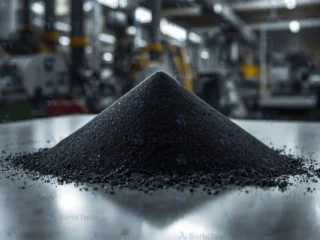
Powdered Activated Carbon
Fine powder carbon for slurry dosing in water treatment, sugar decolorization, pharmaceutical purification, and emergency contamination response.
Form
200×325 mesh (45–75 µm)
Adsorbent
Powdered Activated Carbon
Fine powder carbon for slurry dosing in water treatment, sugar decolorization, pharmaceutical purification, and emergency contamination response.
Form
200×325 mesh (45–75 µm)
Industries Using This Application
-
01
 Sector
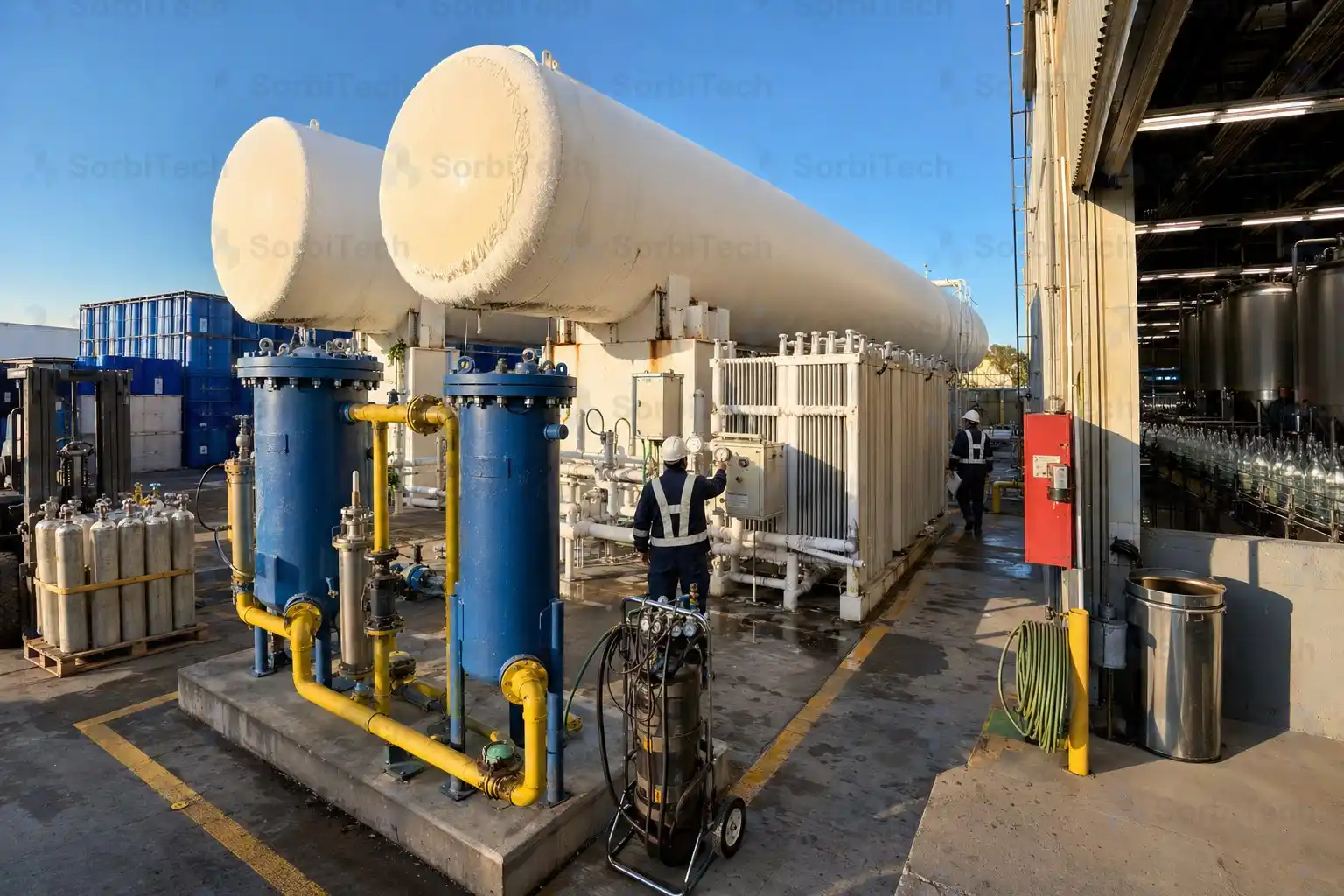
Food & Beverage
Sugar decolorization, edible oil bleaching, beverage CO₂ purification, and food grade adsorbent media for the food and beverage processing industry.
Sector
Food & Beverage
Sugar decolorization, edible oil bleaching, beverage CO₂ purification, and food grade adsorbent media for the food and beverage processing industry.
-
02
 Sector
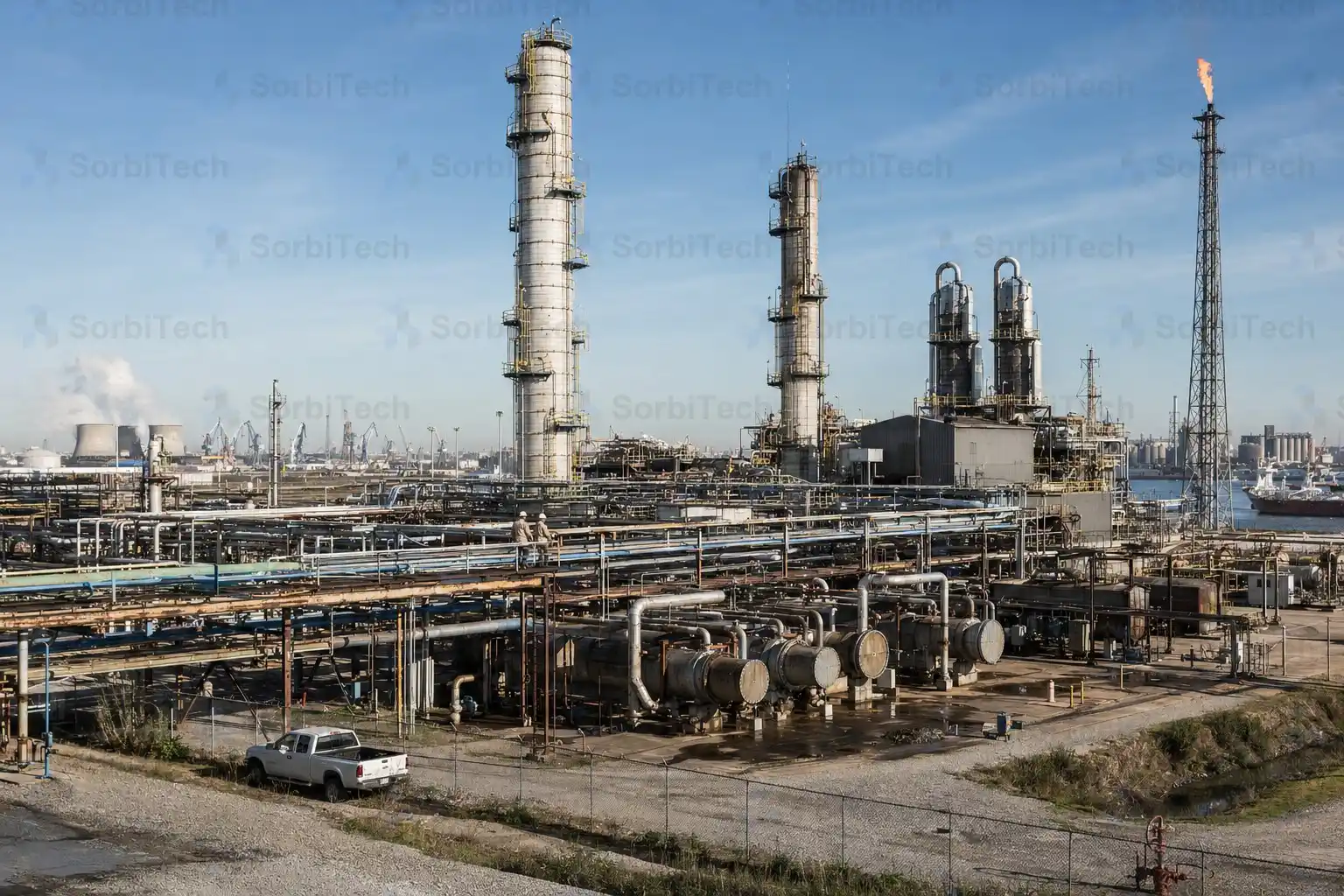
Petrochemicals & Refining
Adsorbents and separation systems for feedstock drying, process gas conditioning, solvent recovery, and refinery effluent treatment.
Sector
Petrochemicals & Refining
Adsorbents and separation systems for feedstock drying, process gas conditioning, solvent recovery, and refinery effluent treatment.
Specify a Solution for This Application
Provide your process conditions and our team will recommend the grade, configuration, and sizing.