
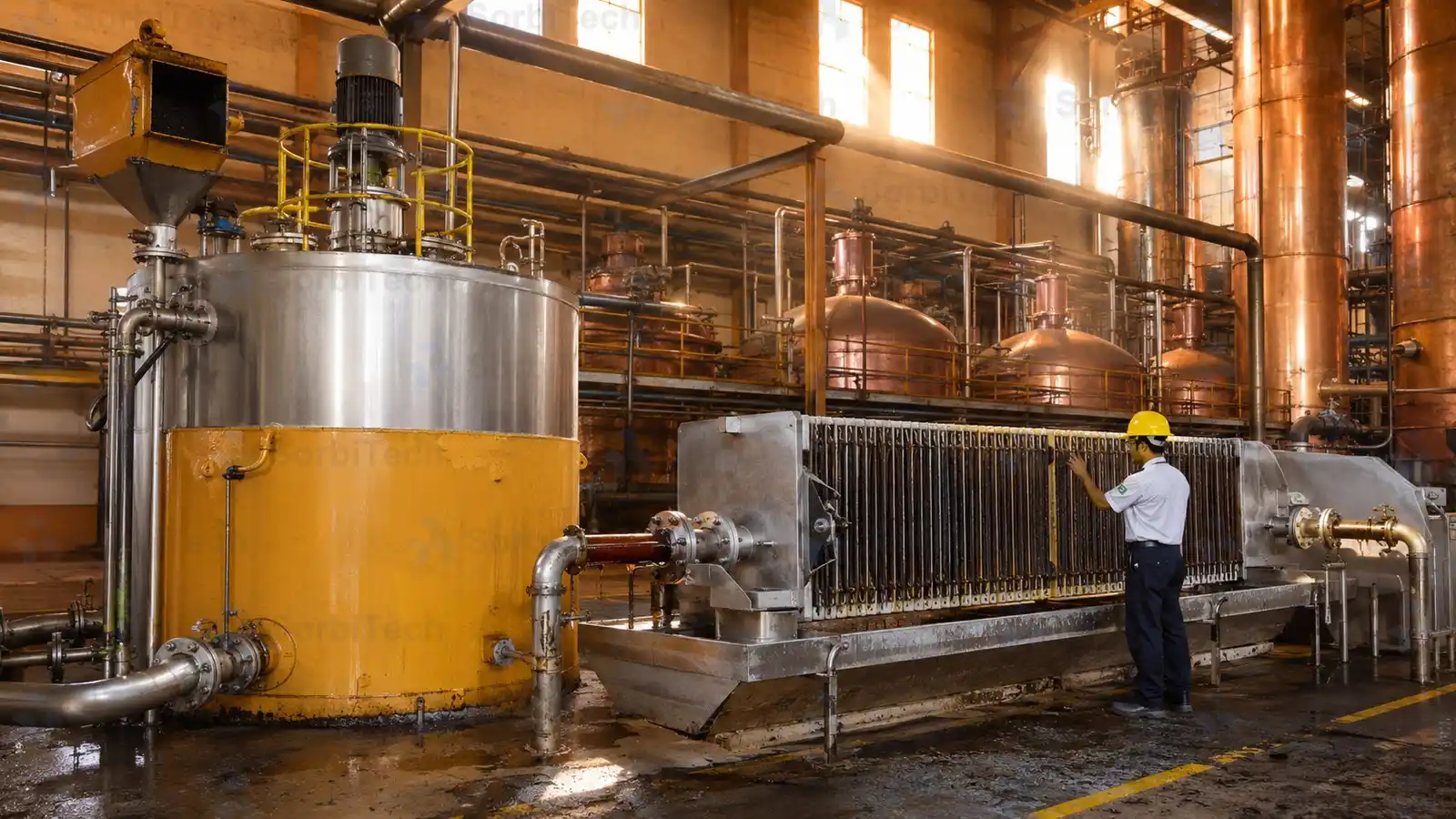
Sugar and Syrup Decolorization
Powdered activated carbon decolorization of cane and beet sugar syrups, glucose syrups, and high fructose corn syrups to meet contracted ICUMSA colour grade for refined product.
Sugar and syrup decolorization uses powdered activated carbon (PAC) dosed into the contact tank at the affination or carbonation stage to remove colour bodies (caramels, melanoidins, polyphenols) generated during sugar processing. Outlet meets the contracted ICUMSA colour grade, typically 45 IU for white refined sugar.
Sugar Processing Generates Colour Bodies
Cane and beet sugar processing generates a range of colour bodies during the boiling, crystallisation, and storage stages: caramels from thermal degradation, melanoidins from Maillard reactions between reducing sugars and amino acids, polyphenols from the raw material extraction. These colour bodies have to be removed before the final crystallisation to meet the contracted ICUMSA colour grade for the refined product, typically 45 IU for white sugar, 100 to 300 IU for refined sugars.
PAC Slurry Contact at the Affination Stage
The SorbiTech decolorization route uses powdered activated carbon (PAC) dosed into the contact tank at the affination or carbonation stage. The carbon is added at 0.5 to 2 percent of the dry solids weight, given 20 to 30 minutes of mixing at the working temperature (typically 65 to 85 °C), then filtered out together with the captured colour bodies. Bleaching earth or diatomaceous earth as filter aid carries the spent carbon to the filter cake.
Grade Selection by Laboratory Test
PAC grade selection follows a laboratory decolorization test on the actual sugar stream, not the iodine number alone. The SorbiTech laboratory runs the test against the operator target ICUMSA, identifies the dose that achieves the target, and recommends the matching grade with full backup data. The recommendation forms the technical basis for the operator procurement and the change control record.
Food Grade Documentation
Every shipment ships with Halal and Kosher certification (held on the standard grades), the certificate of analysis covering heavy metals, ash, moisture, and decolorization, and the FDA and EU Regulation 10/2011 documentation where the operator regulatory regime requires it. Sector coverage is food and beverage.
Selection Guidance
PAC bleaching grade dosed at 0.5 to 2 percent by weight of dry solids at the contact tank. Contact time 20 to 30 minutes at the working temperature. Filtration with bleaching earth as filter aid downstream.
A Specified, Verified Solution
Define the duty
We capture your process conditions: flow, composition, pressure, temperature, and the target outlet specification.
Select media & configuration
Our engineers recommend the adsorbent grade and system type that meet the duty with margin.
Size & engineer
Bed sizing, vessel design, and cycle parameters are engineered to your case and documented for approval.
Commission & verify
We support loading, start up, and performance verification against the guarantee.
Recommended Products & Systems
Adsorbents & Media
-
01
 Adsorbent
Powdered Activated Carbon
Fine powder carbon for slurry dosing in water treatment, sugar decolorization, pharmaceutical purification, and emergency contamination response.
Form
200×325 mesh (45–75 µm)
Adsorbent
Powdered Activated Carbon
Fine powder carbon for slurry dosing in water treatment, sugar decolorization, pharmaceutical purification, and emergency contamination response.
Form
200×325 mesh (45–75 µm)
-
02
 Adsorbent
Carbon Molecular Sieve CMS 450HP
Ultra high purity carbon molecular sieve. 99.99999 percent (7N) N2, selective O2 and CO2 capture, 1.0 to 1.6 mm pellets, minimal fines, deoxo polishing…
Water Cap.
Feed must reach ISO 8573 class 1.4.1, deoxo polishing recommended for 7N %
Adsorbent
Carbon Molecular Sieve CMS 450HP
Ultra high purity carbon molecular sieve. 99.99999 percent (7N) N2, selective O2 and CO2 capture, 1.0 to 1.6 mm pellets, minimal fines, deoxo polishing…
Water Cap.
Feed must reach ISO 8573 class 1.4.1, deoxo polishing recommended for 7N %
-
03
 Adsorbent
Impregnated Activated Carbon
Sulfur, KI, or KOH impregnated activated carbon. Mercury below 10 ng per Nm3, H2S and mercaptan capture upstream of catalysts. 4 mm pellet or…
Water Cap.
Dry feed preferred, water displaces impregnant %
Adsorbent
Impregnated Activated Carbon
Sulfur, KI, or KOH impregnated activated carbon. Mercury below 10 ng per Nm3, H2S and mercaptan capture upstream of catalysts. 4 mm pellet or…
Water Cap.
Dry feed preferred, water displaces impregnant %
-
04
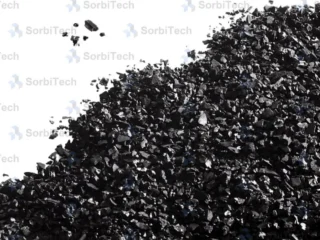 Adsorbent
OraPure Activated Carbon
Coconut shell granular activated carbon for gold recovery. 6x12, 6x16, 8x16 mesh, iodine number above 1000 mg/g, optimised pore for high K value, thermal…
Water Cap.
Low moisture and ash at supply %
Adsorbent
OraPure Activated Carbon
Coconut shell granular activated carbon for gold recovery. 6x12, 6x16, 8x16 mesh, iodine number above 1000 mg/g, optimised pore for high K value, thermal…
Water Cap.
Low moisture and ash at supply %
-
05
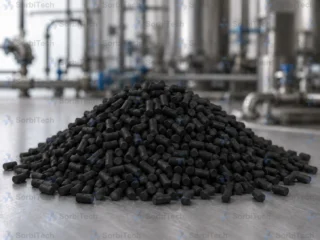 Adsorbent
Pellet Activated Carbon
Extruded pellet carbon for gas phase duties: solvent recovery, vapour recovery, odour control, and mercury guard beds.
Form
3 mm or 4 mm extruded pellets
Adsorbent
Pellet Activated Carbon
Extruded pellet carbon for gas phase duties: solvent recovery, vapour recovery, odour control, and mercury guard beds.
Form
3 mm or 4 mm extruded pellets
-
06
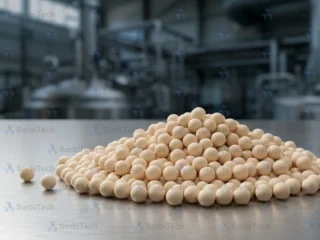 Adsorbent
Molecular Sieve 5A
Calcium form 5A zeolite for n paraffin separation, hydrogen purification, and oxygen PSA generation.
Pore Ø
5 Å
Adsorbent
Molecular Sieve 5A
Calcium form 5A zeolite for n paraffin separation, hydrogen purification, and oxygen PSA generation.
Pore Ø
5 Å
Engineered Systems
-
01
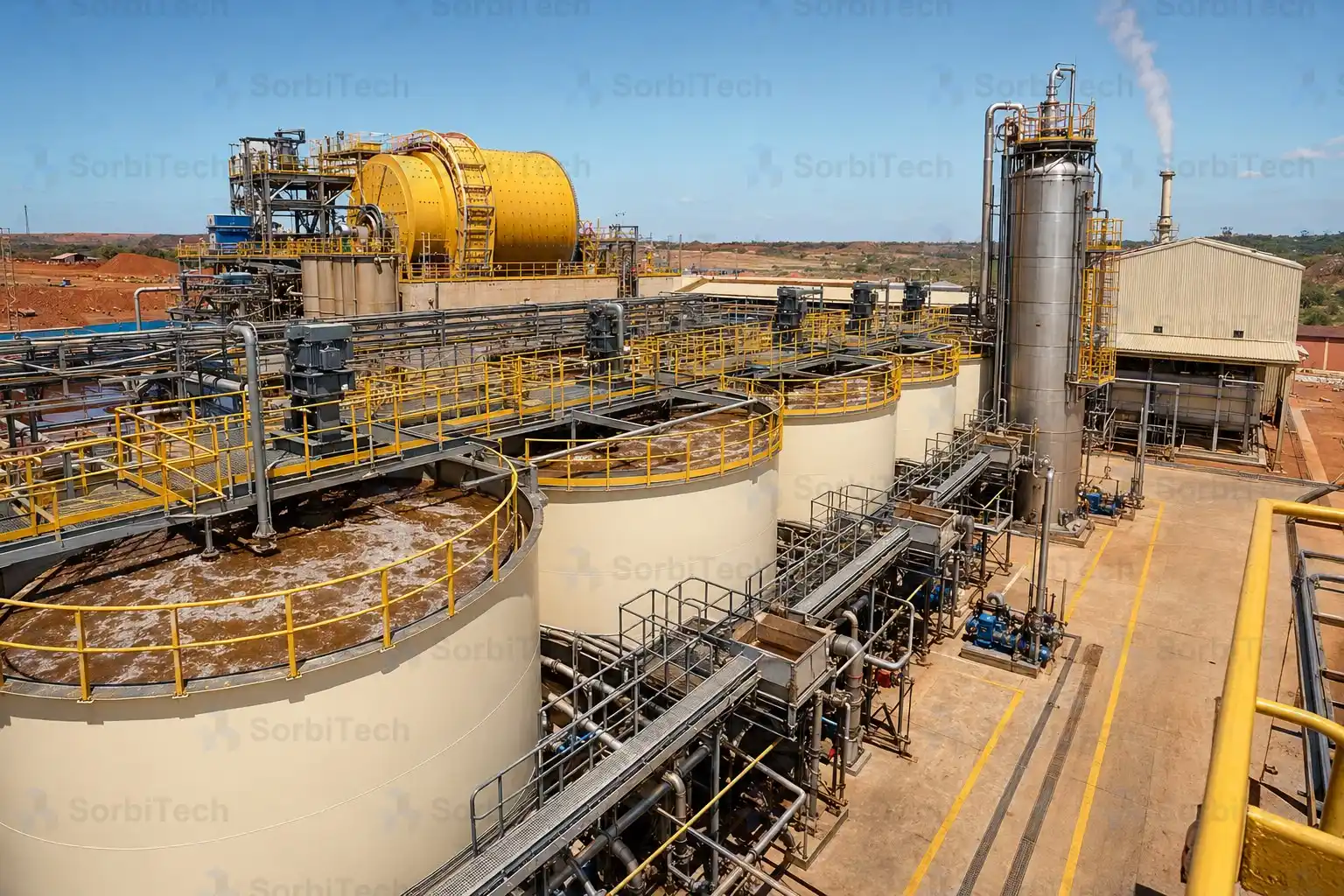 Equipment
CIP CIL Gold Carbon Plant
Carbon in pulp (CIP) and carbon in leach (CIL) gold recovery plant using high activity coconut shell granular activated carbon to recover gold cyanide…
Capacity
10–200 t/h ore throughput
Equipment
CIP CIL Gold Carbon Plant
Carbon in pulp (CIP) and carbon in leach (CIL) gold recovery plant using high activity coconut shell granular activated carbon to recover gold cyanide…
Capacity
10–200 t/h ore throughput
-
02
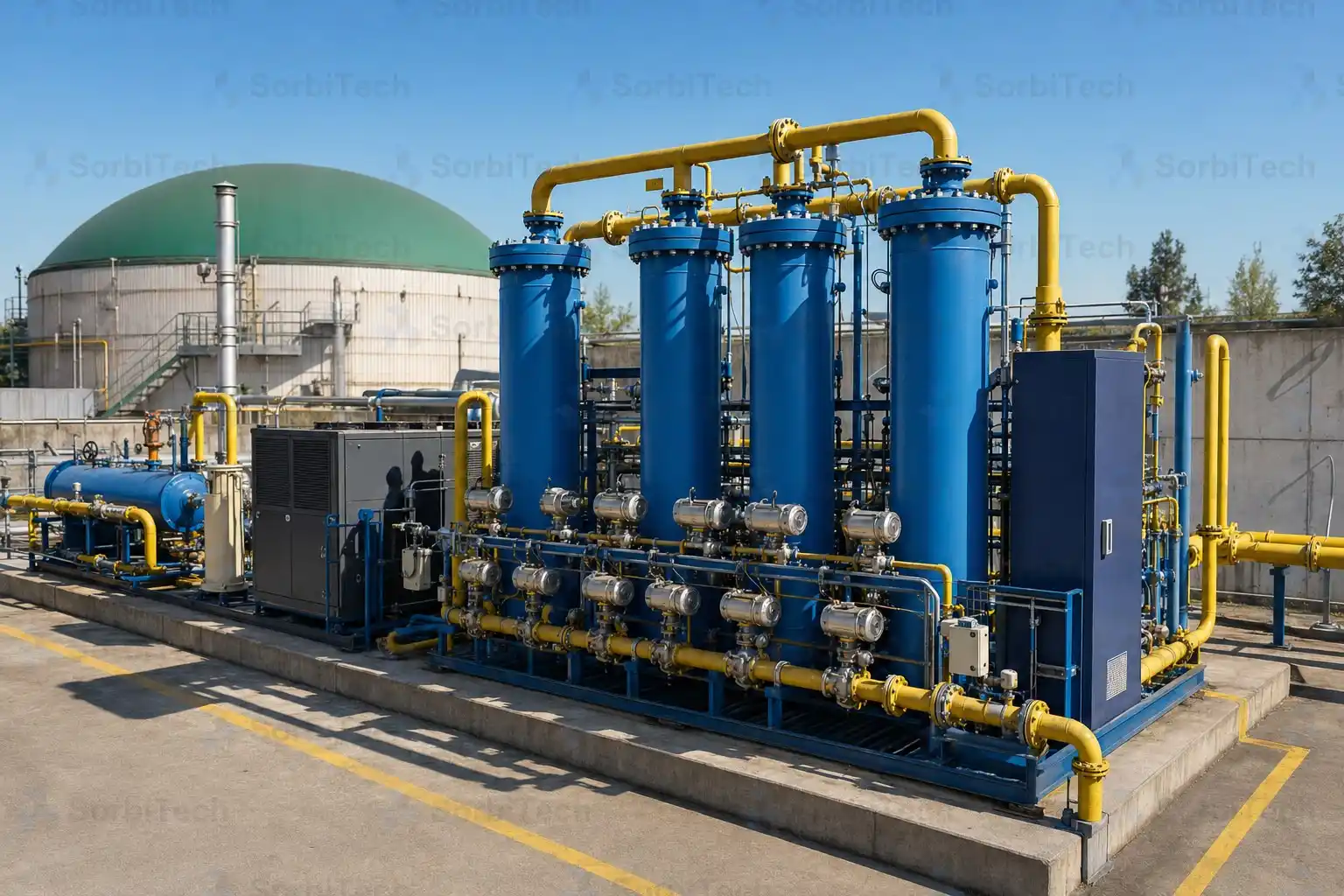 Equipment
Biogas Upgrading Unit
PSA biogas upgrading unit using carbon molecular sieve to separate carbon dioxide from methane and deliver grid quality bio methane from anaerobic digester biogas…
Capacity
50–2,000 Nm³/h raw biogas
Equipment
Biogas Upgrading Unit
PSA biogas upgrading unit using carbon molecular sieve to separate carbon dioxide from methane and deliver grid quality bio methane from anaerobic digester biogas…
Capacity
50–2,000 Nm³/h raw biogas
-
03
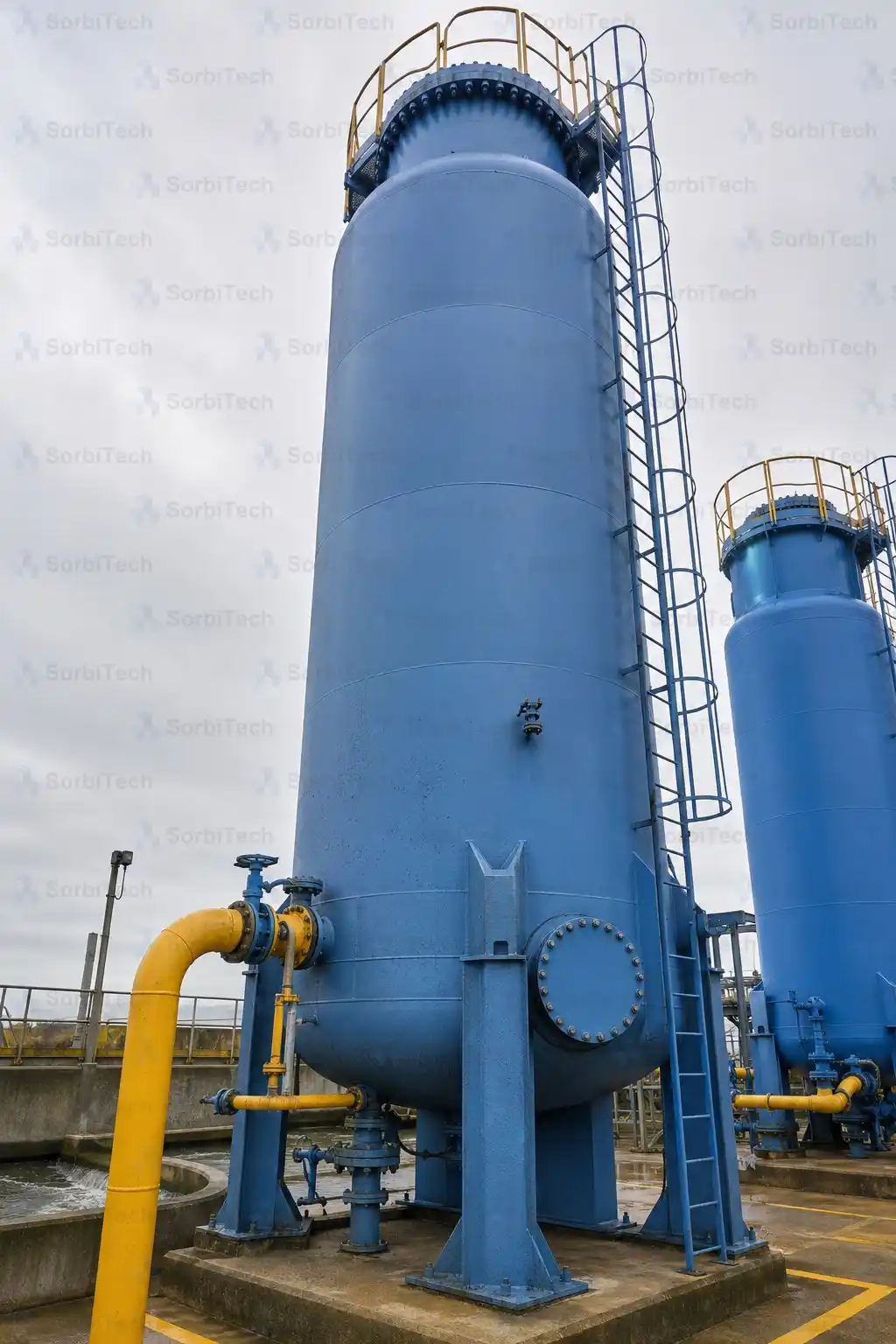 Equipment
Activated Carbon Water Contactor
Granular activated carbon fixed bed water contactor for dechlorination, taste and odour, dissolved organic carbon, and emerging contaminant polishing in drinking water and process…
Capacity
5–2,000 m³/h
Equipment
Activated Carbon Water Contactor
Granular activated carbon fixed bed water contactor for dechlorination, taste and odour, dissolved organic carbon, and emerging contaminant polishing in drinking water and process…
Capacity
5–2,000 m³/h
-
04
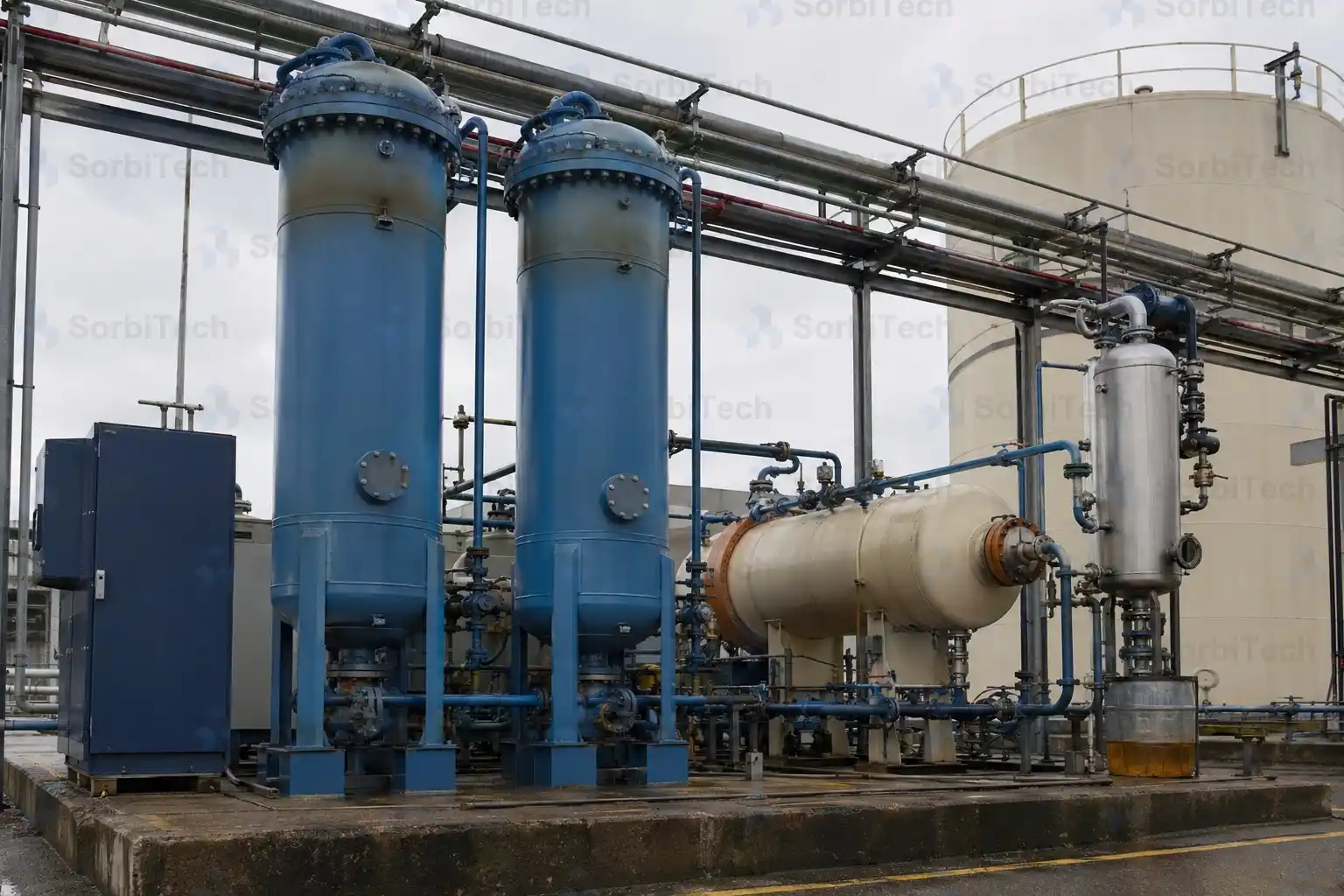 Equipment
Vapour Recovery Unit (VRU)
Activated carbon vapour recovery unit for tank farms, loading racks, and process vents to capture and recover hydrocarbons before stack release.
Capacity
50–10,000 Nm³/h vent gas
Equipment
Vapour Recovery Unit (VRU)
Activated carbon vapour recovery unit for tank farms, loading racks, and process vents to capture and recover hydrocarbons before stack release.
Capacity
50–10,000 Nm³/h vent gas
Industries Using This Application
Specify a Solution for This Application
Provide your process conditions and our team will recommend the grade, configuration, and sizing.