
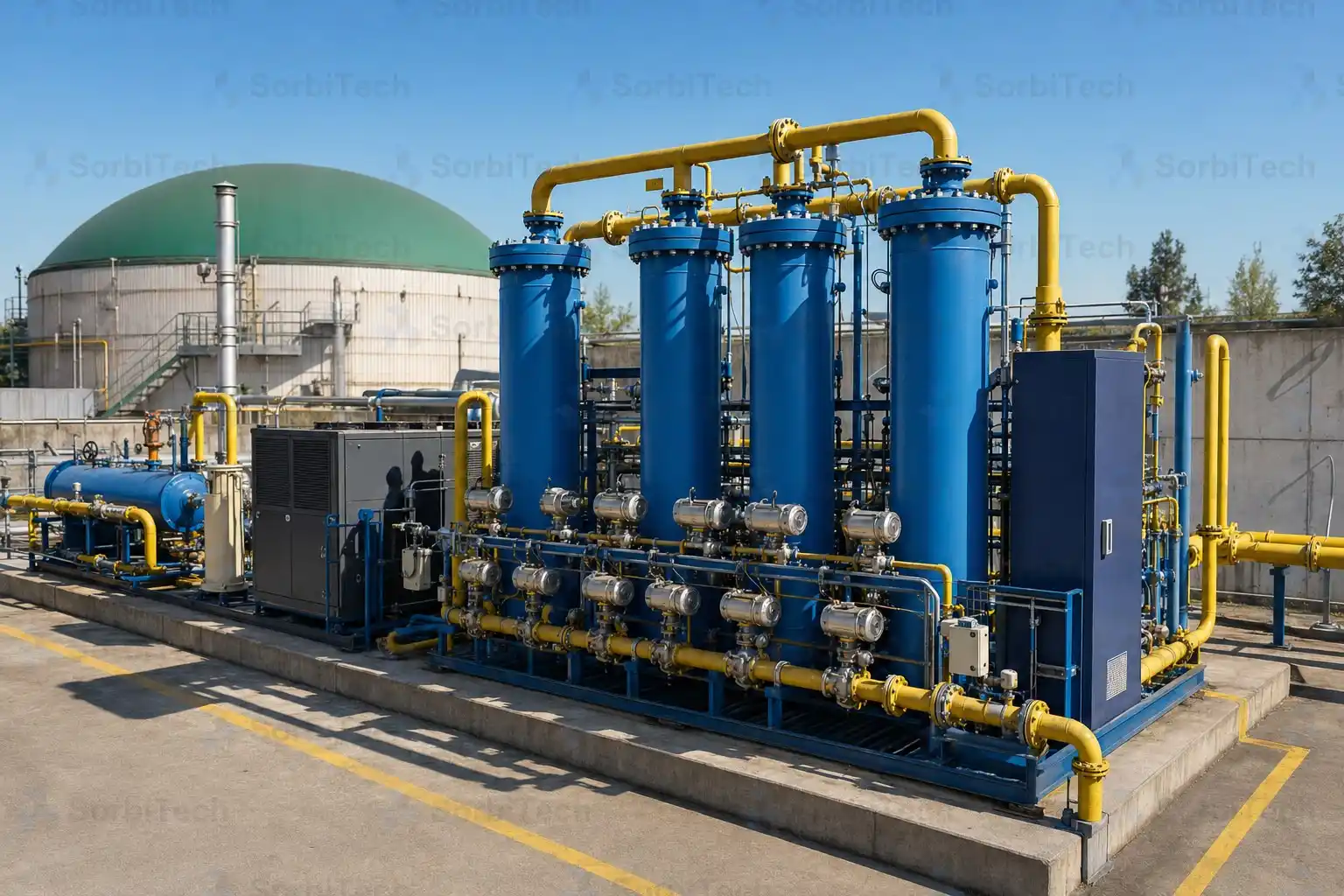
Biogas Upgrading Unit
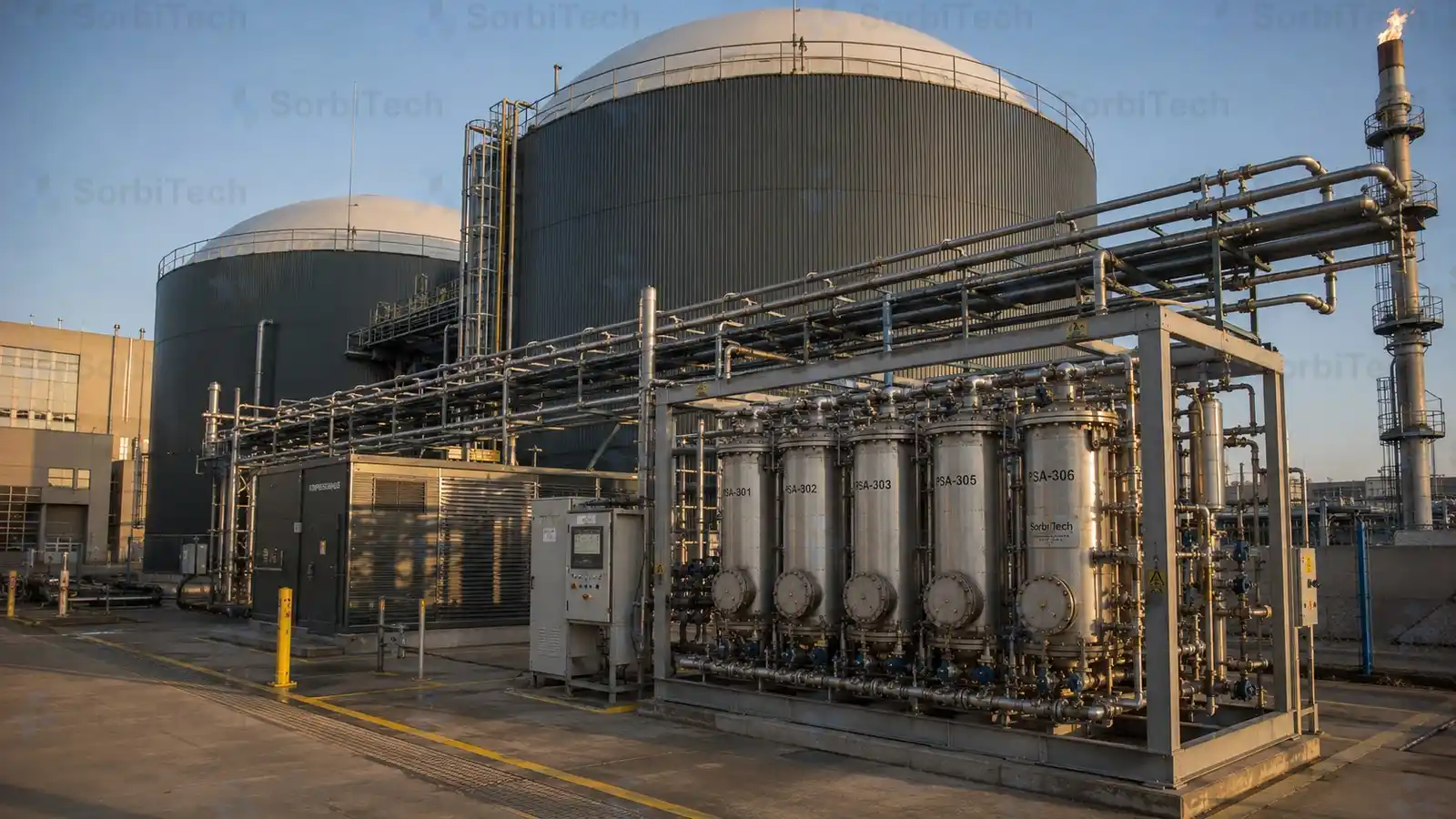
PSA biogas upgrading unit using carbon molecular sieve to separate carbon dioxide from methane and deliver grid quality bio methane from anaerobic digester biogas or landfill gas.
A Biogas Upgrading Unit separates carbon dioxide from methane in anaerobic digester biogas or landfill gas using carbon molecular sieve in a pressure swing adsorption cycle. Outlet bio methane meets pipeline grid quality at 95 to 98 percent methane, ready for grid injection, CNG vehicle fuel, or LNG feedstock.
Pressure Swing Adsorption for Bio Methane Production
The SorbiTech Biogas Upgrading Unit converts raw biogas (50 to 60 percent methane, balance carbon dioxide) into grid quality bio methane at 95 to 98 percent methane purity. The duty uses SorbiTech carbon molecular sieve in a multi vessel pressure swing adsorption cycle: the CMS pore is tuned to admit carbon dioxide faster than methane, so the carbon dioxide is captured under pressure and the methane passes through. The captured carbon dioxide is vented or fed to a sequestration system depending on the project carbon credit scheme.
Inlet Conditioning and Hydrogen Sulphide Removal
Raw biogas carries hydrogen sulphide, siloxanes, ammonia, and water that must be removed upstream of the CMS bed. The SorbiTech inlet conditioning package includes a chiller for water removal, a SorbiTech pellet activated carbon guard bed for hydrogen sulphide and siloxanes, and a particulate filter. The conditioned gas reaches the CMS bed dry, clean, and at the contracted feed pressure.
Scope of Supply
The complete package includes:
- Inlet chiller, condensate separator, and water trap
- Activated carbon H₂S and siloxane guard bed
- Particulate filter and bypass
- Multi vessel CMS PSA train (typically four to six vessels)
- Bio methane buffer tank and gas analyser (methane and CO₂)
- Bio methane compressor for grid injection pressure (if required)
- Off gas handling (vent, sequester, or combustion)
- ATEX or IECEx zone certified controls
Bio Methane Markets and Applications
The upgraded bio methane is injected into the natural gas grid (largest market in Europe under EN 16723-1), compressed for CNG vehicle fuel (largest market in the Indian subcontinent), or liquefied as small scale LNG. Project economics depend on the regional renewable gas incentive, the feed gas hydrogen sulphide and siloxane load, and the avoided cost of flaring or venting. See the industrial gas sector.
Delivery and EPC
Delivered turnkey by SorbiTech with civil, mechanical, and electrical scope, or as a packaged plant on SorbiTech fabrication scope. Sites range from sewage treatment plants (digester biogas) to landfills (collected landfill gas) to agricultural digesters (manure and crop residue).
Engineered Scope
Project References
Applications This System Serves
-
01
 Process Duty
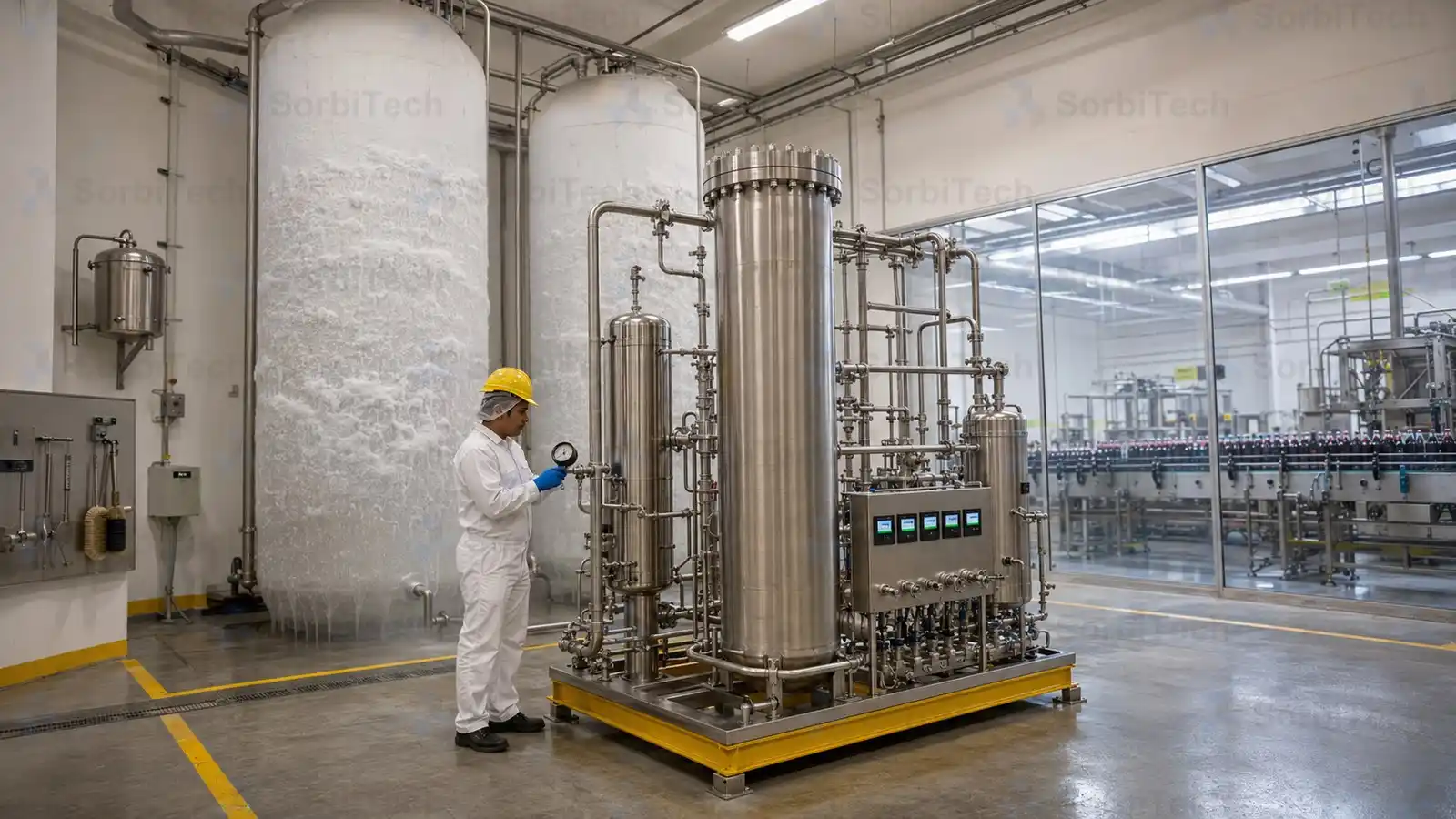
Beverage Carbon Dioxide Purification
Pellet activated carbon guard bed for beverage grade carbon dioxide purification meeting ISBT (International Society of Beverage Technologists) specifications for carbonated soft drinks, beer,…
Process Duty
Beverage Carbon Dioxide Purification
Pellet activated carbon guard bed for beverage grade carbon dioxide purification meeting ISBT (International Society of Beverage Technologists) specifications for carbonated soft drinks, beer,…
-
02
 Process Duty
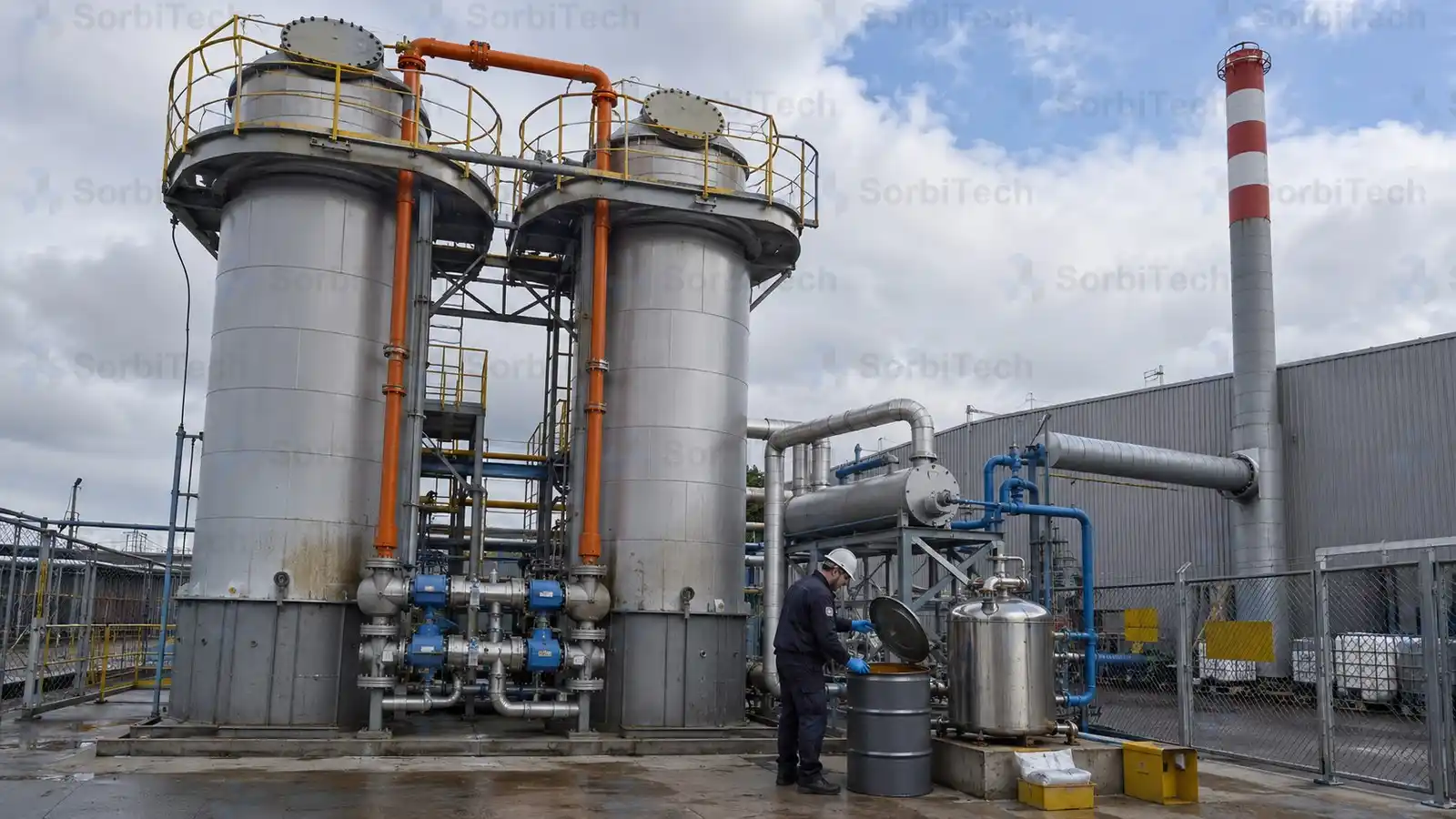
Solvent Vapor Recovery
Solvent vapor recovery using twin tower pellet activated carbon adsorbers with steam or vacuum regeneration to capture and recover volatile organic solvents from process…
Process Duty
Solvent Vapor Recovery
Solvent vapor recovery using twin tower pellet activated carbon adsorbers with steam or vacuum regeneration to capture and recover volatile organic solvents from process…
-
03
 Process Duty
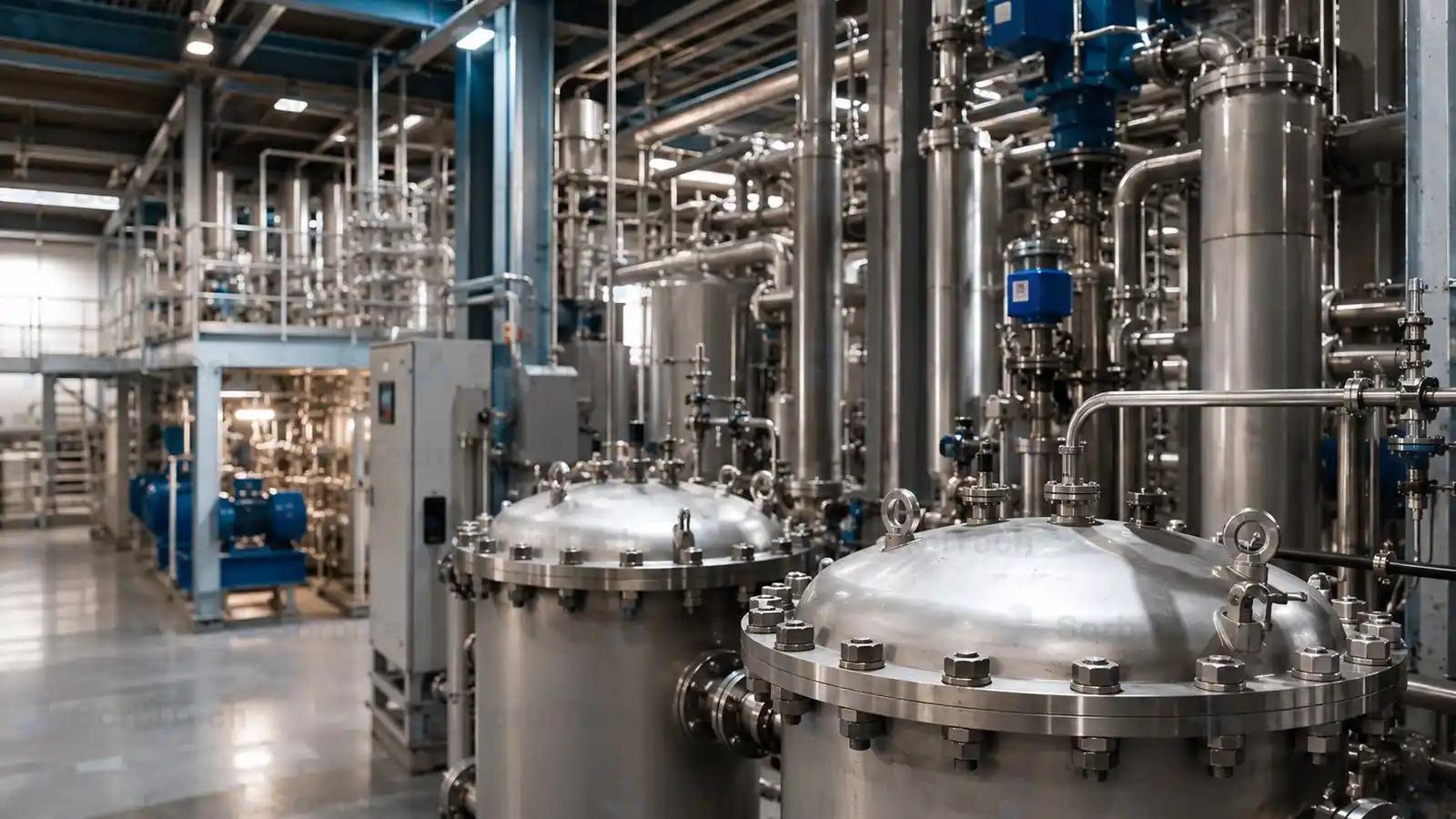
Ethanol Dehydration (Biofuel)
Breaking the ethanol water azeotrope using 3A molecular sieve to produce fuel grade anhydrous ethanol at 99.5 percent purity or higher for blending into…
Process Duty
Ethanol Dehydration (Biofuel)
Breaking the ethanol water azeotrope using 3A molecular sieve to produce fuel grade anhydrous ethanol at 99.5 percent purity or higher for blending into…
-
04
 Process Duty
Biogas Upgrading (CO₂ Removal)
Carbon dioxide removal from anaerobic digester biogas and landfill gas using carbon molecular sieve PSA to deliver grid quality bio methane for pipeline injection…
Process Duty
Biogas Upgrading (CO₂ Removal)
Carbon dioxide removal from anaerobic digester biogas and landfill gas using carbon molecular sieve PSA to deliver grid quality bio methane for pipeline injection…
-
05
 Process Duty
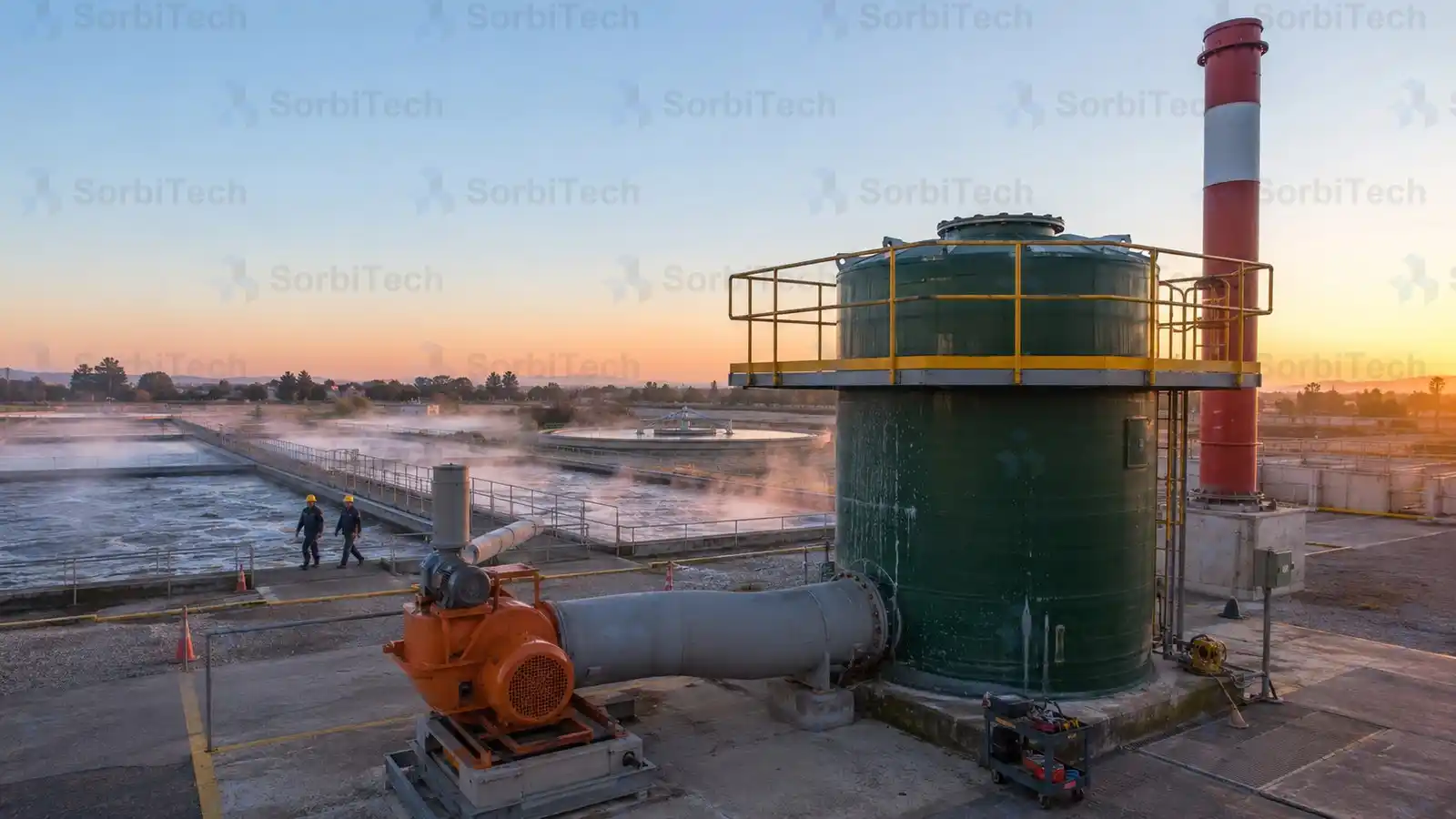
Industrial Odor and Air Stream Carbon Filtration
Pellet and impregnated activated carbon filters for industrial odor control on wastewater treatment plant vents, sewage pumping stations, food processing exhausts, and manufacturing odor…
Process Duty
Industrial Odor and Air Stream Carbon Filtration
Pellet and impregnated activated carbon filters for industrial odor control on wastewater treatment plant vents, sewage pumping stations, food processing exhausts, and manufacturing odor…
-
06
 Process Duty
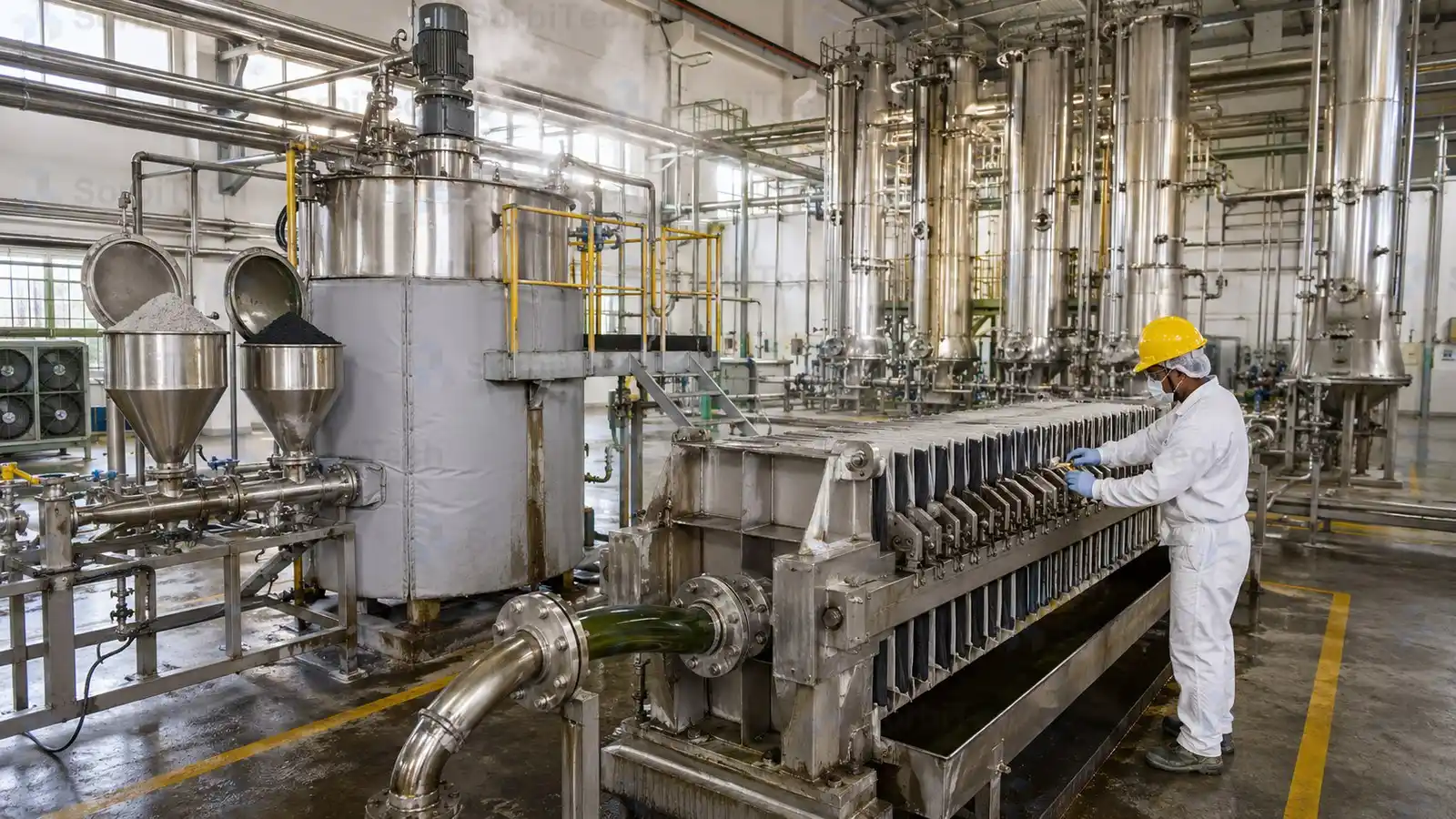
Edible Oil Bleaching
Powdered activated carbon and bleaching earth combination for edible oil bleaching to remove chlorophyll, carotenoids, and oxidation products from palm, sunflower, soybean, and canola…
Process Duty
Edible Oil Bleaching
Powdered activated carbon and bleaching earth combination for edible oil bleaching to remove chlorophyll, carotenoids, and oxidation products from palm, sunflower, soybean, and canola…
Media Used in This System
-
01
 Adsorbent
Pellet Activated Carbon
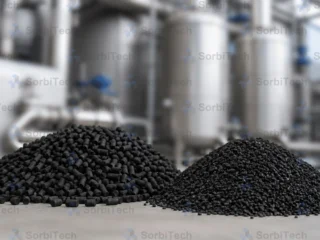
Extruded pellet carbon for gas phase duties: solvent recovery, vapour recovery, odour control, and mercury guard beds.
Form
3 mm or 4 mm extruded pellets
Adsorbent
Pellet Activated Carbon
Extruded pellet carbon for gas phase duties: solvent recovery, vapour recovery, odour control, and mercury guard beds.
Form
3 mm or 4 mm extruded pellets
-
02
 Adsorbent
Carbon Molecular Sieve CMS 450HP
Ultra high purity carbon molecular sieve. 99.99999 percent (7N) N2, selective O2 and CO2 capture, 1.0 to 1.6 mm pellets, minimal fines, deoxo polishing…
Water Cap.
Feed must reach ISO 8573 class 1.4.1, deoxo polishing recommended for 7N %
Adsorbent
Carbon Molecular Sieve CMS 450HP
Ultra high purity carbon molecular sieve. 99.99999 percent (7N) N2, selective O2 and CO2 capture, 1.0 to 1.6 mm pellets, minimal fines, deoxo polishing…
Water Cap.
Feed must reach ISO 8573 class 1.4.1, deoxo polishing recommended for 7N %
-
03
 Adsorbent
Carbon Molecular Sieve CMS 420KT
High efficiency carbon molecular sieve. Higher oxygen affinity under 7 to 12 barg, 1.2 to 1.8 mm pellets, Snowstorm Filling compatible, ASTM D4058 attrition…
Water Cap.
Feed must reach ISO 8573 class 1.4.1 %
Adsorbent
Carbon Molecular Sieve CMS 420KT
High efficiency carbon molecular sieve. Higher oxygen affinity under 7 to 12 barg, 1.2 to 1.8 mm pellets, Snowstorm Filling compatible, ASTM D4058 attrition…
Water Cap.
Feed must reach ISO 8573 class 1.4.1 %
-
04
 Adsorbent
Carbon Molecular Sieve CMS 350KT
Rapid adsorption carbon molecular sieve. 40 to 90 second cycle at 7 to 10 barg, up to 99.99 percent N2, 1.0 to 2.2 mm…
Water Cap.
Moisture at supply below 1.0 percent, feed must reach ISO 8573 class 1.4.1 %
Adsorbent
Carbon Molecular Sieve CMS 350KT
Rapid adsorption carbon molecular sieve. 40 to 90 second cycle at 7 to 10 barg, up to 99.99 percent N2, 1.0 to 2.2 mm…
Water Cap.
Moisture at supply below 1.0 percent, feed must reach ISO 8573 class 1.4.1 %
-
05
 Adsorbent
Carbon Molecular Sieve CMS 260L
Affordable carbon molecular sieve. 1.2 to 1.8 mm pellets, sub 10 Angstrom pore, 95 to 99.9 percent N2 from compressed air at 7 to…
Water Cap.
Intolerant of liquid water, feed must reach ISO 8573 class 1.4.1 %
Adsorbent
Carbon Molecular Sieve CMS 260L
Affordable carbon molecular sieve. 1.2 to 1.8 mm pellets, sub 10 Angstrom pore, 95 to 99.9 percent N2 from compressed air at 7 to…
Water Cap.
Intolerant of liquid water, feed must reach ISO 8573 class 1.4.1 %
-
06
 Adsorbent
Impregnated Activated Carbon
Sulfur, KI, or KOH impregnated activated carbon. Mercury below 10 ng per Nm3, H2S and mercaptan capture upstream of catalysts. 4 mm pellet or…
Water Cap.
Dry feed preferred, water displaces impregnant %
Adsorbent
Impregnated Activated Carbon
Sulfur, KI, or KOH impregnated activated carbon. Mercury below 10 ng per Nm3, H2S and mercaptan capture upstream of catalysts. 4 mm pellet or…
Water Cap.
Dry feed preferred, water displaces impregnant %
Industries Served
-
01
 Sector
Industrial Gas & Air Separation
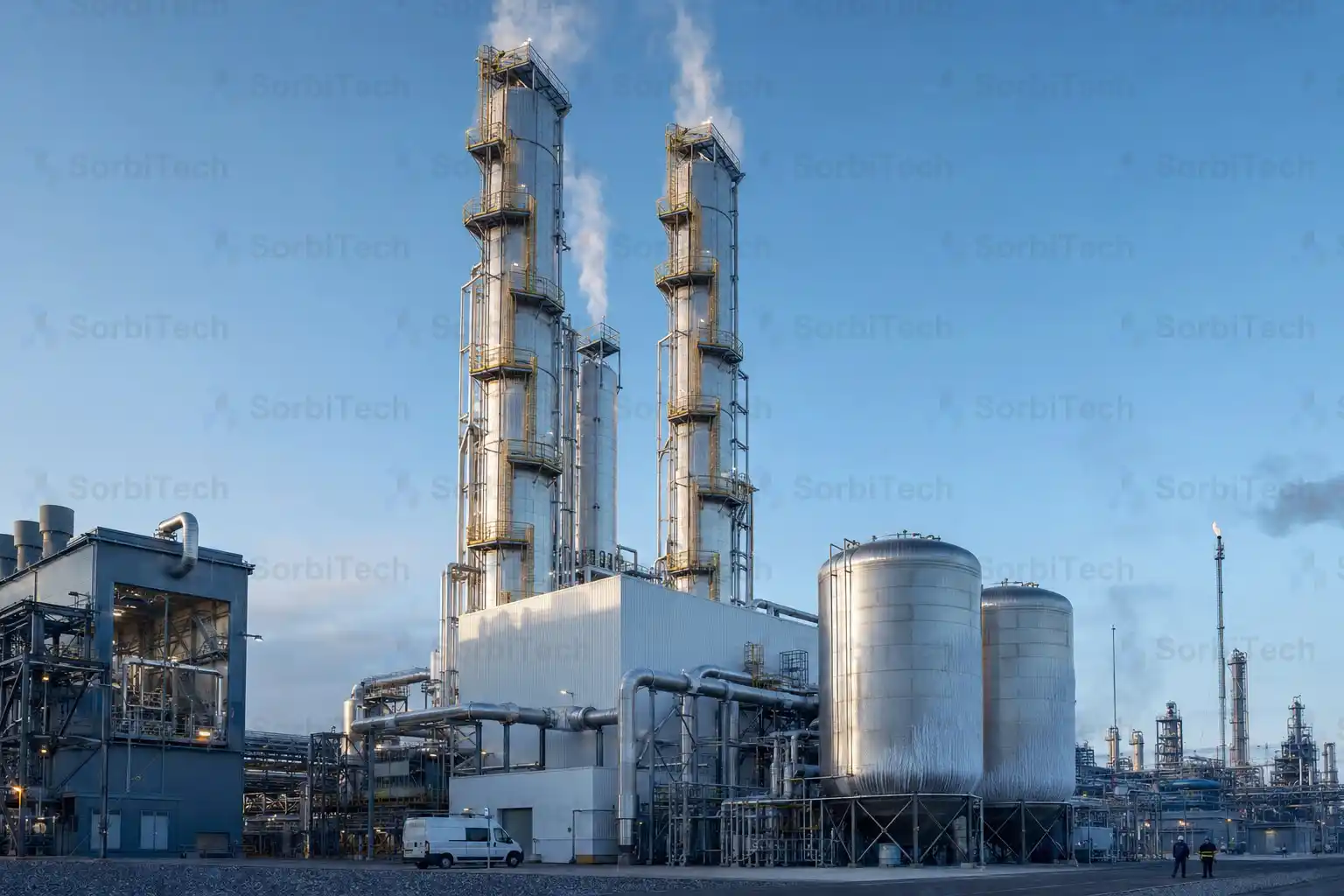
Molecular sieves and carbon molecular sieve plus PSA/TSA systems for nitrogen and oxygen generation and cryogenic air separation pre purification.
Sector
Industrial Gas & Air Separation
Molecular sieves and carbon molecular sieve plus PSA/TSA systems for nitrogen and oxygen generation and cryogenic air separation pre purification.
-
02
 Sector
Oil & Gas
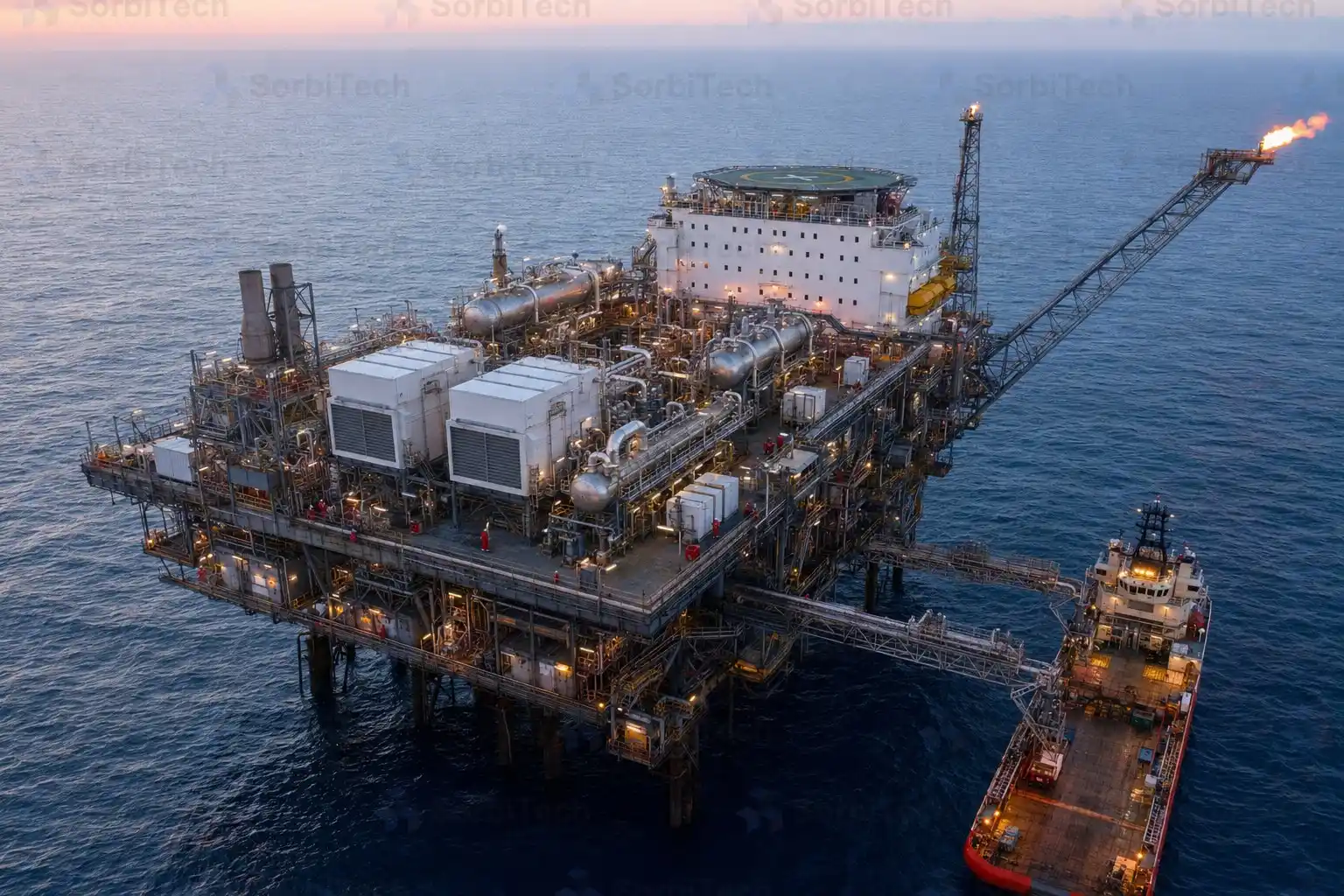
Complete dehydration, separation, and treatment across upstream, midstream, and downstream oil and gas. SorbiTech supplies the adsorbent media and the engineered systems from one…
Sector
Oil & Gas
Complete dehydration, separation, and treatment across upstream, midstream, and downstream oil and gas. SorbiTech supplies the adsorbent media and the engineered systems from one…
Discuss Your Engineering Requirements
Our engineers review your duty conditions and recommend the right configuration.