
Municipal Drinking Water Treatment
Granular activated carbon polishing for municipal drinking water treatment plants targeting taste, odour, disinfection byproducts, dissolved organic carbon, and emerging contaminants.
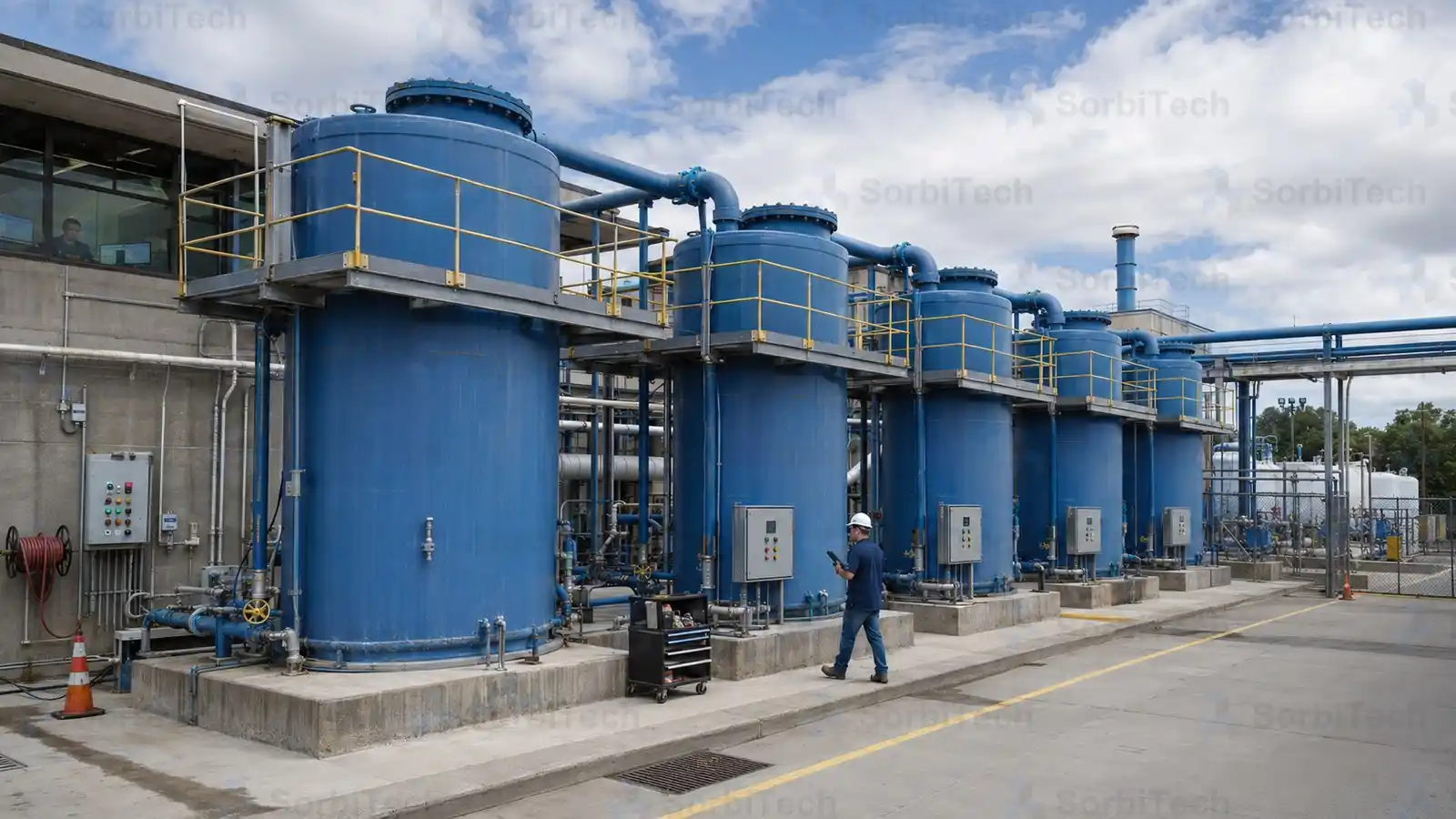
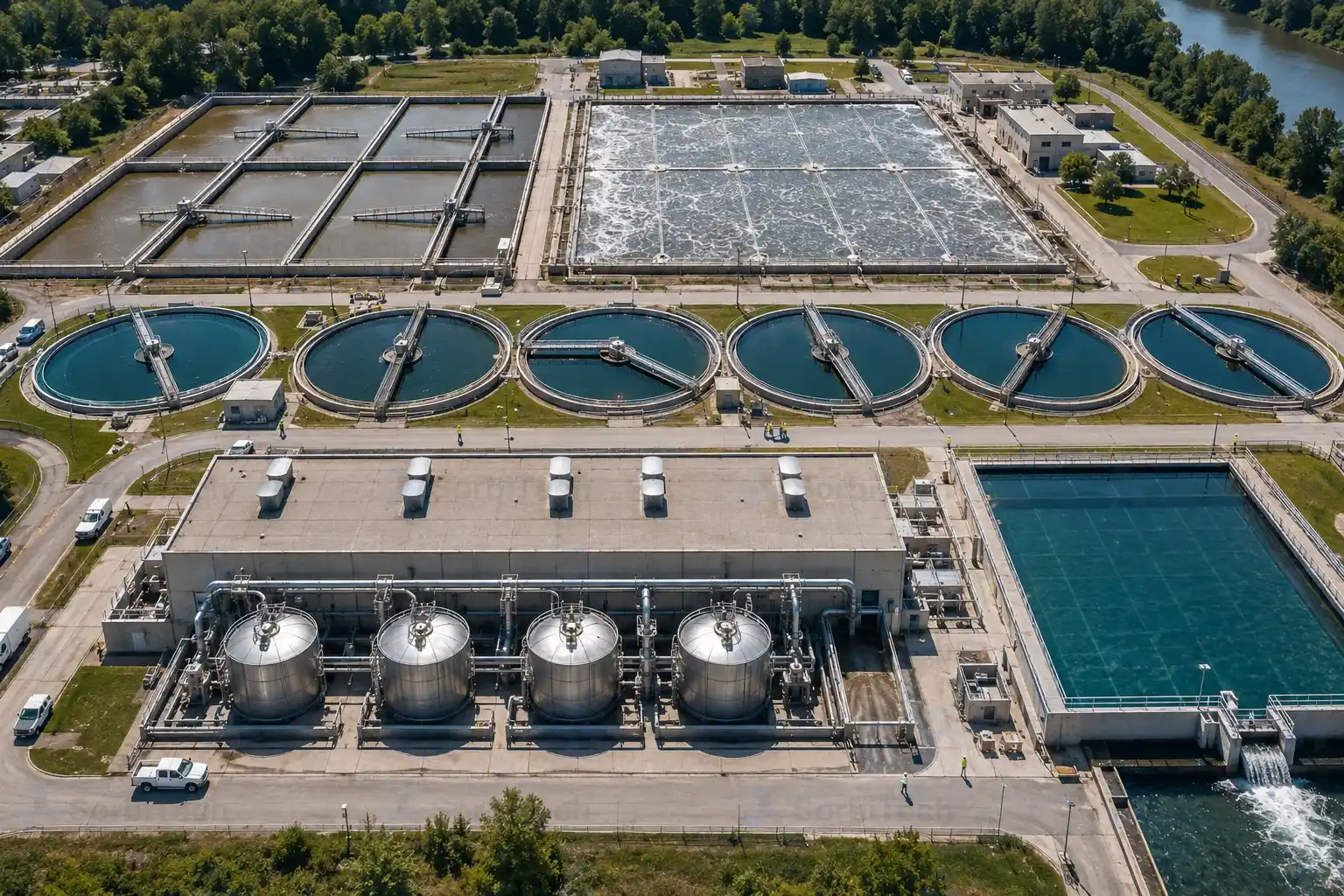
Municipal drinking water treatment uses granular activated carbon (GAC) polishing downstream of conventional clarification and filtration to remove taste and odour compounds (geosmin, MIB), disinfection byproducts (THM, HAA), dissolved organic carbon, and emerging contaminants (PFAS, pharmaceutical residue). Empty bed contact time matched to the target.
Drinking Water Standards Drive the Polishing Stage
Drinking water utilities serve regulated populations with regulated standards: chlorine residual, taste and odour compounds, disinfection byproducts (trihalomethanes, haloacetic acids), dissolved organic carbon, fluoride, arsenic, and the emerging contaminants list (PFAS, pharmaceutical residue, pesticides). Conventional clarification and filtration plants remove turbidity and particulate but cannot meet the dissolved contaminant limits. GAC polishing is the standard polishing stage that bridges the gap between conventional treatment and modern regulatory requirements.
EBCT Sizing for the Target Contaminant
The bed is sized by empty bed contact time (EBCT = bed volume / volumetric flow):
- Dechlorination and chloramine reduction: EBCT 2 to 6 minutes
- Taste and odour (geosmin, MIB from algal blooms): EBCT 8 to 15 minutes
- Dissolved organic carbon and THM precursors: EBCT 15 to 25 minutes
- PFAS short and medium chain: EBCT 10 to 20 minutes
Bed depth follows from the face velocity (8 to 15 m/h service) and the EBCT.
GAC 1240 and NSF Eligibility
The reference grade is SorbiTech GAC 1240, manufactured to ISO 9001:2015 and eligible for NSF/ANSI 61 contact with drinking water. The wetted materials of construction (vessel, internals, valves) are NSF/ANSI 61 certified for the operator regulatory approval. The SorbiTech COA per lot supports the utility regulatory submission.
Reactivation Programme Cuts Lifecycle Cost
Spent GAC is thermally reactivated at 850 to 950 °C at the SorbiTech partner facility and returned to service at 85 to 95 percent of virgin activity. The reactivation contract lowers the lifecycle cost by 40 to 60 percent versus single use operation. Sector coverage is municipal water treatment.
Selection Guidance
GAC 1240 in a fixed bed contactor sized by empty bed contact time. EBCT 2-6 min for dechlorination, 8-15 min for taste & odour, 15-25 min for DOC and THM precursors. NSF/ANSI 61 eligible media and wetted materials.
A Specified, Verified Solution
Define the duty
We capture your process conditions: flow, composition, pressure, temperature, and the target outlet specification.
Select media & configuration
Our engineers recommend the adsorbent grade and system type that meet the duty with margin.
Size & engineer
Bed sizing, vessel design, and cycle parameters are engineered to your case and documented for approval.
Commission & verify
We support loading, start up, and performance verification against the guarantee.
Recommended Products & Systems
Adsorbents & Media
-
01
 Adsorbent
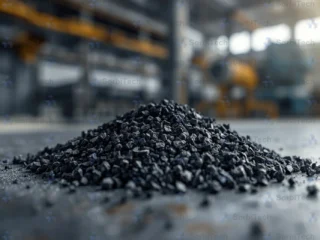
Activated Carbon GAC 1240
Coal based granular activated carbon for dechlorination, taste and odour, and dissolved organics in water.
Form
12 × 40 US mesh (0.42–1.70 mm)
Adsorbent
Activated Carbon GAC 1240
Coal based granular activated carbon for dechlorination, taste and odour, and dissolved organics in water.
Form
12 × 40 US mesh (0.42–1.70 mm)
-
02
 Adsorbent
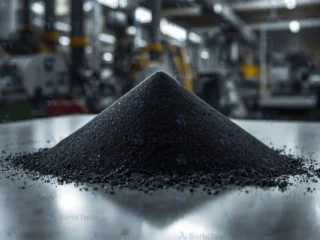
Powdered Activated Carbon
Fine powder carbon for slurry dosing in water treatment, sugar decolorization, pharmaceutical purification, and emergency contamination response.
Form
200×325 mesh (45–75 µm)
Adsorbent
Powdered Activated Carbon
Fine powder carbon for slurry dosing in water treatment, sugar decolorization, pharmaceutical purification, and emergency contamination response.
Form
200×325 mesh (45–75 µm)
-
03
 Adsorbent
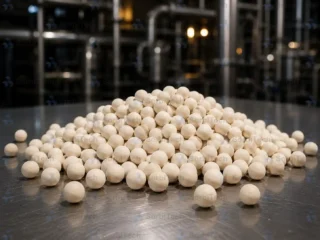
AloxSorb F
High performance activated alumina for vapor and liquid phase adsorption, drying, purification, and guard bed service.
Water Cap.
≥ 18 %
Adsorbent
AloxSorb F
High performance activated alumina for vapor and liquid phase adsorption, drying, purification, and guard bed service.
Water Cap.
≥ 18 %
Engineered Systems
-
01
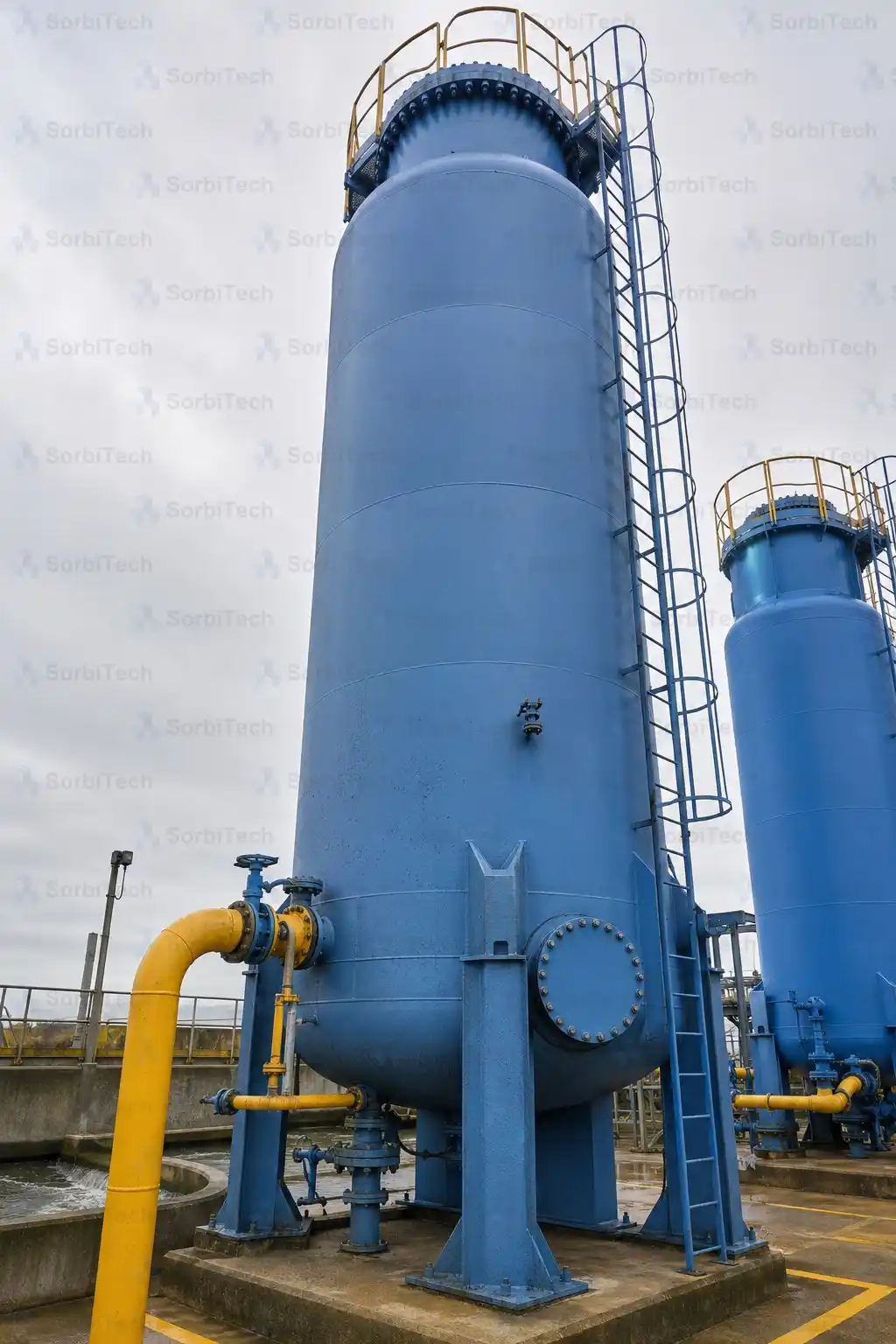 Equipment
Activated Carbon Water Contactor
Granular activated carbon fixed bed water contactor for dechlorination, taste and odour, dissolved organic carbon, and emerging contaminant polishing in drinking water and process…
Capacity
5–2,000 m³/h
Equipment
Activated Carbon Water Contactor
Granular activated carbon fixed bed water contactor for dechlorination, taste and odour, dissolved organic carbon, and emerging contaminant polishing in drinking water and process…
Capacity
5–2,000 m³/h
-
02
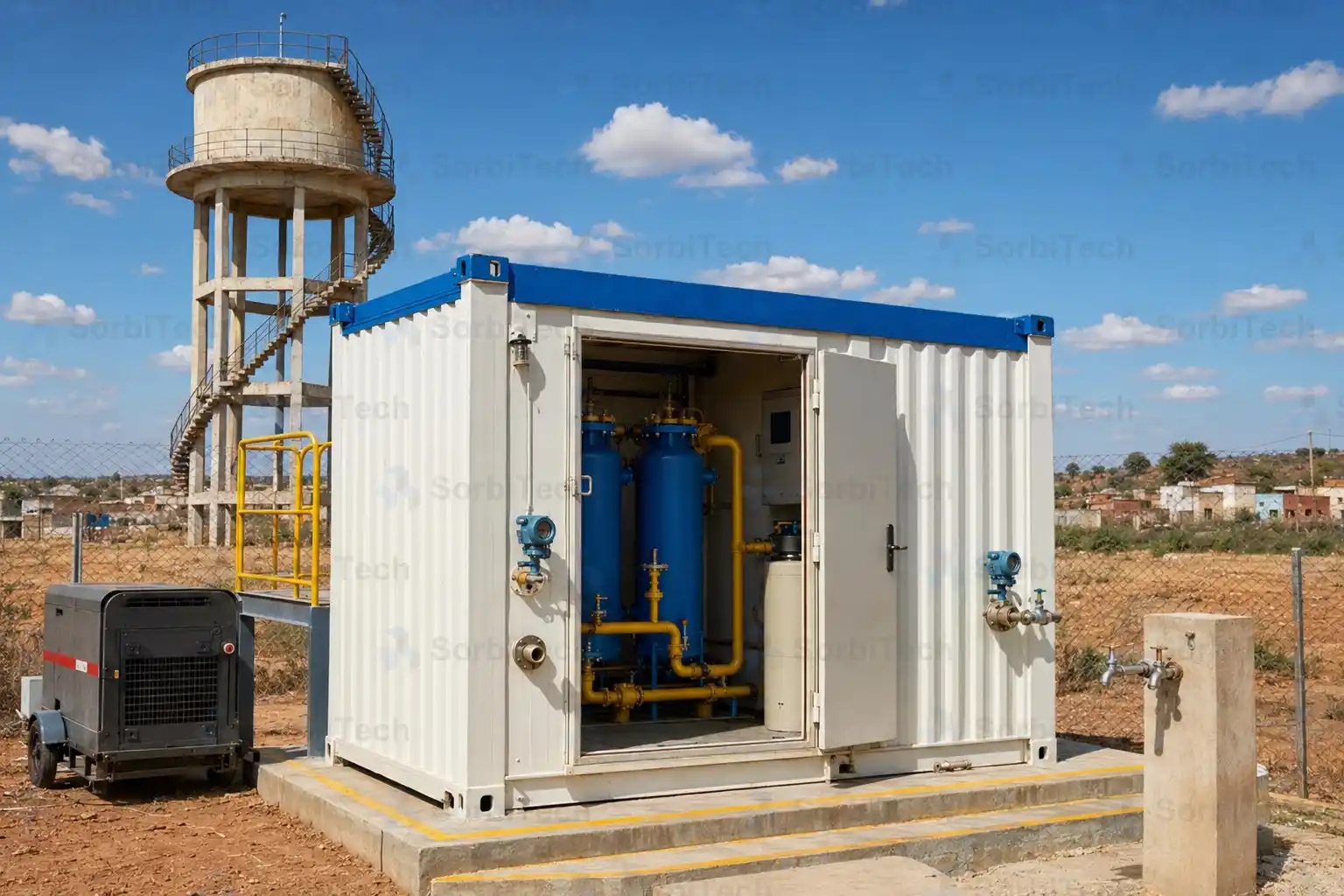 Equipment
Community Defluoridation Treatment Unit
Containerised activated alumina defluoridation unit for community and decentralised drinking water supply to the WHO guideline of 1.5 mg per litre.
Capacity
0.5–50 m³/h
Equipment
Community Defluoridation Treatment Unit
Containerised activated alumina defluoridation unit for community and decentralised drinking water supply to the WHO guideline of 1.5 mg per litre.
Capacity
0.5–50 m³/h
-
03
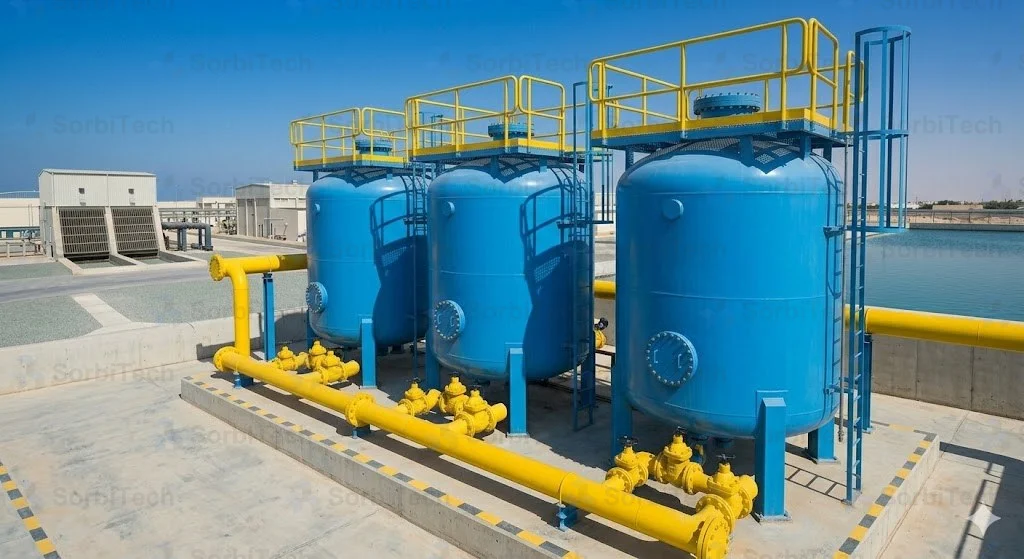 Equipment
Multi Media Filter
Multi media filter for suspended solids and turbidity removal upstream of activated carbon polishing, reverse osmosis, or process reuse in water treatment trains.
Capacity
5–500 m³/h
Equipment
Multi Media Filter
Multi media filter for suspended solids and turbidity removal upstream of activated carbon polishing, reverse osmosis, or process reuse in water treatment trains.
Capacity
5–500 m³/h
-
04
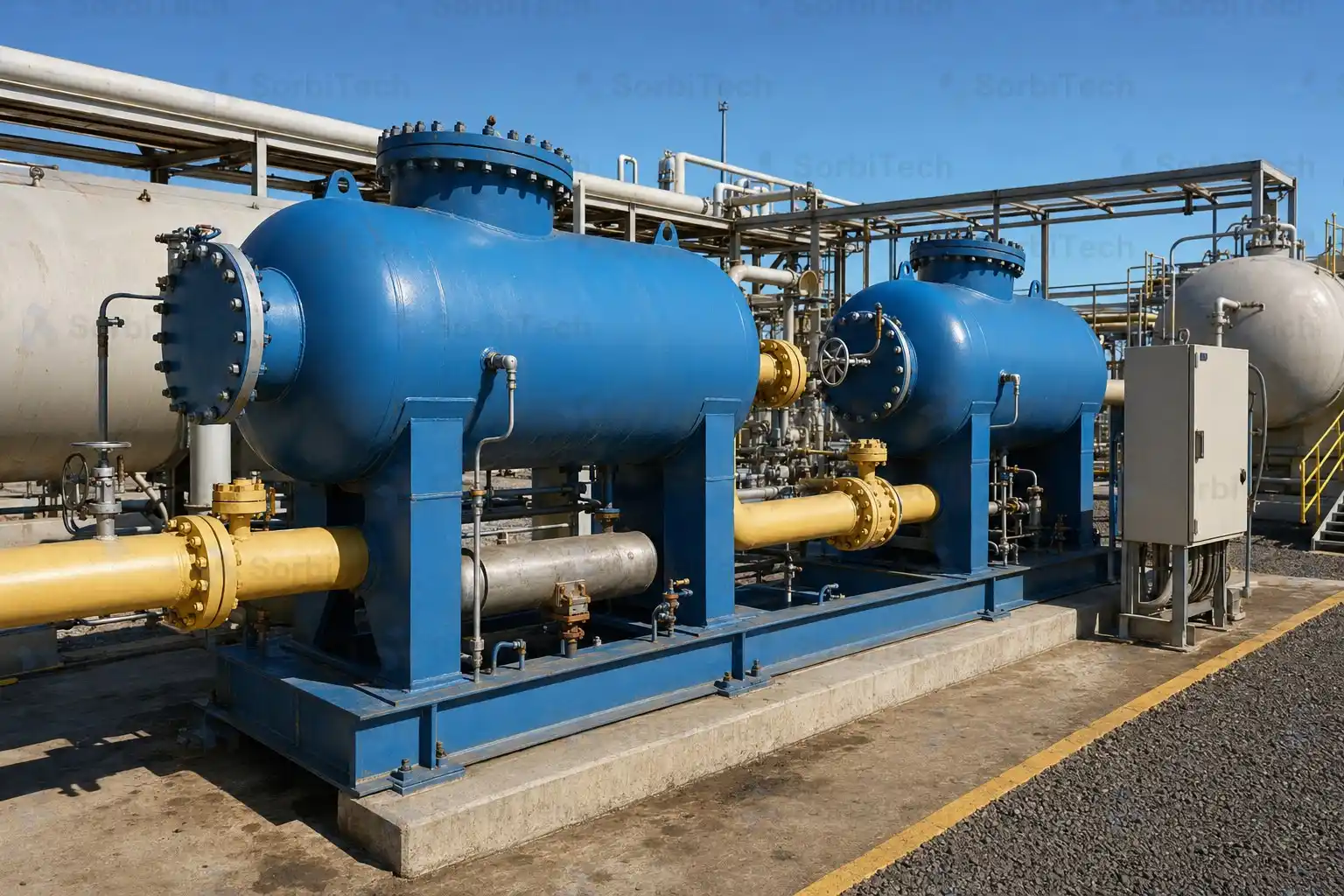 Equipment
Coalescing Filtration Skid
Two stage coalescer and separator skid that removes fine dispersed hydrocarbons and solids from water down to single digit ppm. It is the polishing…
Capacity
2–200 m³/h
Equipment
Coalescing Filtration Skid
Two stage coalescer and separator skid that removes fine dispersed hydrocarbons and solids from water down to single digit ppm. It is the polishing…
Capacity
2–200 m³/h
Specify a Solution for This Application
Provide your process conditions and our team will recommend the grade, configuration, and sizing.