
Solvent Vapor Recovery
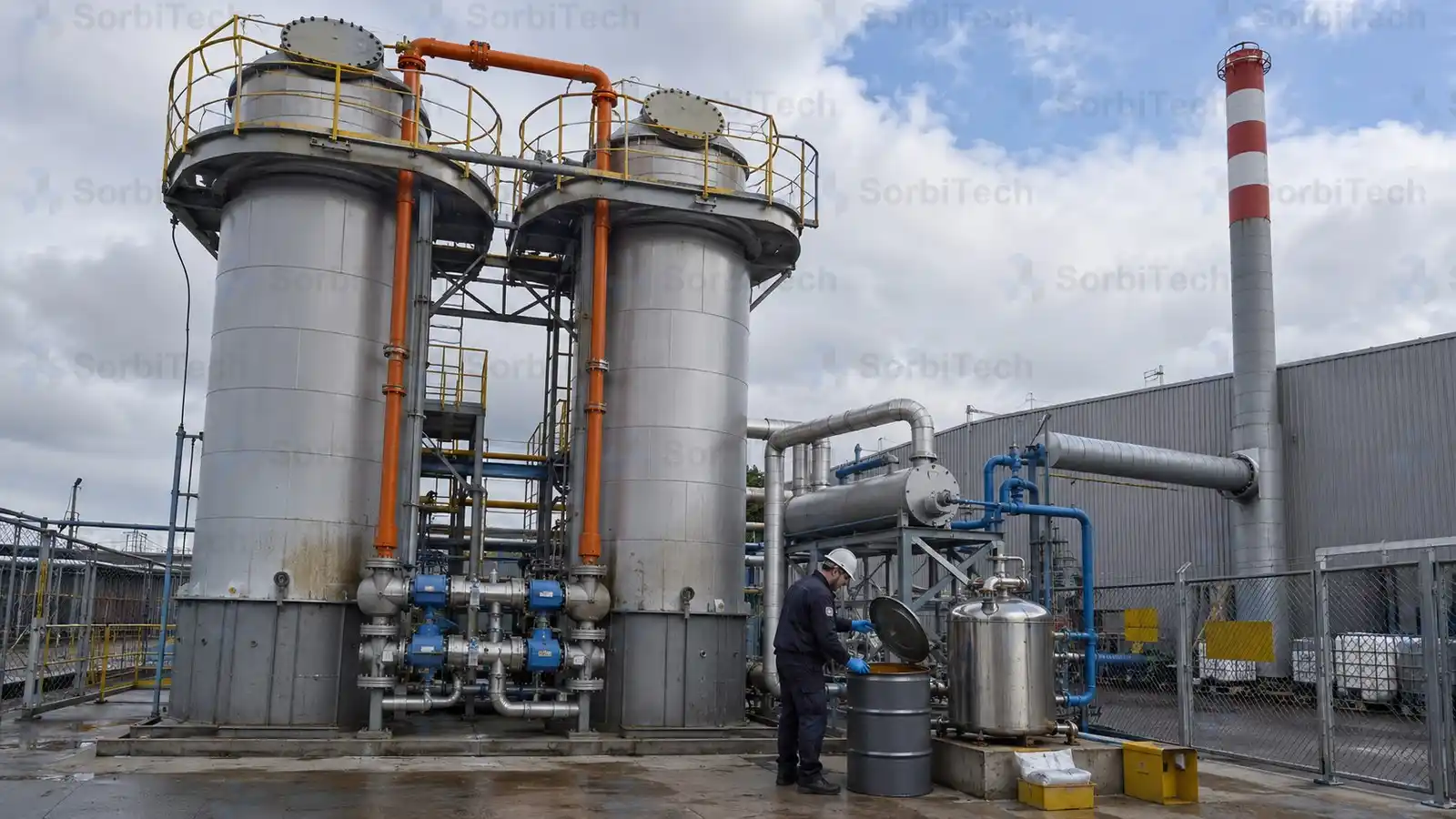
Solvent vapor recovery using twin tower pellet activated carbon adsorbers with steam or vacuum regeneration to capture and recover volatile organic solvents from process and printing vents.
Solvent vapor recovery uses twin tower pellet activated carbon adsorbers to capture volatile organic solvents (acetone, ethanol, methanol, MEK, toluene, dichloromethane) from process and printing vents. Steam or hot inert gas regeneration releases the captured solvent for condensation and return to the process. Recovery rates above 95 percent.
Solvent Vents Have Economic and Regulatory Pressure
Solvent vents from industrial coating lines, flexible packaging printing, pharmaceutical synthesis reactors, chemical batch processing, and degreasing operations carry volatile organic solvents at concentrations from 100 to 10,000 mg/m³. The vented solvent is both an economic loss (the solvent has to be replaced from new purchase) and an environmental liability (the vent stream contributes to regulated VOC emissions). Recovery captures both.
Twin Tower Carbon Adsorber Configuration
The SorbiTech vapour recovery unit uses twin pellet activated carbon adsorbers running 180 degrees out of phase. The pellet form is preferred over granular: lower pressure drop in the vent gas service, higher hardness through the regeneration cycles, and longer service life. One tower is on adsorption capturing the solvent; the other is on regeneration releasing the captured solvent for condensation.
Steam or Hot Gas Regeneration
Two regeneration methods are offered. Steam regeneration heats the bed to 100 to 120 °C and uses the steam to strip the captured solvent; the solvent vapour is condensed in a downstream chiller and the recovered solvent and water are decanted. This route suits water miscible solvents (ethanol, methanol, acetone). Hot inert gas regeneration uses heated nitrogen at 100 to 180 °C and avoids the water contamination of the recovered solvent; this route suits water sensitive solvents (THF) or halogenated solvents (dichloromethane).
Delivery and Economics
Delivered as a complete vapour recovery unit by SorbiTech or SorbiTech. Recovery rates above 95 percent are routine; the avoided solvent purchase cost typically pays for the unit within 18 to 36 months. Sector coverage is petrochemicals, pharmaceutical, and chemical processing.
Selection Guidance
Twin pellet activated carbon adsorbers with steam regeneration (for water miscible solvents) or hot inert gas regeneration (for halogenated or oxidation sensitive solvents). Condenser downstream for solvent recovery.
A Specified, Verified Solution
Define the duty
We capture your process conditions: flow, composition, pressure, temperature, and the target outlet specification.
Select media & configuration
Our engineers recommend the adsorbent grade and system type that meet the duty with margin.
Size & engineer
Bed sizing, vessel design, and cycle parameters are engineered to your case and documented for approval.
Commission & verify
We support loading, start up, and performance verification against the guarantee.
Recommended Products & Systems
Adsorbents & Media
-
01
 Adsorbent
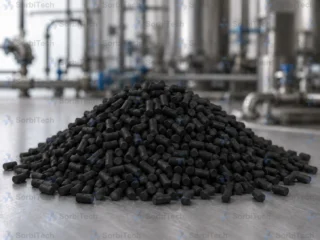
Pellet Activated Carbon
Extruded pellet carbon for gas phase duties: solvent recovery, vapour recovery, odour control, and mercury guard beds.
Form
3 mm or 4 mm extruded pellets
Adsorbent
Pellet Activated Carbon
Extruded pellet carbon for gas phase duties: solvent recovery, vapour recovery, odour control, and mercury guard beds.
Form
3 mm or 4 mm extruded pellets
-
02
 Adsorbent
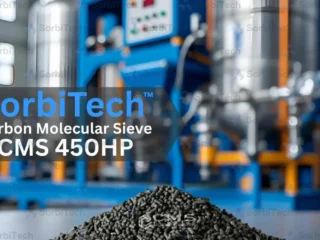
Carbon Molecular Sieve CMS 450HP
Ultra high purity carbon molecular sieve. 99.99999 percent (7N) N2, selective O2 and CO2 capture, 1.0 to 1.6 mm pellets, minimal fines, deoxo polishing…
Water Cap.
Feed must reach ISO 8573 class 1.4.1, deoxo polishing recommended for 7N %
Adsorbent
Carbon Molecular Sieve CMS 450HP
Ultra high purity carbon molecular sieve. 99.99999 percent (7N) N2, selective O2 and CO2 capture, 1.0 to 1.6 mm pellets, minimal fines, deoxo polishing…
Water Cap.
Feed must reach ISO 8573 class 1.4.1, deoxo polishing recommended for 7N %
-
03
 Adsorbent
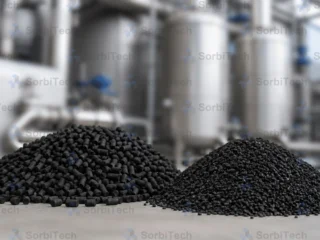
Impregnated Activated Carbon
Sulfur, KI, or KOH impregnated activated carbon. Mercury below 10 ng per Nm3, H2S and mercaptan capture upstream of catalysts. 4 mm pellet or…
Water Cap.
Dry feed preferred, water displaces impregnant %
Adsorbent
Impregnated Activated Carbon
Sulfur, KI, or KOH impregnated activated carbon. Mercury below 10 ng per Nm3, H2S and mercaptan capture upstream of catalysts. 4 mm pellet or…
Water Cap.
Dry feed preferred, water displaces impregnant %
-
04
 Adsorbent
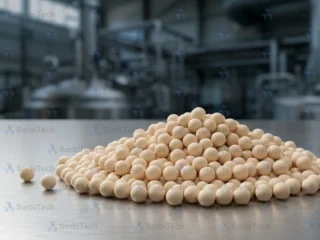
Molecular Sieve 5A
Calcium form 5A zeolite for n paraffin separation, hydrogen purification, and oxygen PSA generation.
Pore Ø
5 Å
Adsorbent
Molecular Sieve 5A
Calcium form 5A zeolite for n paraffin separation, hydrogen purification, and oxygen PSA generation.
Pore Ø
5 Å
-
05
 Adsorbent
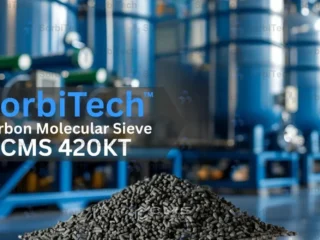
Carbon Molecular Sieve CMS 420KT
High efficiency carbon molecular sieve. Higher oxygen affinity under 7 to 12 barg, 1.2 to 1.8 mm pellets, Snowstorm Filling compatible, ASTM D4058 attrition…
Water Cap.
Feed must reach ISO 8573 class 1.4.1 %
Adsorbent
Carbon Molecular Sieve CMS 420KT
High efficiency carbon molecular sieve. Higher oxygen affinity under 7 to 12 barg, 1.2 to 1.8 mm pellets, Snowstorm Filling compatible, ASTM D4058 attrition…
Water Cap.
Feed must reach ISO 8573 class 1.4.1 %
-
06
 Adsorbent
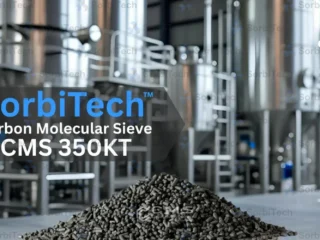
Carbon Molecular Sieve CMS 350KT
Rapid adsorption carbon molecular sieve. 40 to 90 second cycle at 7 to 10 barg, up to 99.99 percent N2, 1.0 to 2.2 mm…
Water Cap.
Moisture at supply below 1.0 percent, feed must reach ISO 8573 class 1.4.1 %
Adsorbent
Carbon Molecular Sieve CMS 350KT
Rapid adsorption carbon molecular sieve. 40 to 90 second cycle at 7 to 10 barg, up to 99.99 percent N2, 1.0 to 2.2 mm…
Water Cap.
Moisture at supply below 1.0 percent, feed must reach ISO 8573 class 1.4.1 %
Engineered Systems
-
01
 Equipment
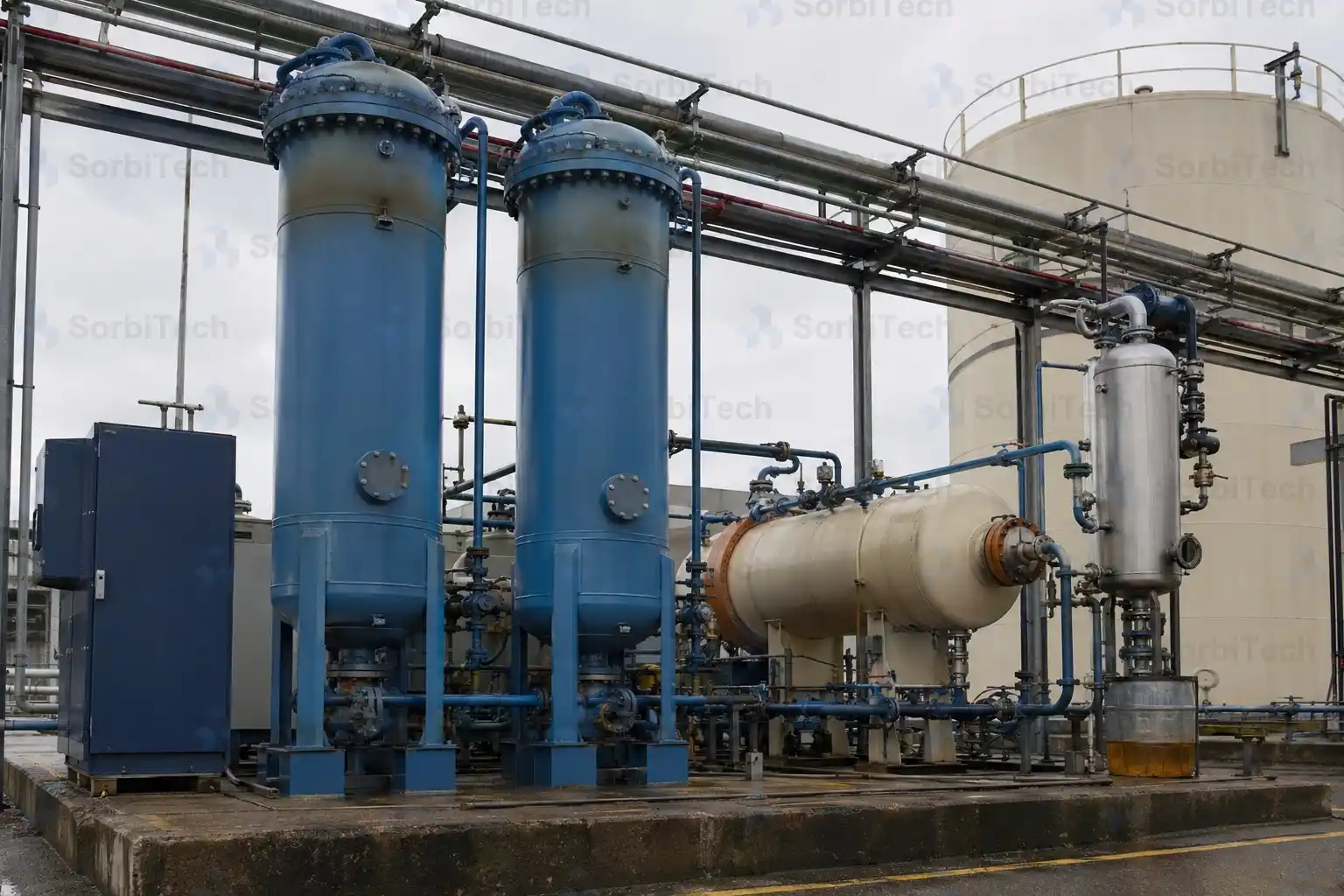
Vapour Recovery Unit (VRU)
Activated carbon vapour recovery unit for tank farms, loading racks, and process vents to capture and recover hydrocarbons before stack release.
Capacity
50–10,000 Nm³/h vent gas
Equipment
Vapour Recovery Unit (VRU)
Activated carbon vapour recovery unit for tank farms, loading racks, and process vents to capture and recover hydrocarbons before stack release.
Capacity
50–10,000 Nm³/h vent gas
-
02
 Equipment
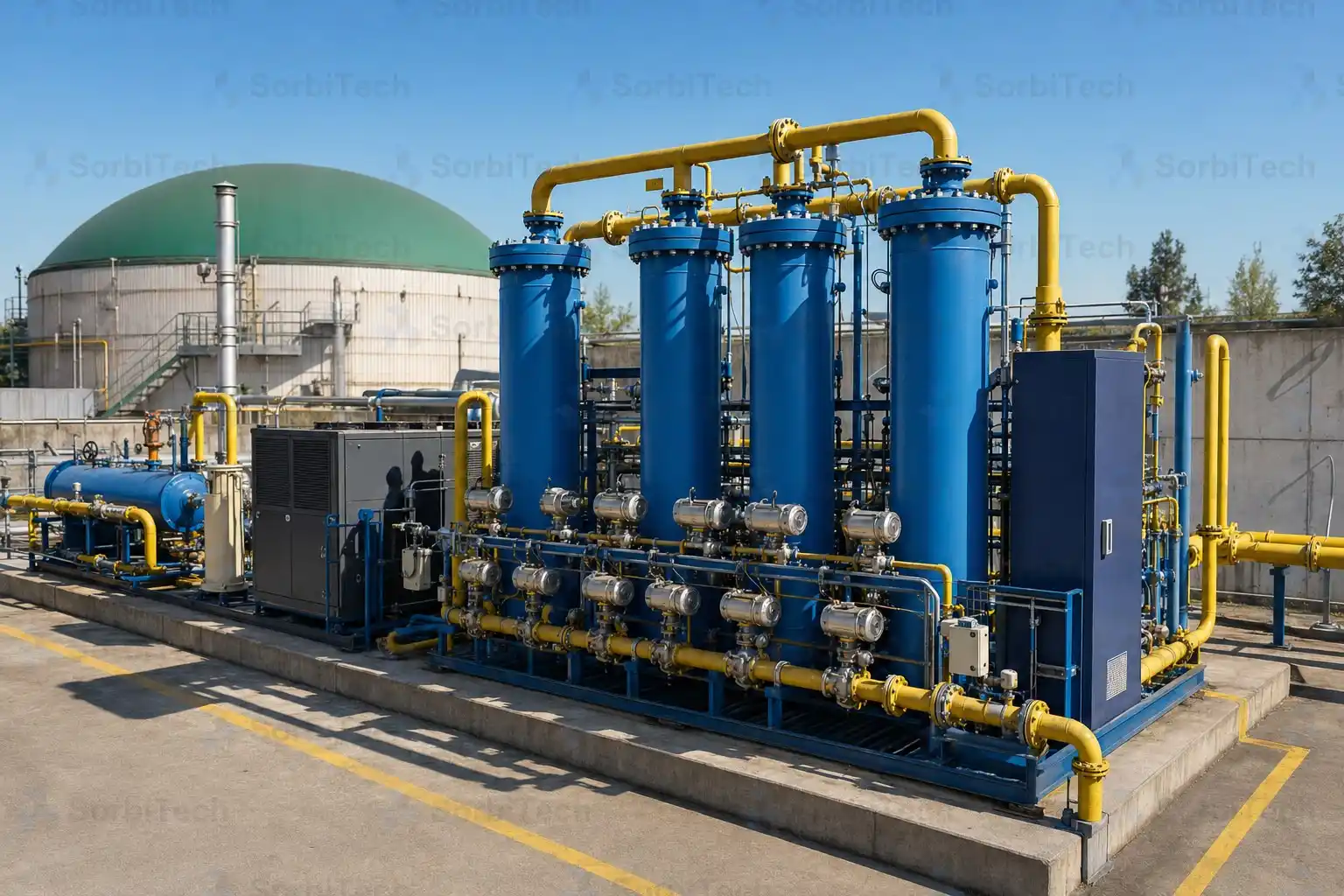
Biogas Upgrading Unit
PSA biogas upgrading unit using carbon molecular sieve to separate carbon dioxide from methane and deliver grid quality bio methane from anaerobic digester biogas…
Capacity
50–2,000 Nm³/h raw biogas
Equipment
Biogas Upgrading Unit
PSA biogas upgrading unit using carbon molecular sieve to separate carbon dioxide from methane and deliver grid quality bio methane from anaerobic digester biogas…
Capacity
50–2,000 Nm³/h raw biogas
-
03
 Equipment
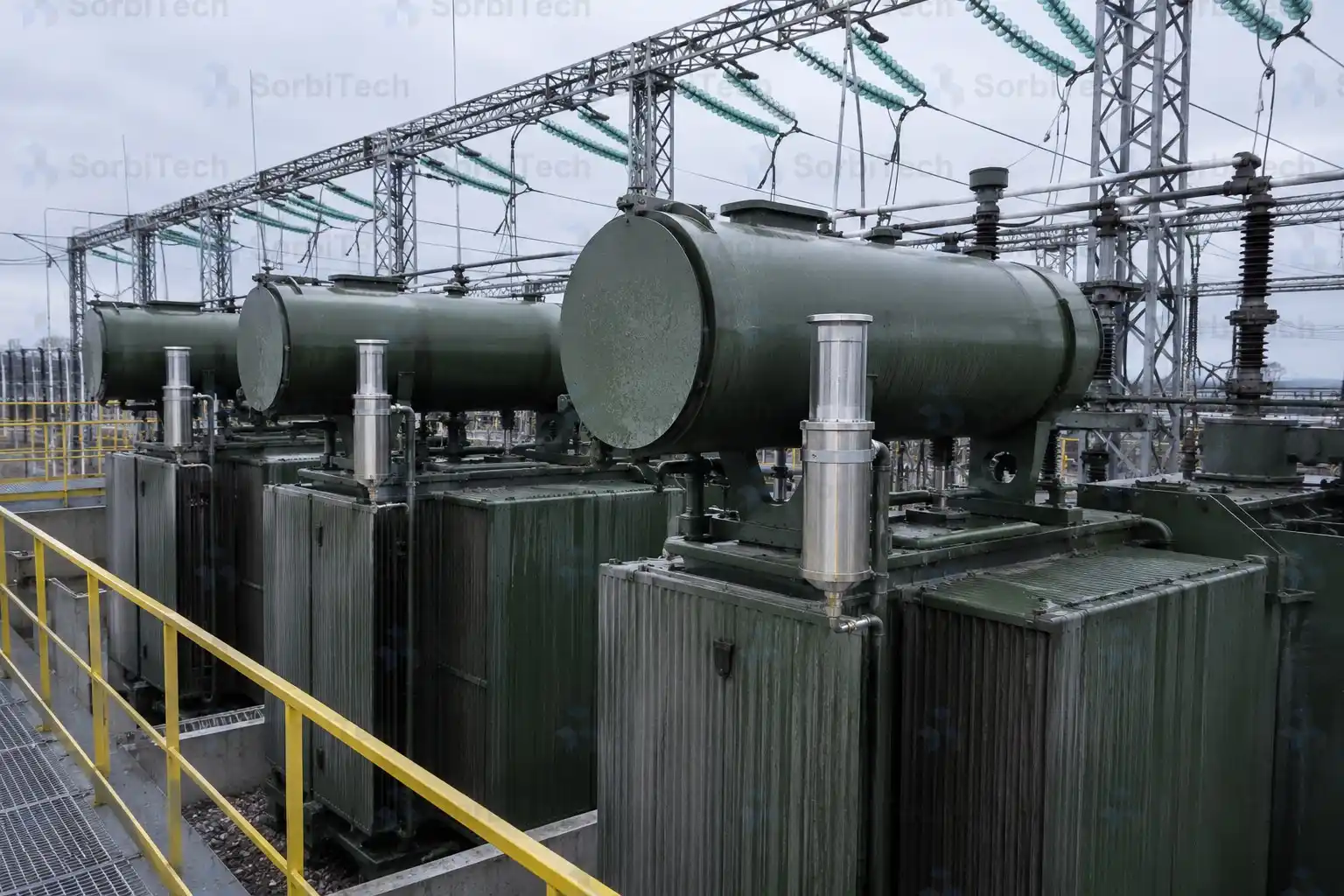
Transformer Breather Cartridge System
Pre packaged stainless steel transformer breather cartridge with indicating silica gel for grid transformer moisture protection across the high voltage transmission and distribution network.
Capacity
0.5–25 kVA transformer to 800 kV substation
Equipment
Transformer Breather Cartridge System
Pre packaged stainless steel transformer breather cartridge with indicating silica gel for grid transformer moisture protection across the high voltage transmission and distribution network.
Capacity
0.5–25 kVA transformer to 800 kV substation
-
04
 Equipment
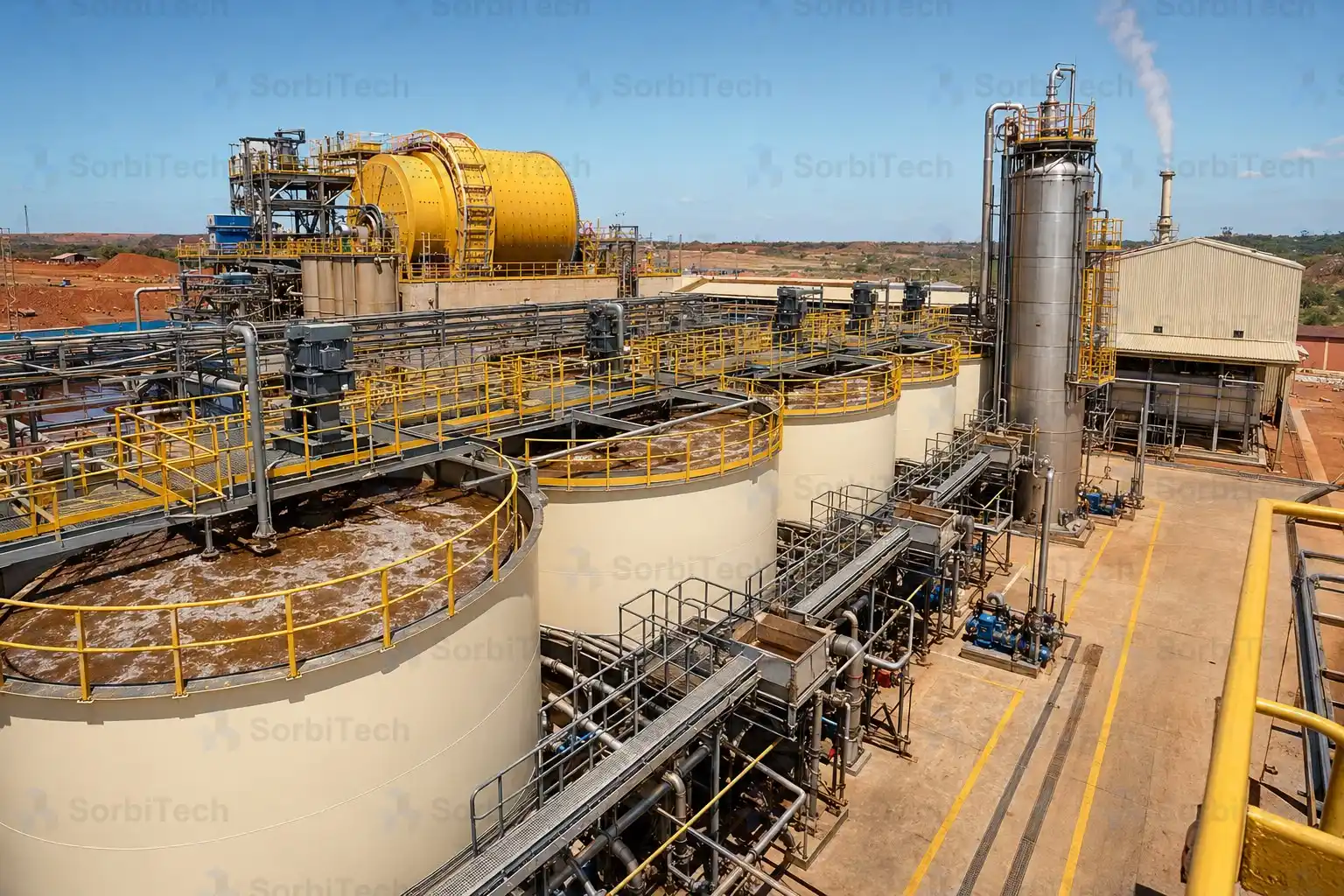
CIP CIL Gold Carbon Plant
Carbon in pulp (CIP) and carbon in leach (CIL) gold recovery plant using high activity coconut shell granular activated carbon to recover gold cyanide…
Capacity
10–200 t/h ore throughput
Equipment
CIP CIL Gold Carbon Plant
Carbon in pulp (CIP) and carbon in leach (CIL) gold recovery plant using high activity coconut shell granular activated carbon to recover gold cyanide…
Capacity
10–200 t/h ore throughput
-
05
 Equipment
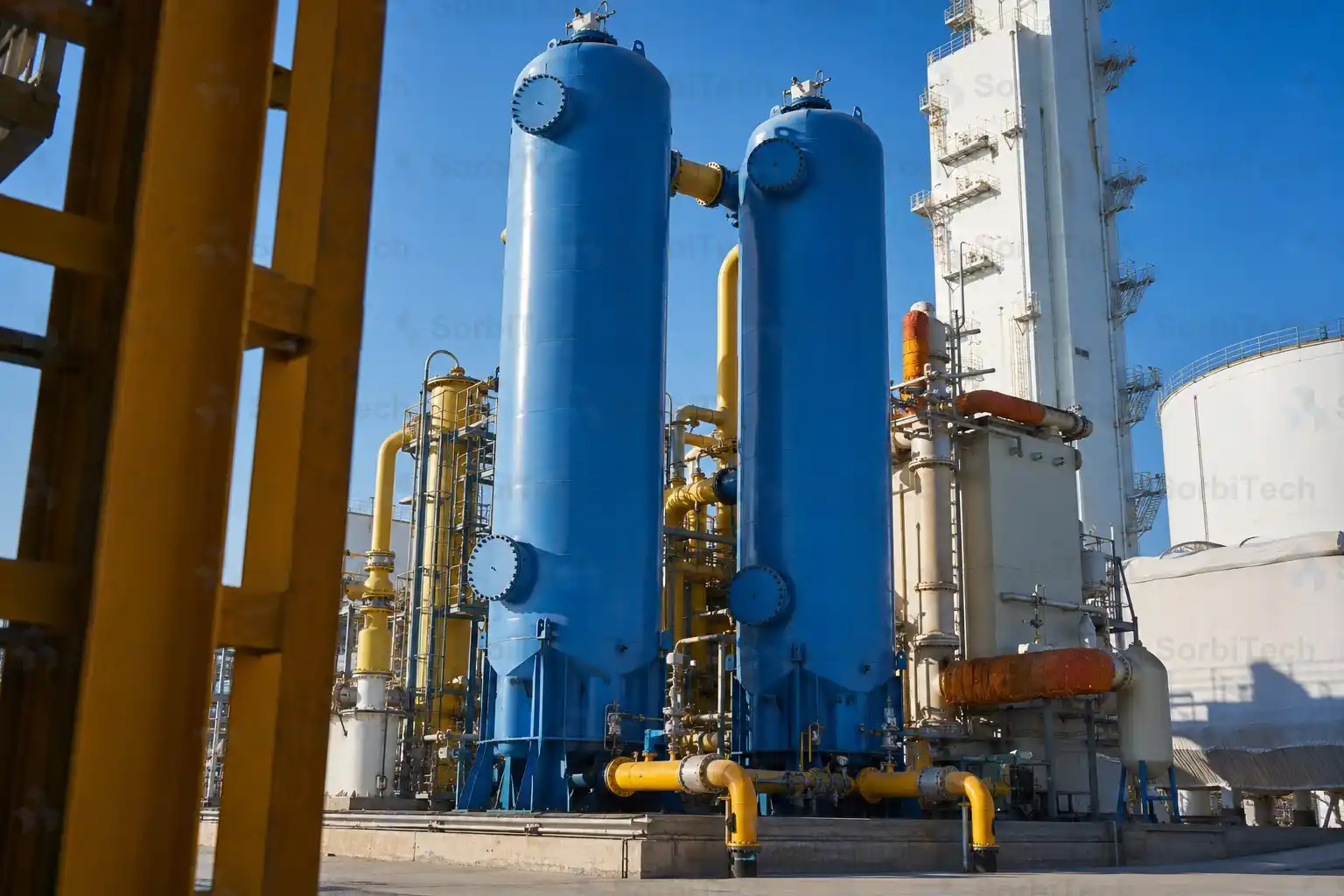
Cryogenic ASU Pre Purification Package
Front end TSA pre purification package for cryogenic air separation units removing water, carbon dioxide, and trace hydrocarbons before the cold box.
Capacity
5,000–500,000 Nm³/h air
Equipment
Cryogenic ASU Pre Purification Package
Front end TSA pre purification package for cryogenic air separation units removing water, carbon dioxide, and trace hydrocarbons before the cold box.
Capacity
5,000–500,000 Nm³/h air
-
06
 Equipment
Oxygen VPSA Package
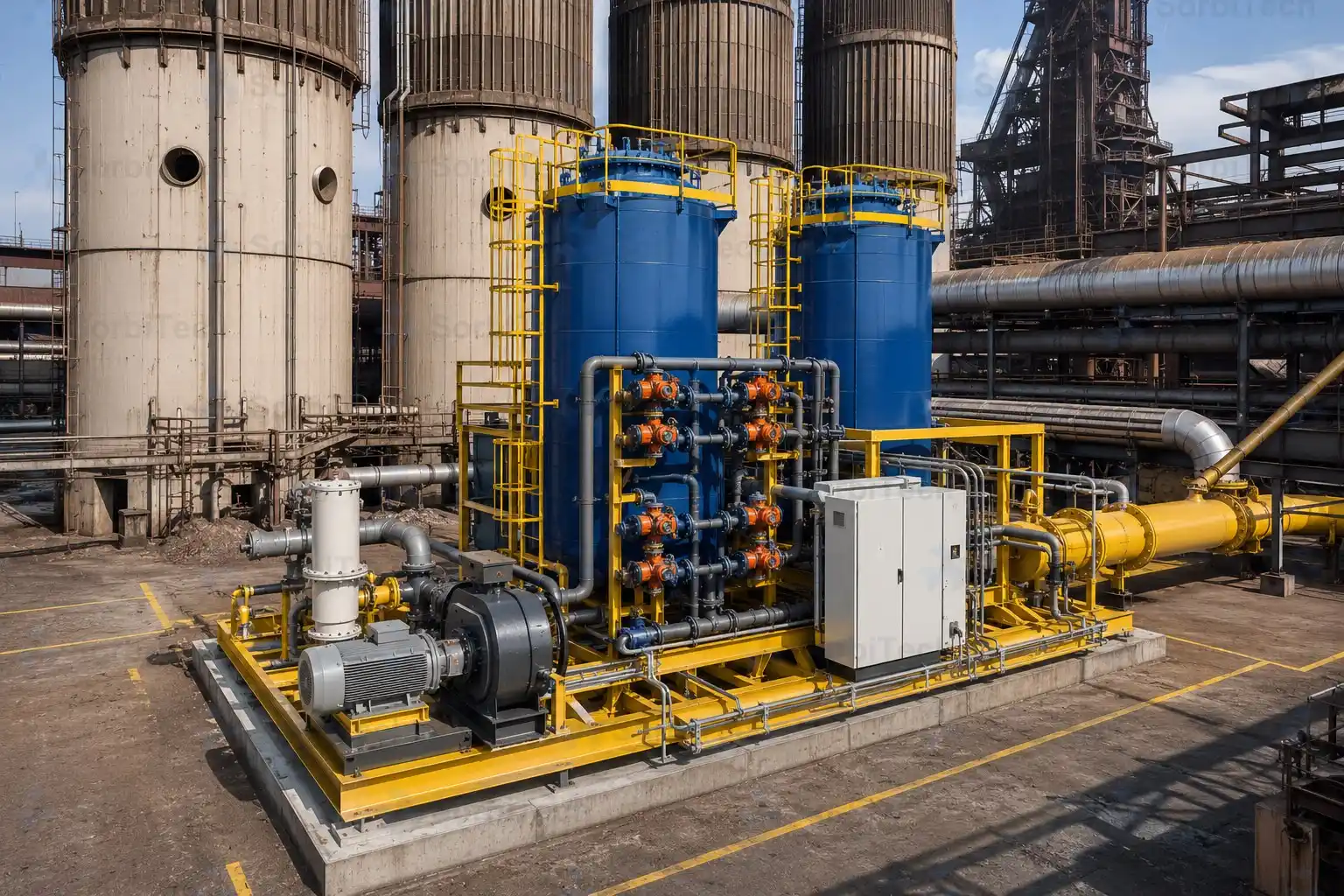
On site vacuum pressure swing adsorption (VPSA) oxygen generation package delivering 90 to 95 percent oxygen for medical, aquaculture, ozone generation, and metals applications.
Capacity
50–2,500 Nm³/h O₂ (90–95 % purity)
Equipment
Oxygen VPSA Package
On site vacuum pressure swing adsorption (VPSA) oxygen generation package delivering 90 to 95 percent oxygen for medical, aquaculture, ozone generation, and metals applications.
Capacity
50–2,500 Nm³/h O₂ (90–95 % purity)
Industries Using This Application
-
01
 Sector
Pharmaceutical & Life Sciences
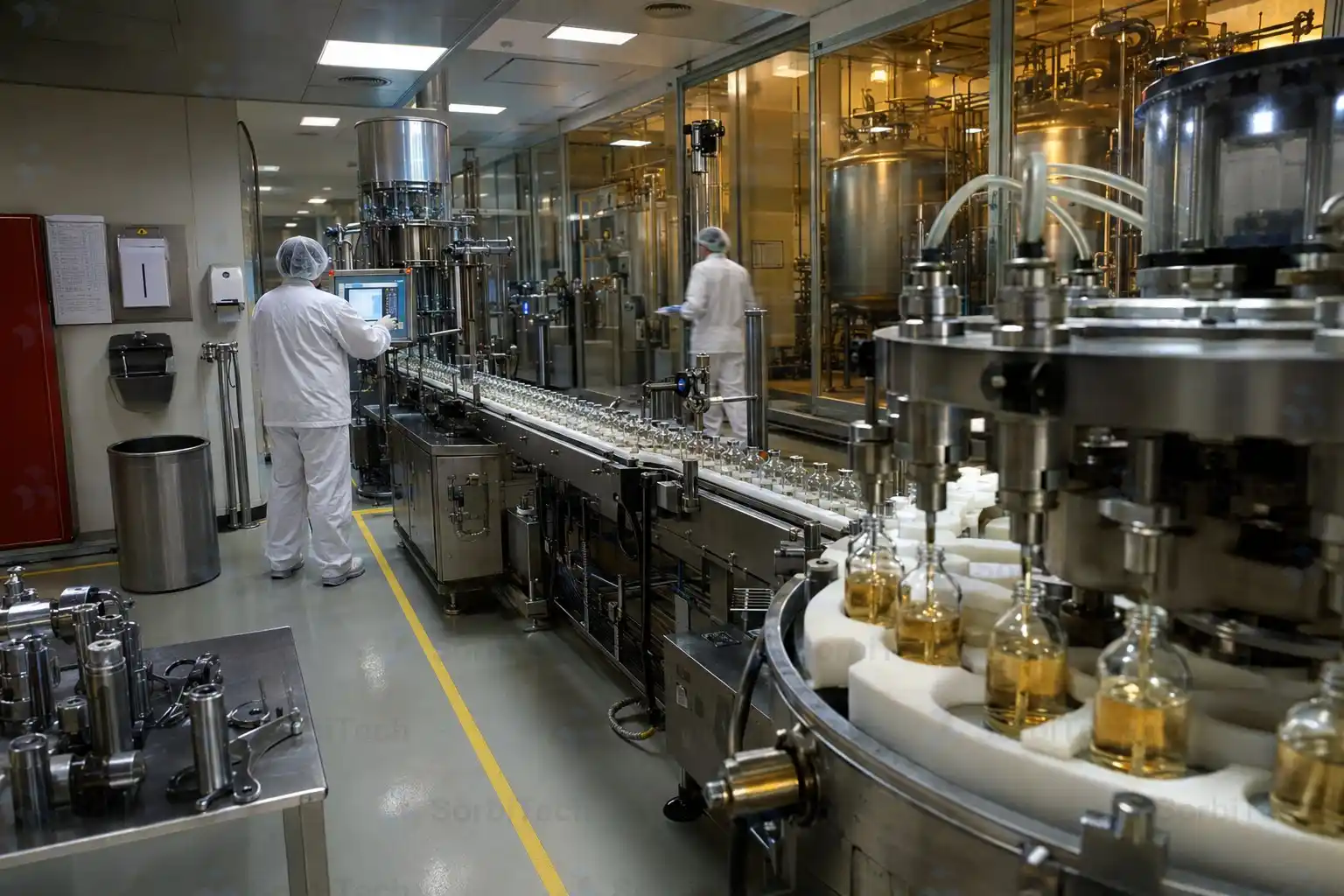
USP and EP grade adsorbent media for API purification, GMP compliant nitrogen generation, and controlled humidity packaging desiccants for the pharmaceutical sector.
Sector
Pharmaceutical & Life Sciences
USP and EP grade adsorbent media for API purification, GMP compliant nitrogen generation, and controlled humidity packaging desiccants for the pharmaceutical sector.
-
02
 Sector
Petrochemicals & Refining
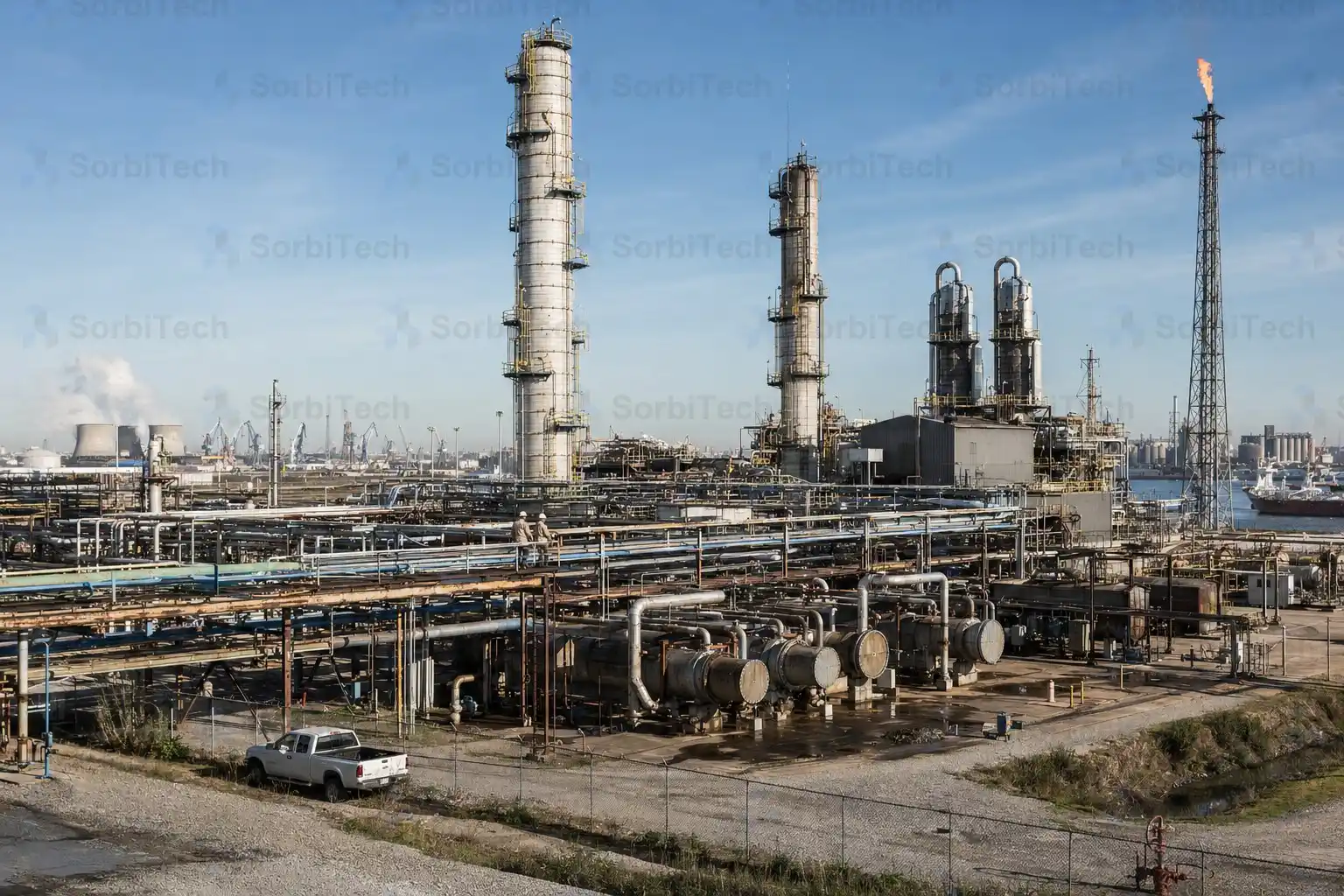
Adsorbents and separation systems for feedstock drying, process gas conditioning, solvent recovery, and refinery effluent treatment.
Sector
Petrochemicals & Refining
Adsorbents and separation systems for feedstock drying, process gas conditioning, solvent recovery, and refinery effluent treatment.
Specify a Solution for This Application
Provide your process conditions and our team will recommend the grade, configuration, and sizing.