
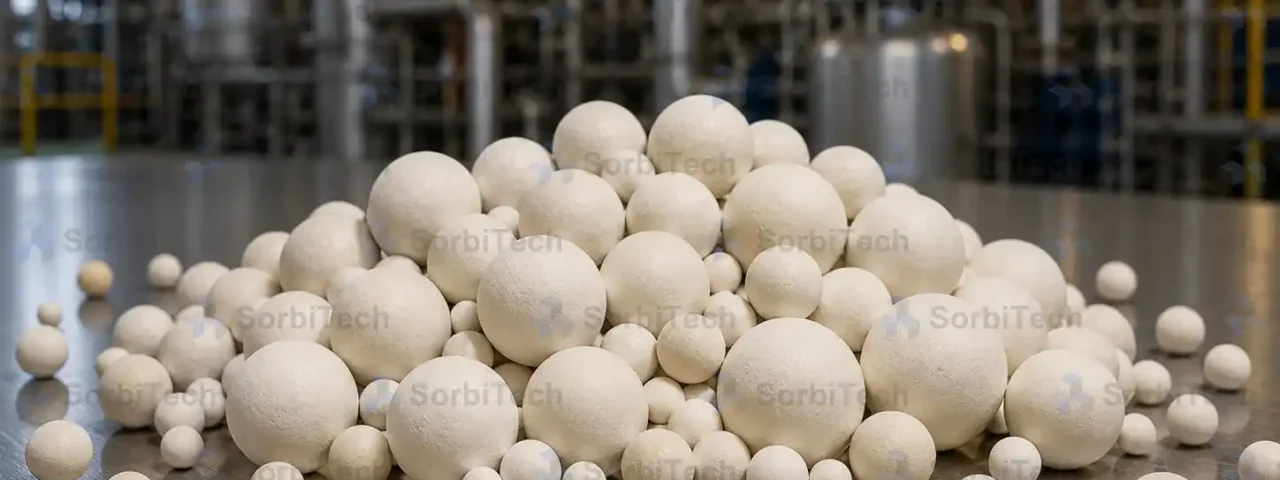
Ceramic Support Balls
Inert ceramic balls for adsorber bed support, flow distribution, and graded bed transitions.
Ceramic Support Balls are inert spheres of alumina silicate clay fired at high temperature for adsorber and catalyst bed support, flow distribution, and graded bed transitions between active layers. The balls hold the active media in place during operation, distribute the inlet flow uniformly across the bed cross section, and prevent fines migration into the downstream piping.
ISO 9001:2015
In house thermal shock and chemical resistance
SorbiTech, Middle East
COA per batch

Inert Spheres for Bed Mechanical Support
SorbiTech Ceramic Support Balls are inert alumina silicate clay spheres fired at high temperature to give a hard, dense, chemically resistant ball that holds the active adsorbent or catalyst bed in place during operation. SorbiTech manufactures the balls from 3 mm to 25 mm and to custom sizes against project specification.
The balls carry no adsorption duty themselves; their role is mechanical. They form the support layer at the bottom of the vessel above the outlet collector, the cover layer at the top of the active bed to prevent fluidisation during pressurisation, and the graded transition layers where the particle size of the active media changes through the bed.
Graded Bed Layering
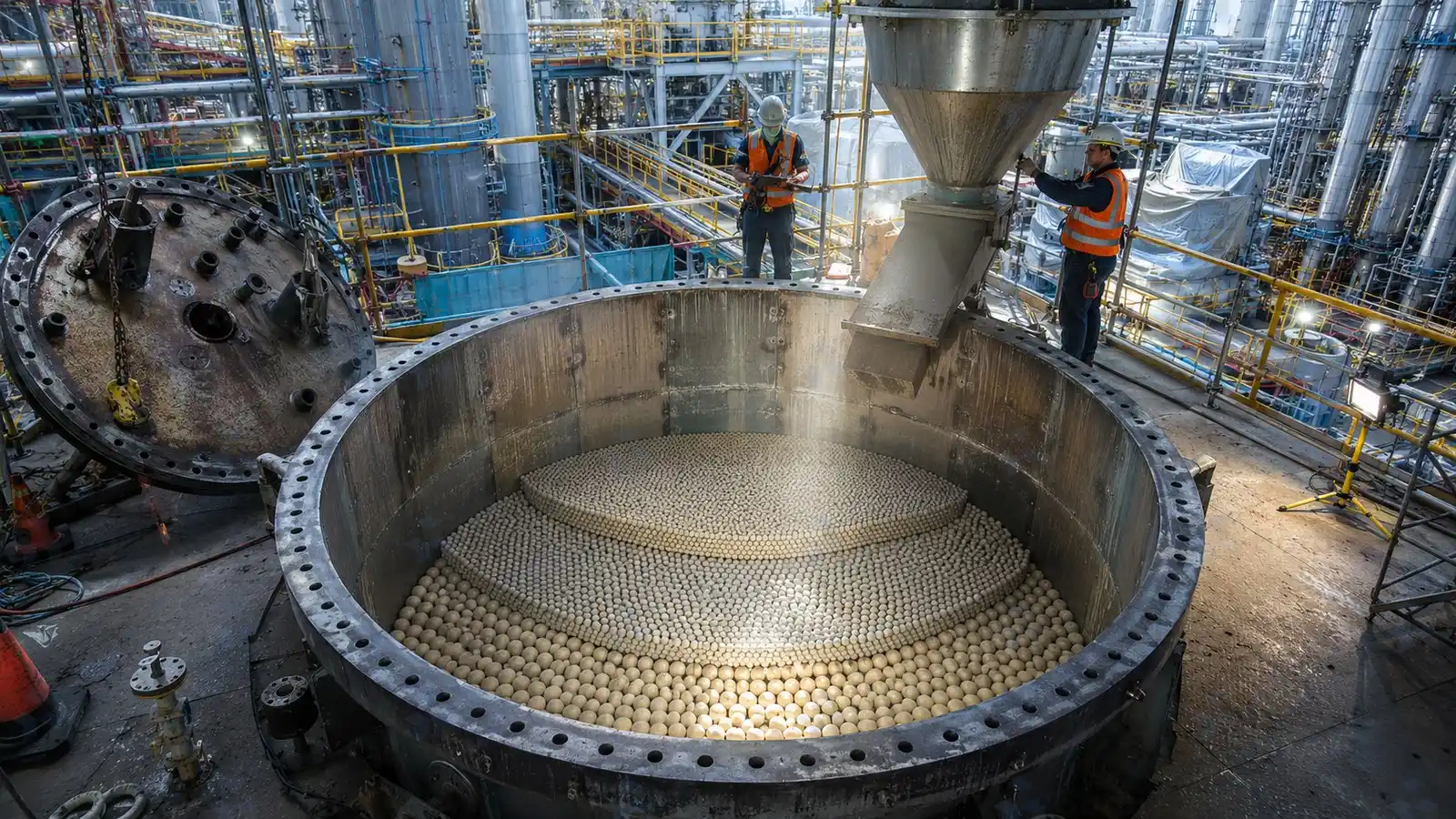
A correctly designed graded bed places larger balls at the very bottom and the very top, with stepped layers of progressively smaller balls between the support and the active media. The graded transition prevents fines migration from the active media into the support, holds the active media in place under upset flow, and distributes the inlet flow across the bed cross section.
SorbiTech specifies the graded bed for every adsorber or catalyst vessel it delivers, with the SorbiTech Ceramic Support Balls charged in sequence during commissioning under the supervision of the SorbiTech commissioning engineer.
Thermal Shock and Chemical Resistance
Adsorber regeneration cycles the bed between adsorption temperature and 200 to 320 °C several thousand times over the campaign life. The SorbiTech ceramic ball is fired at temperatures above the regeneration peak to give a vitrified body that does not crack under the thermal cycling and does not react with the hot regeneration purge.
Chemical resistance covers the typical adsorption duty range: hydrocarbons, water, methanol, carbon dioxide, hydrogen sulphide, mercaptans, and dilute acid or caustic during defluoridation regeneration. For aggressive duty such as concentrated caustic, the SorbiTech inert alumina balls are specified instead.
Sizing and Bed Geometry
- Top cover layer: 25 mm balls, 100 to 200 mm depth
- Top transition: 13 mm balls, 50 to 100 mm depth
- Bottom transition: 6 mm balls, 50 to 100 mm depth
- Bottom support: 3 to 13 mm balls graded over the outlet collector
- Total support depth: typically 5 to 10 percent of the active bed depth
Forms and Supply
Supplied in graded sets to the vessel specification by SorbiTech, with a certificate of analysis per batch covering ball size, bulk density, and crush strength. Standard packaging is 25 kg drums or 500 kg big bags. Available as a standalone support charge or included in a complete SorbiTech adsorber loading. SorbiTech supplies graded ceramic support sets matched to the host vessel; see the higher purity inert alumina balls for aggressive duty, the parent support media family, and applications under the oil & gas sector.
Process Applications
-
01
 Process Duty
Catalyst Bed Support and Grading
Inert ceramic and high purity alumina support balls in graded sets for catalyst and adsorbent bed support, flow distribution, and thermal mass in refinery,…
Process Duty
Catalyst Bed Support and Grading
Inert ceramic and high purity alumina support balls in graded sets for catalyst and adsorbent bed support, flow distribution, and thermal mass in refinery,…
-
02
 Process Duty
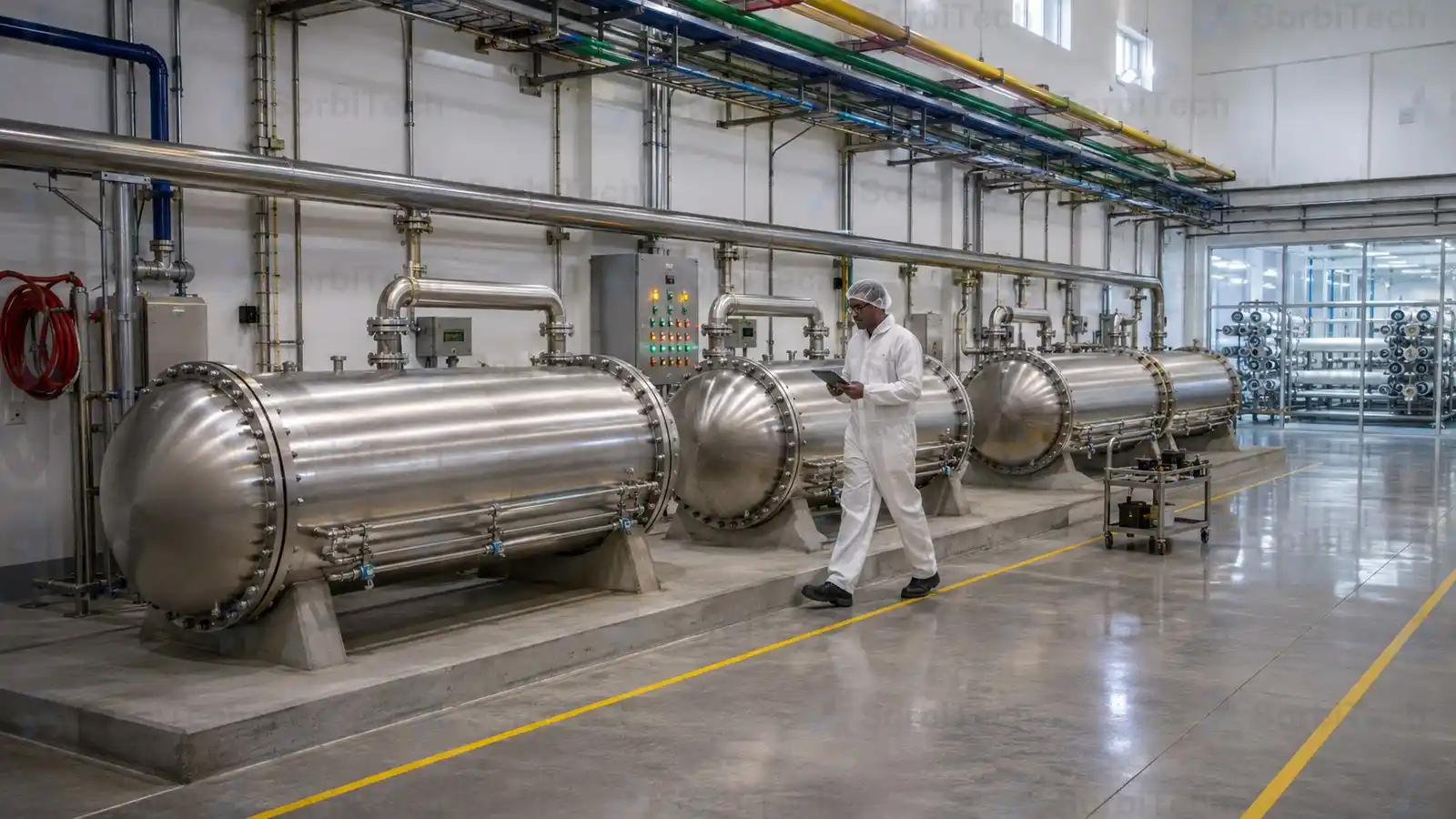
Dechlorination of Process Water
Granular activated carbon dechlorination of municipal supply water ahead of reverse osmosis, ion exchange, or chemical processing to protect downstream equipment from oxidative damage.
Process Duty
Dechlorination of Process Water
Granular activated carbon dechlorination of municipal supply water ahead of reverse osmosis, ion exchange, or chemical processing to protect downstream equipment from oxidative damage.
-
03
 Process Duty
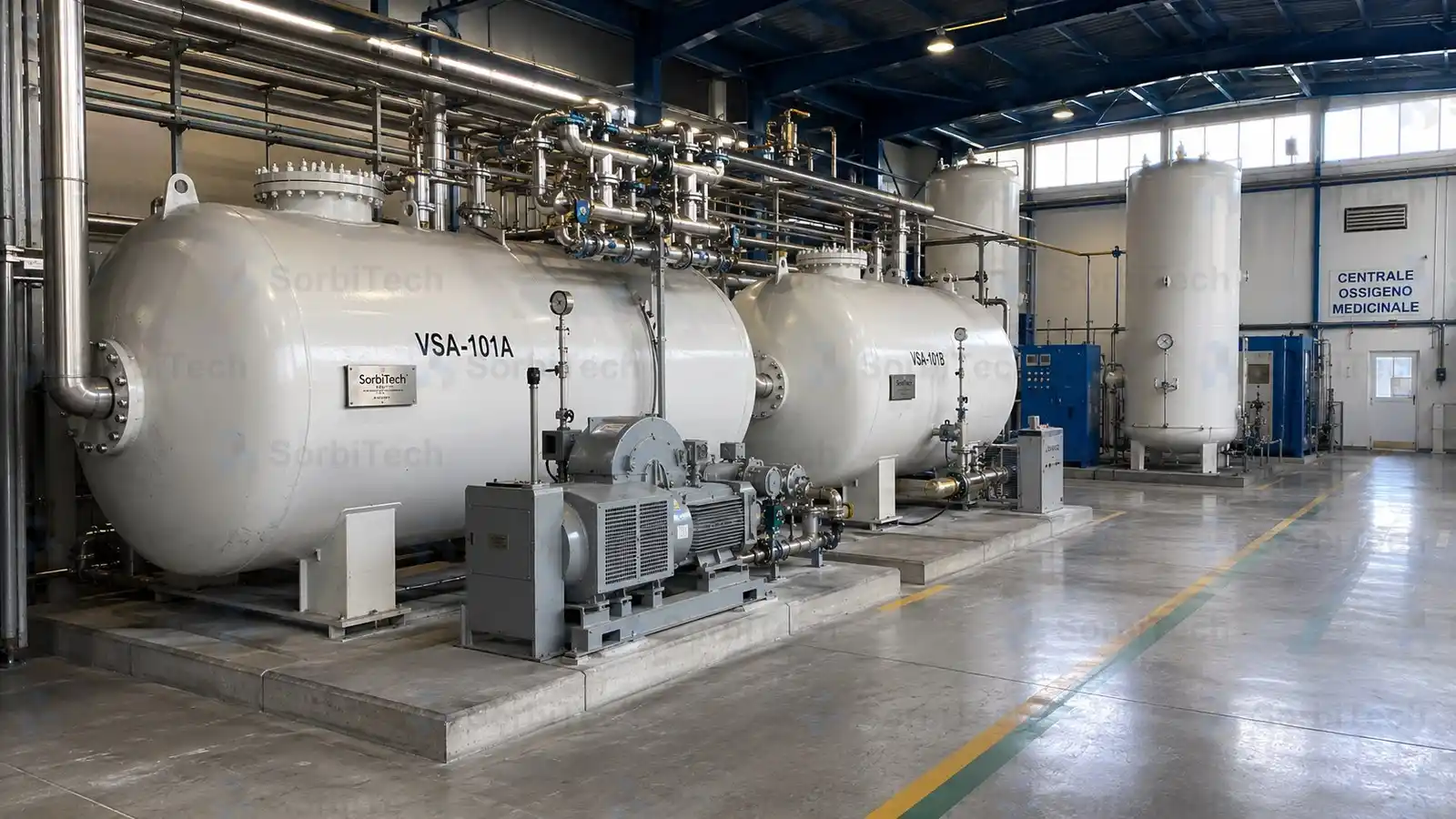
Oxygen Generation (PSA / VSA)
On site oxygen generation by pressure swing or vacuum pressure swing adsorption using lithium exchanged X zeolite for medical, aquaculture, ozone, and metals applications.
Process Duty
Oxygen Generation (PSA / VSA)
On site oxygen generation by pressure swing or vacuum pressure swing adsorption using lithium exchanged X zeolite for medical, aquaculture, ozone, and metals applications.
Compatible Systems
-
01
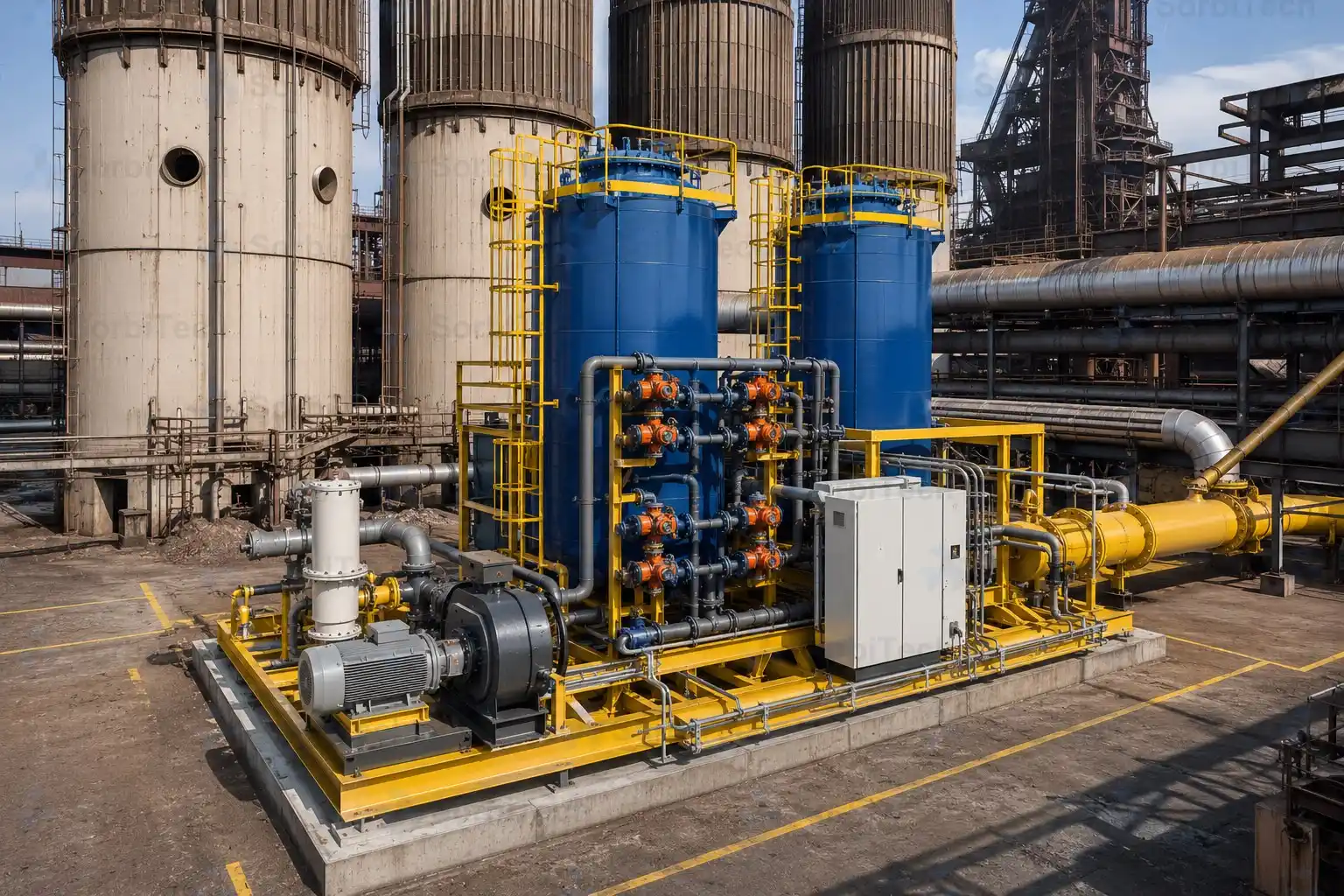 Equipment
Oxygen VPSA Package
On site vacuum pressure swing adsorption (VPSA) oxygen generation package delivering 90 to 95 percent oxygen for medical, aquaculture, ozone generation, and metals applications.
Capacity
50–2,500 Nm³/h O₂ (90–95 % purity)
Equipment
Oxygen VPSA Package
On site vacuum pressure swing adsorption (VPSA) oxygen generation package delivering 90 to 95 percent oxygen for medical, aquaculture, ozone generation, and metals applications.
Capacity
50–2,500 Nm³/h O₂ (90–95 % purity)
-
02
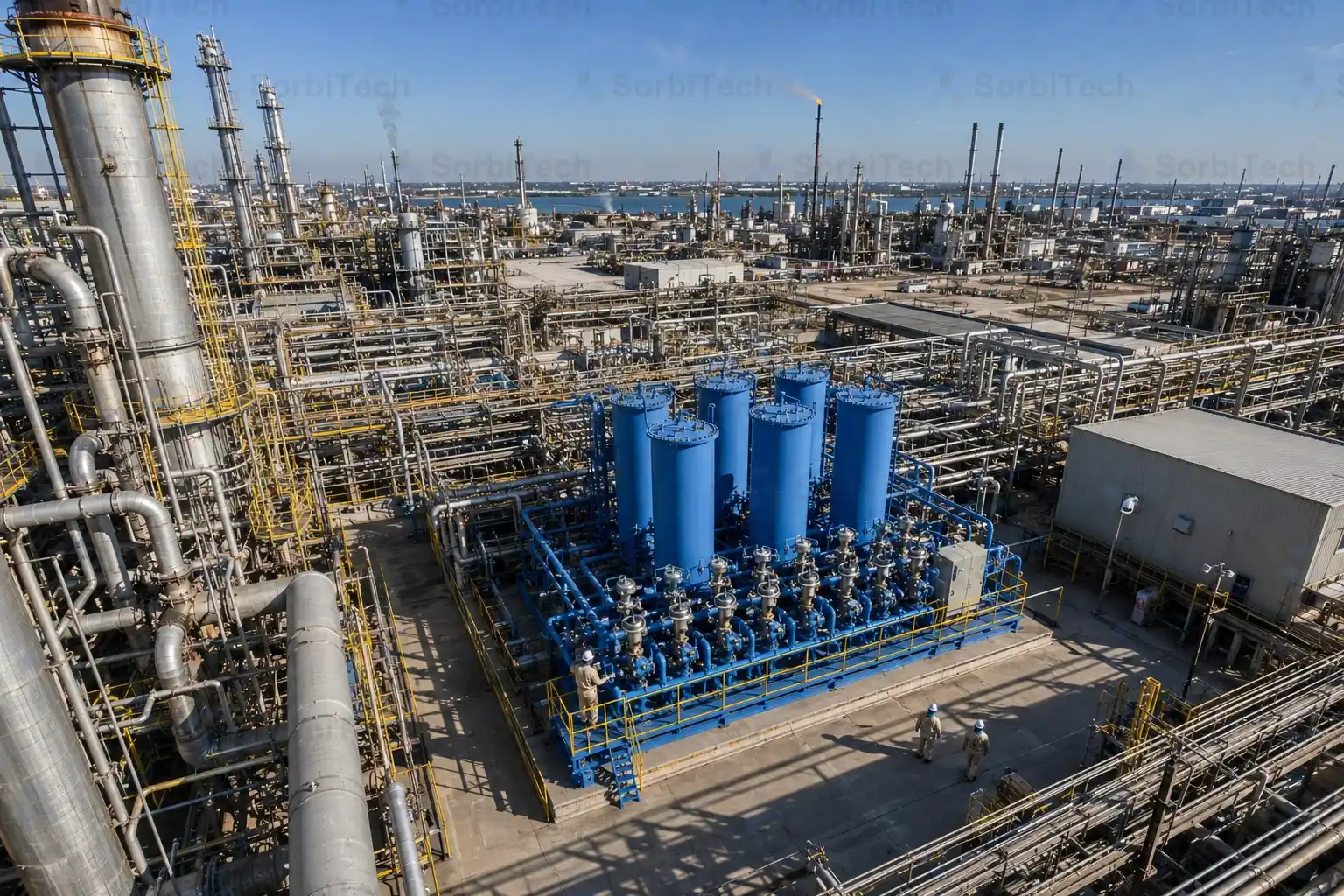 Equipment
Hydrogen PSA Purification Package
On site hydrogen PSA package using a layered adsorbent bed for high purity hydrogen recovery from steam methane reformer off gas or electrolyser product.
Capacity
50–50,000 Nm³/h H₂
Equipment
Hydrogen PSA Purification Package
On site hydrogen PSA package using a layered adsorbent bed for high purity hydrogen recovery from steam methane reformer off gas or electrolyser product.
Capacity
50–50,000 Nm³/h H₂
-
03
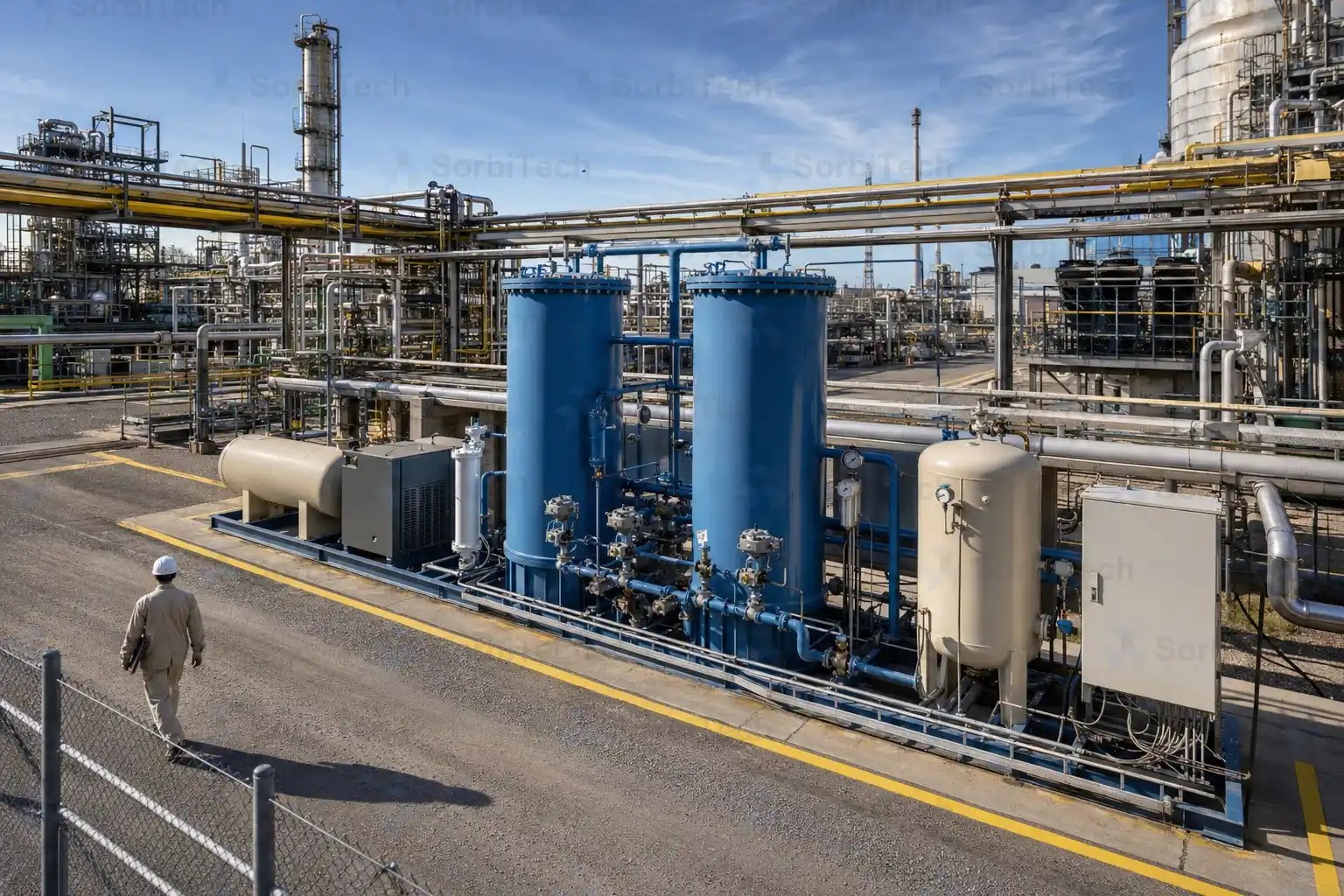 Equipment
PSA Nitrogen Generation Package
On site pressure swing adsorption nitrogen generator using carbon molecular sieve. It delivers nitrogen at 95 to 99.999 percent purity for blanketing, purging, and…
Capacity
5–5,000 Nm³/h N₂
Equipment
PSA Nitrogen Generation Package
On site pressure swing adsorption nitrogen generator using carbon molecular sieve. It delivers nitrogen at 95 to 99.999 percent purity for blanketing, purging, and…
Capacity
5–5,000 Nm³/h N₂
Request a Quote or Technical Consultation
Our technical team responds within one business day.