
PSA Nitrogen Generation Package
On site pressure swing adsorption nitrogen generator using carbon molecular sieve. It delivers nitrogen at 95 to 99.999 percent purity for blanketing, purging, and inerting, with no dependence on delivered gas.
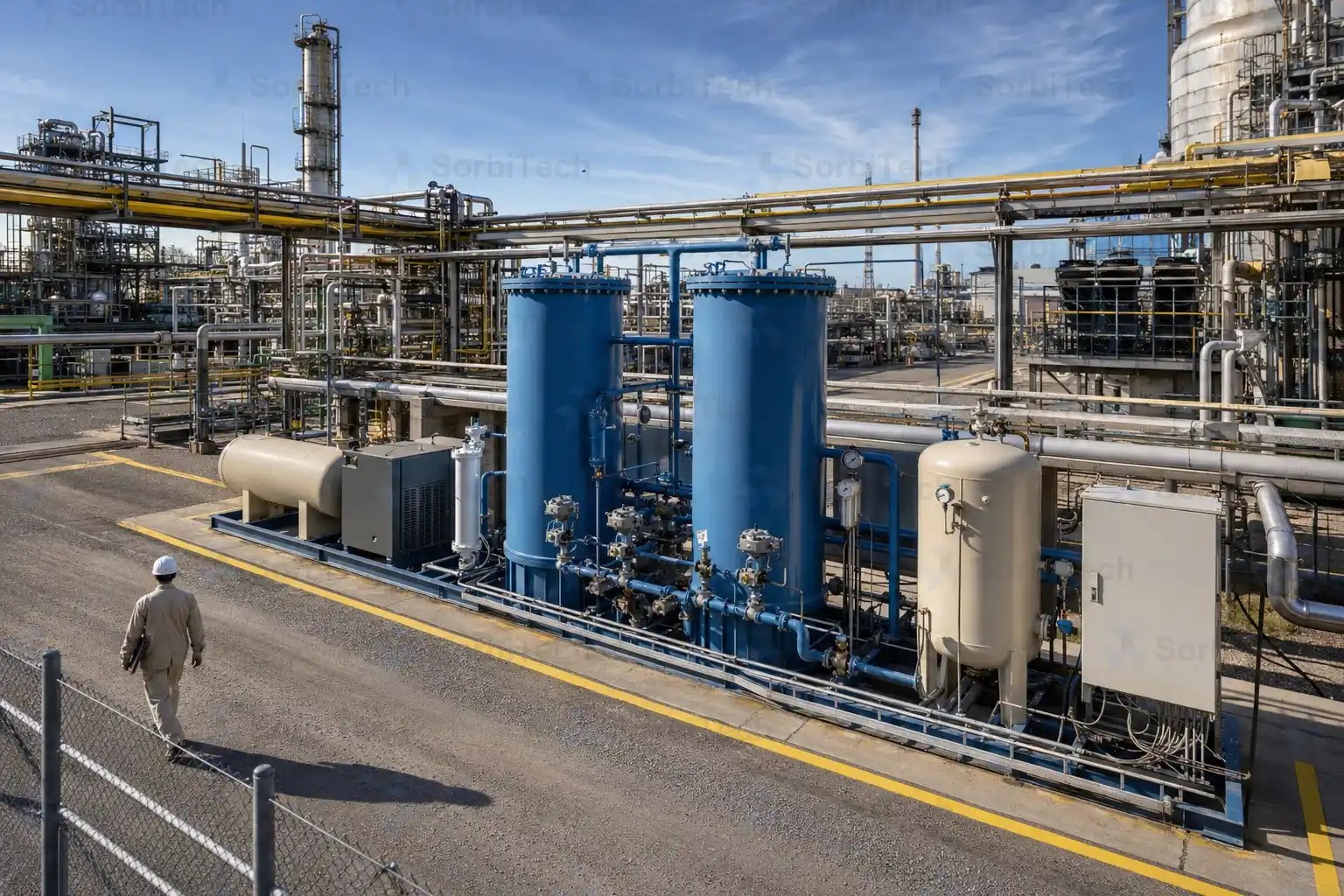
A PSA Nitrogen Generation Package separates nitrogen from compressed air using carbon molecular sieve in twin adsorber vessels. Oxygen is held on the sieve under pressure while nitrogen passes through, delivering on site nitrogen at 95 to 99.999 percent purity for blanketing, purging, and inerting. This removes the cost and logistics of delivered gas.
On Site Nitrogen by Pressure Swing
The SorbiTech PSA Nitrogen Generation Package produces nitrogen from compressed air on a pressure swing adsorption cycle. Twin carbon molecular sieve adsorbers run out of phase: one vessel adsorbs oxygen under pressure while nitrogen passes through to a buffer tank, the other vessel regenerates by depressurising to vent the captured oxygen. The cycle repeats every 60 to 120 seconds, giving a continuous flow at the purity the duty requires.
The package is delivered as a skid mounted unit with the compressor, the adsorbers, the buffer tank, and the controls integrated and pre commissioned by SorbiTech, ready to start producing nitrogen within hours of arrival on site.
Carbon Molecular Sieve and Kinetic Selectivity
Carbon molecular sieve separates oxygen and nitrogen by a difference in diffusion rate, not by a difference in equilibrium loading. The CMS pores are tuned so that oxygen, with a slightly smaller kinetic diameter, enters the pore network faster. Under the typical adsorption time of 60 seconds, oxygen is captured while most of the nitrogen passes through.
SorbiTech supplies the CMS for the SorbiTech package, with grade selection matched to the contracted purity and recovery. Adsorption pressure (7 to 10 barg), cycle time, and bed depth are tuned together to keep the kinetic separation factor above the value required.
Air Conditioning Front End
The CMS is intolerant of liquid water, oil, and particulate. The front end therefore includes refrigerated or membrane drying of the feed air to a pressure dew point of 3 °C or lower, a coalescing filter for liquid water and oil, and a particulate filter ahead of the adsorber inlet. Feed air is delivered at ISO 8573 class 1.4.1 or better.
A breach of any of those specifications shortens the CMS life. A correctly conditioned feed gives CMS service of seven to ten years before noticeable purity drift.
Selecting Purity, Flow, and Recovery
Three variables set the package size and the operating cost: contracted purity, peak flow, and nitrogen recovery from the feed air.
- Purity 95 to 99 percent: high recovery (40 to 50 percent), smaller CMS charge
- Purity 99.5 to 99.9 percent: moderate recovery (30 to 40 percent)
- Purity 99.999 percent: lower recovery (15 to 25 percent), deoxo polishing step required
A purity above what the duty needs forces a larger compressor and a larger sieve charge than required. SorbiTech sizes the package to the actual purity demanded by the downstream consumer, with a margin of 0.1 percent on the contract value.
Energy and Compressed Air Demand
Specific air consumption rises with purity: 2.5 to 3.5 Nm³ of air per Nm³ of nitrogen at 99 percent, 4 to 5 at 99.5 percent, and 7 to 10 at 99.999 percent. The compressor electrical load follows directly. SorbiTech matches the demand profile to the compressor turn down and to a buffer tank that absorbs short peaks without driving up the average load.
For a 24/7 consumer with stable demand, a single screw compressor with frequency drive runs at near constant load and gives the lowest specific electricity. For an intermittent demand, two parallel compressors with lead/lag control beat a single large machine.
Where It Is Used
Tank blanketing, vessel and pipeline purging, food and beverage packaging, laser cutting cover gas, electronics assembly, and inert atmospheres for thermal treatment. The duty is described under PSA nitrogen generation, and the sector treatment under industrial gas and air separation.
Maintenance Schedule and Sieve Changeout
Routine maintenance is filter changes every 4,000 hours, oil and coolant on the compressor at manufacturer interval, and a calibration check on the oxygen analyser every 12 months. The SorbiTech CMS is unloaded and replaced at seven to ten years, depending on feed air quality and on the cycle severity.
A planned changeout takes 48 to 72 hours per vessel with the package shut down. SorbiTech supplies the replacement CMS, the loading service, and the post changeout performance test on a contracted call out for sites that need to minimise downtime.
Lifecycle Economics Versus Delivered Gas
A SorbiTech on site PSA replaces delivered liquid nitrogen and cylinder gas with a capital plus electricity cost. For continuous demand above 50 Nm³/h, payback is typically under 24 months and lifetime cost of nitrogen falls by 50 to 70 percent. The package is delivered turnkey by SorbiTech with a single performance guarantee covering the CMS, the equipment, and the contracted purity, and a rental option is available for commissioning or bridging supply. SorbiTech delivers the PSA nitrogen package across the industrial gas sector for on site nitrogen generation, charged with the CMS N₂ grade.
Engineered Scope
Project References
Applications This System Serves
-
01
 Process Duty
Oxygen Generation (PSA / VSA)
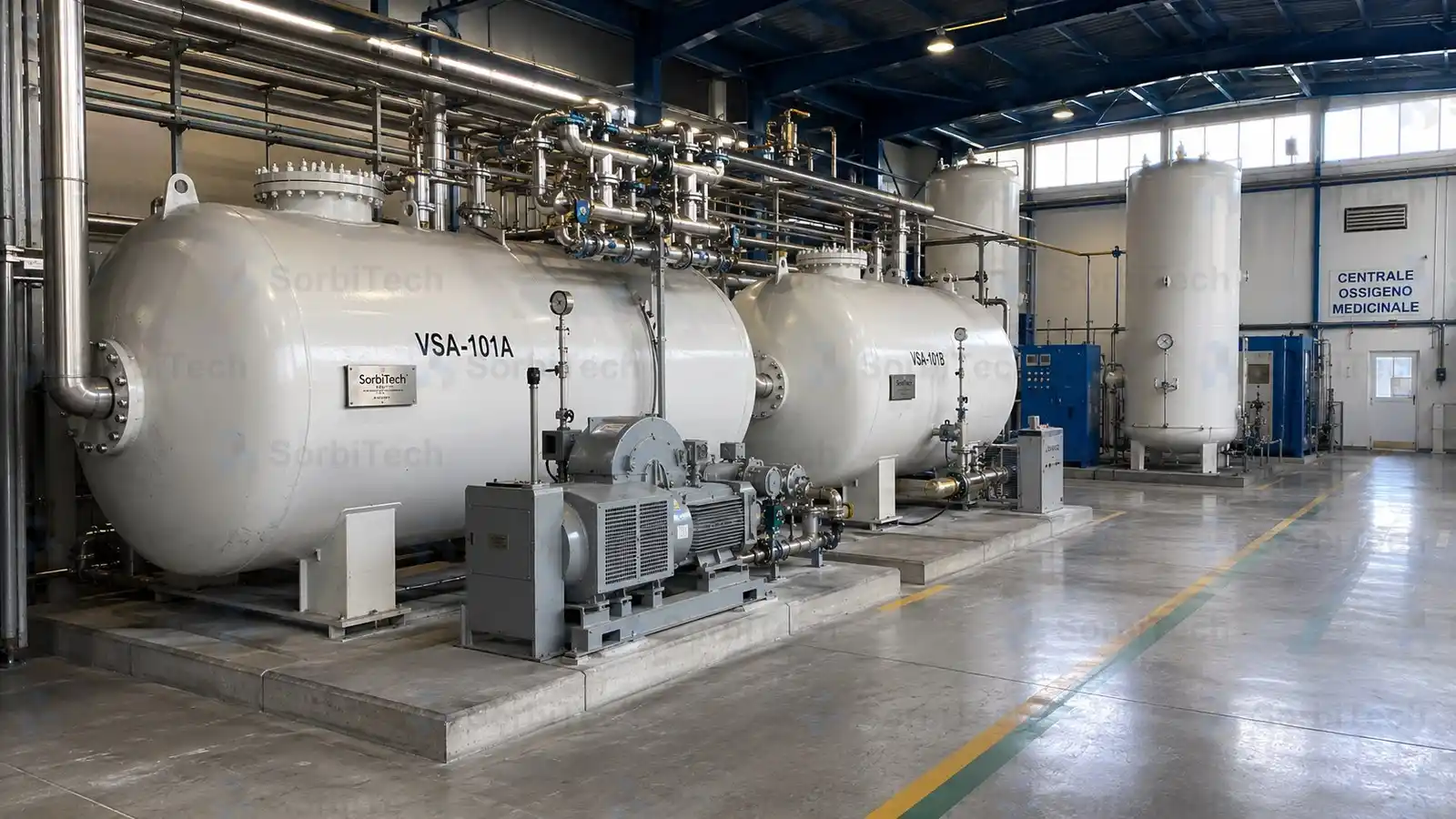
On site oxygen generation by pressure swing or vacuum pressure swing adsorption using lithium exchanged X zeolite for medical, aquaculture, ozone, and metals applications.
Process Duty
Oxygen Generation (PSA / VSA)
On site oxygen generation by pressure swing or vacuum pressure swing adsorption using lithium exchanged X zeolite for medical, aquaculture, ozone, and metals applications.
-
02
 Process Duty
Catalyst Bed Support and Grading
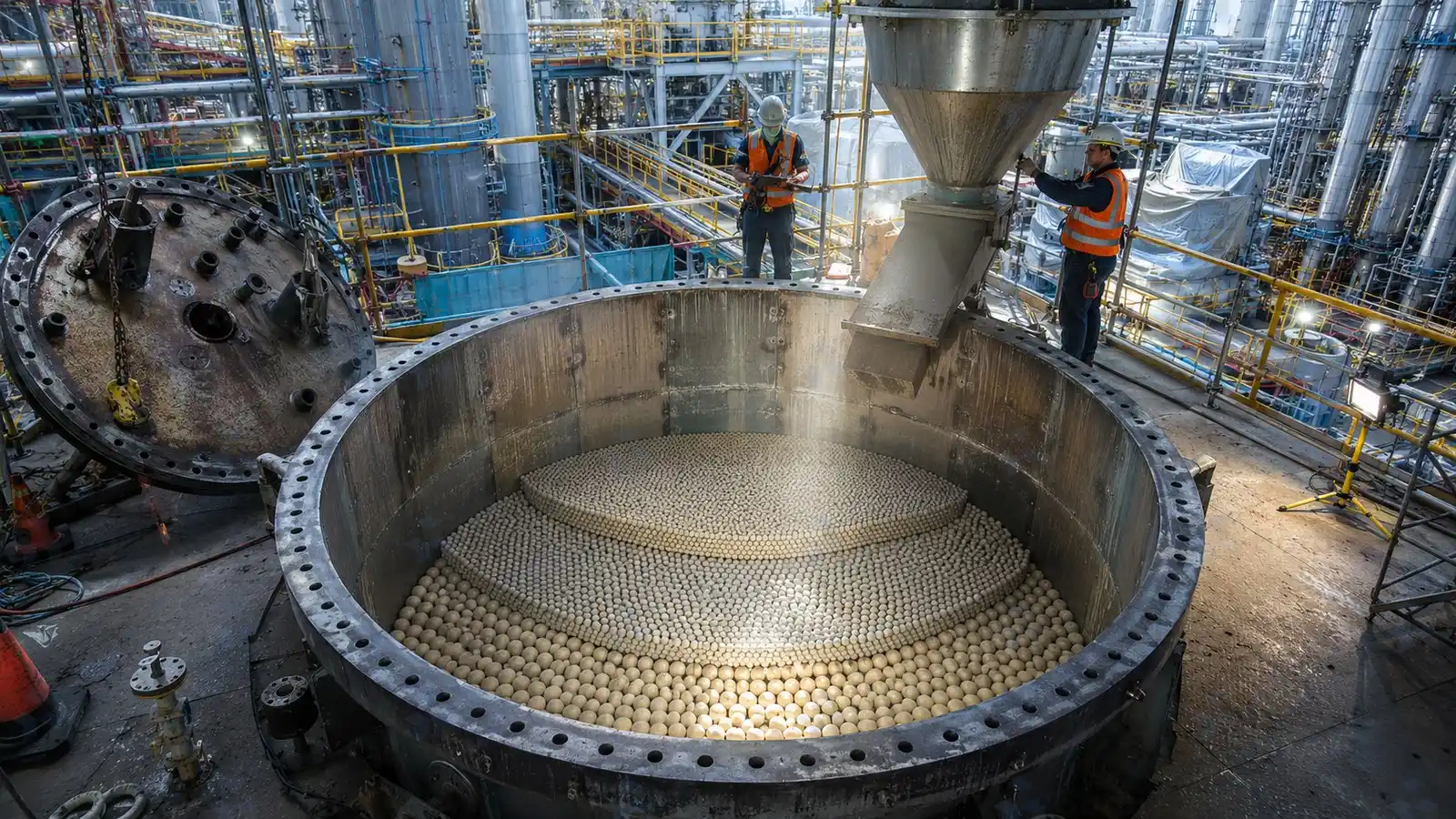
Inert ceramic and high purity alumina support balls in graded sets for catalyst and adsorbent bed support, flow distribution, and thermal mass in refinery,…
Process Duty
Catalyst Bed Support and Grading
Inert ceramic and high purity alumina support balls in graded sets for catalyst and adsorbent bed support, flow distribution, and thermal mass in refinery,…
-
03
 Process Duty
Beverage Carbon Dioxide Purification
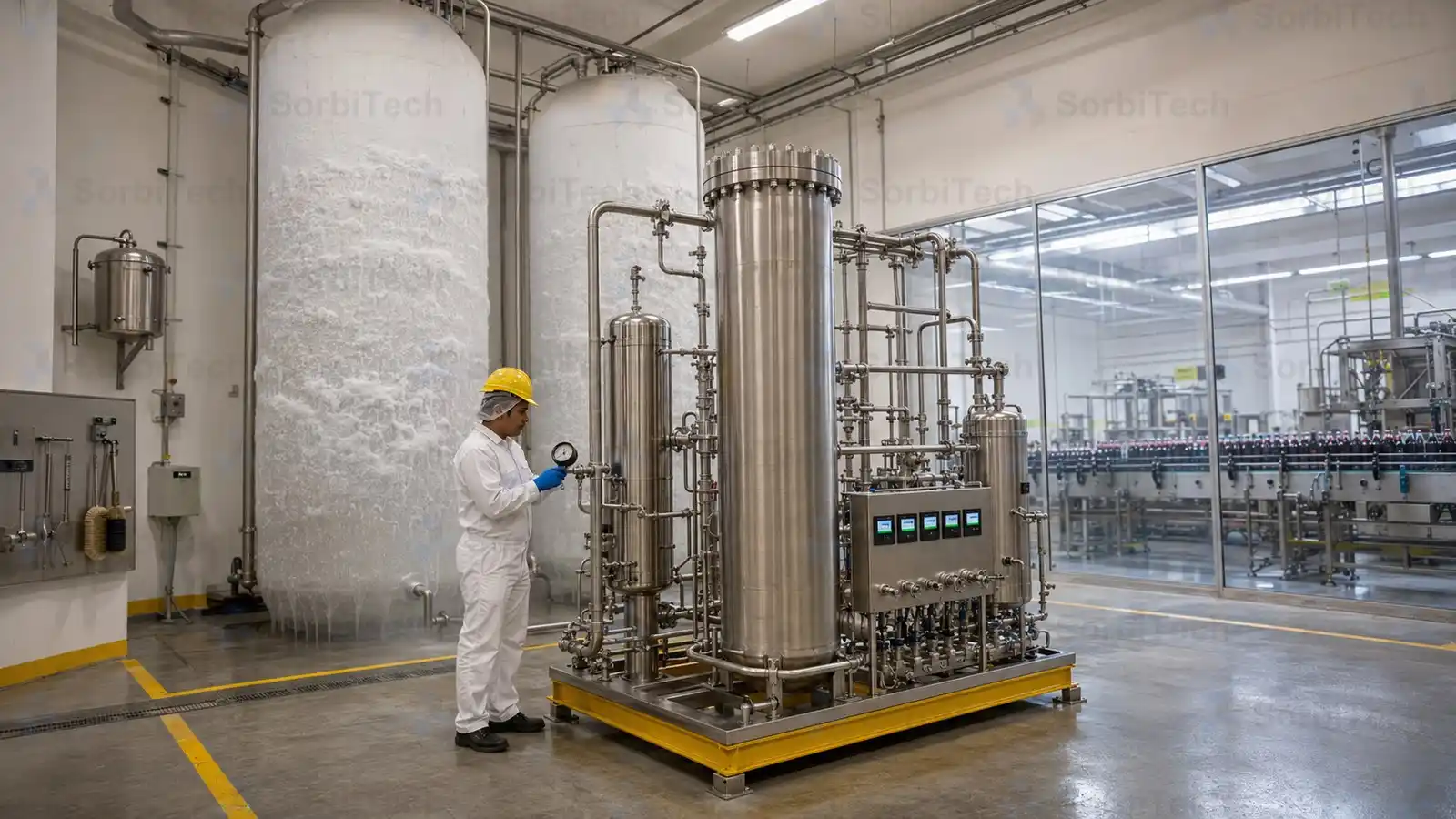
Pellet activated carbon guard bed for beverage grade carbon dioxide purification meeting ISBT (International Society of Beverage Technologists) specifications for carbonated soft drinks, beer,…
Process Duty
Beverage Carbon Dioxide Purification
Pellet activated carbon guard bed for beverage grade carbon dioxide purification meeting ISBT (International Society of Beverage Technologists) specifications for carbonated soft drinks, beer,…
-
04
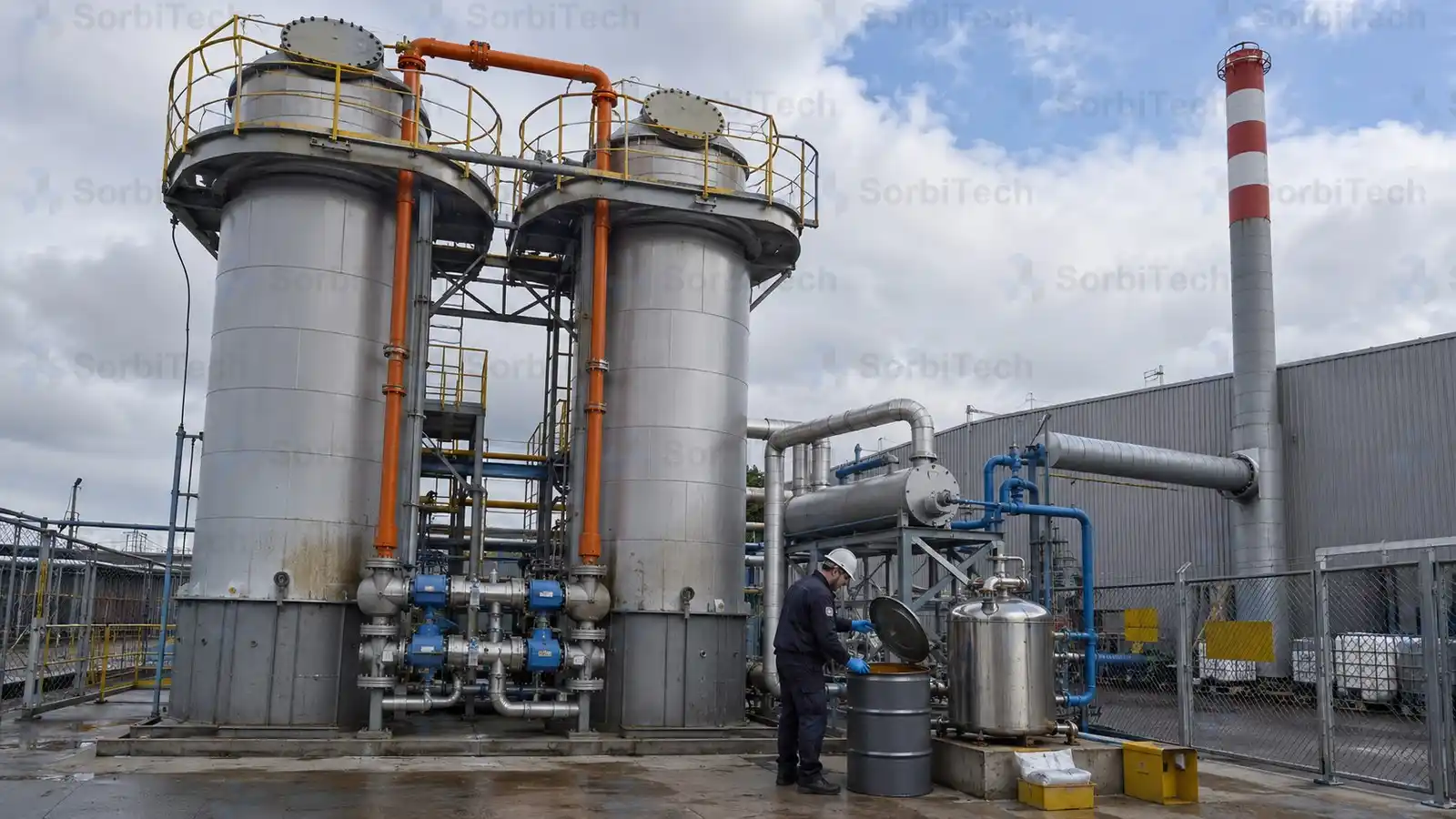 Process Duty
Solvent Vapor Recovery
Solvent vapor recovery using twin tower pellet activated carbon adsorbers with steam or vacuum regeneration to capture and recover volatile organic solvents from process…
Process Duty
Solvent Vapor Recovery
Solvent vapor recovery using twin tower pellet activated carbon adsorbers with steam or vacuum regeneration to capture and recover volatile organic solvents from process…
-
05
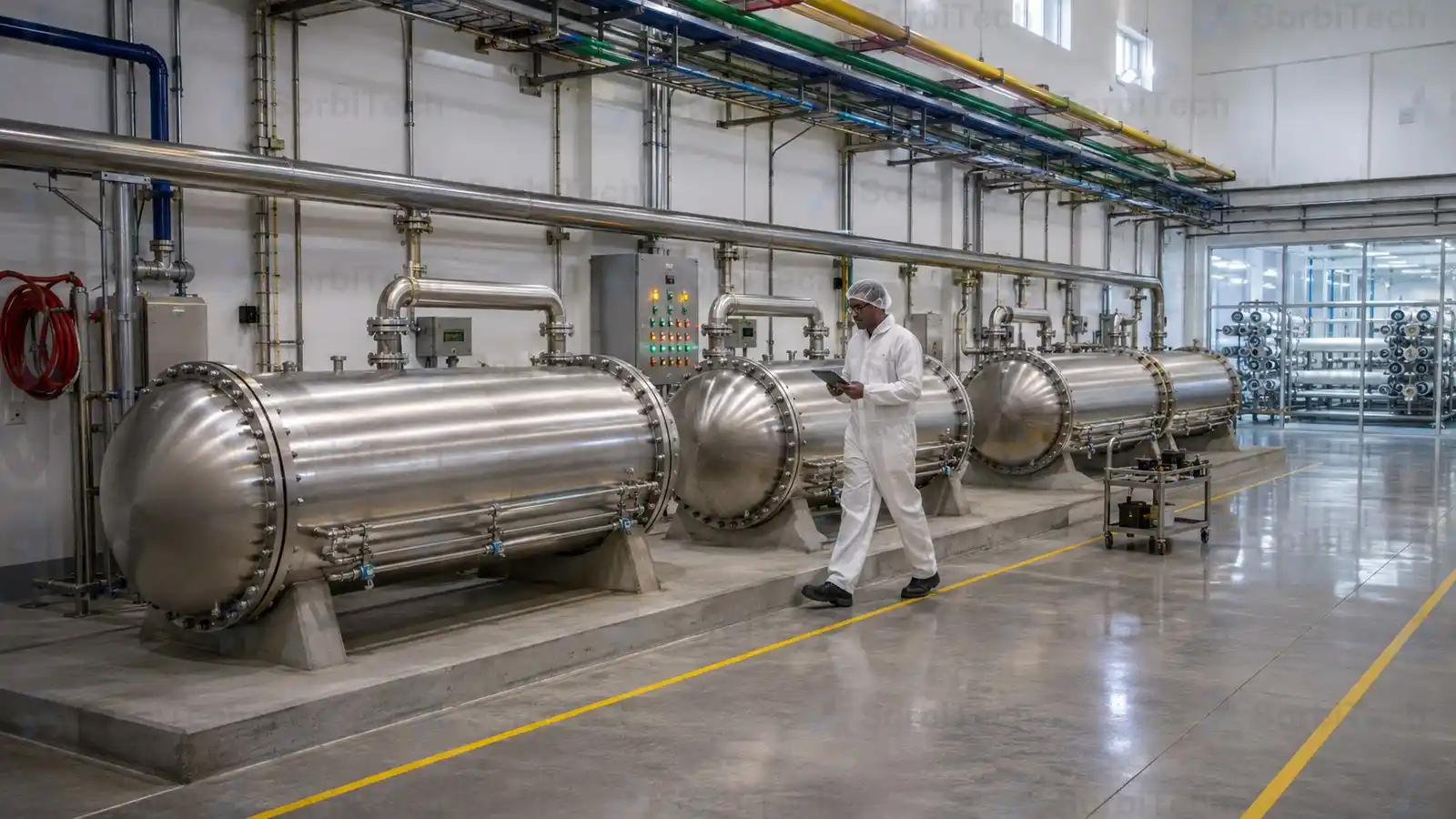 Process Duty
Dechlorination of Process Water
Granular activated carbon dechlorination of municipal supply water ahead of reverse osmosis, ion exchange, or chemical processing to protect downstream equipment from oxidative damage.
Process Duty
Dechlorination of Process Water
Granular activated carbon dechlorination of municipal supply water ahead of reverse osmosis, ion exchange, or chemical processing to protect downstream equipment from oxidative damage.
-
06
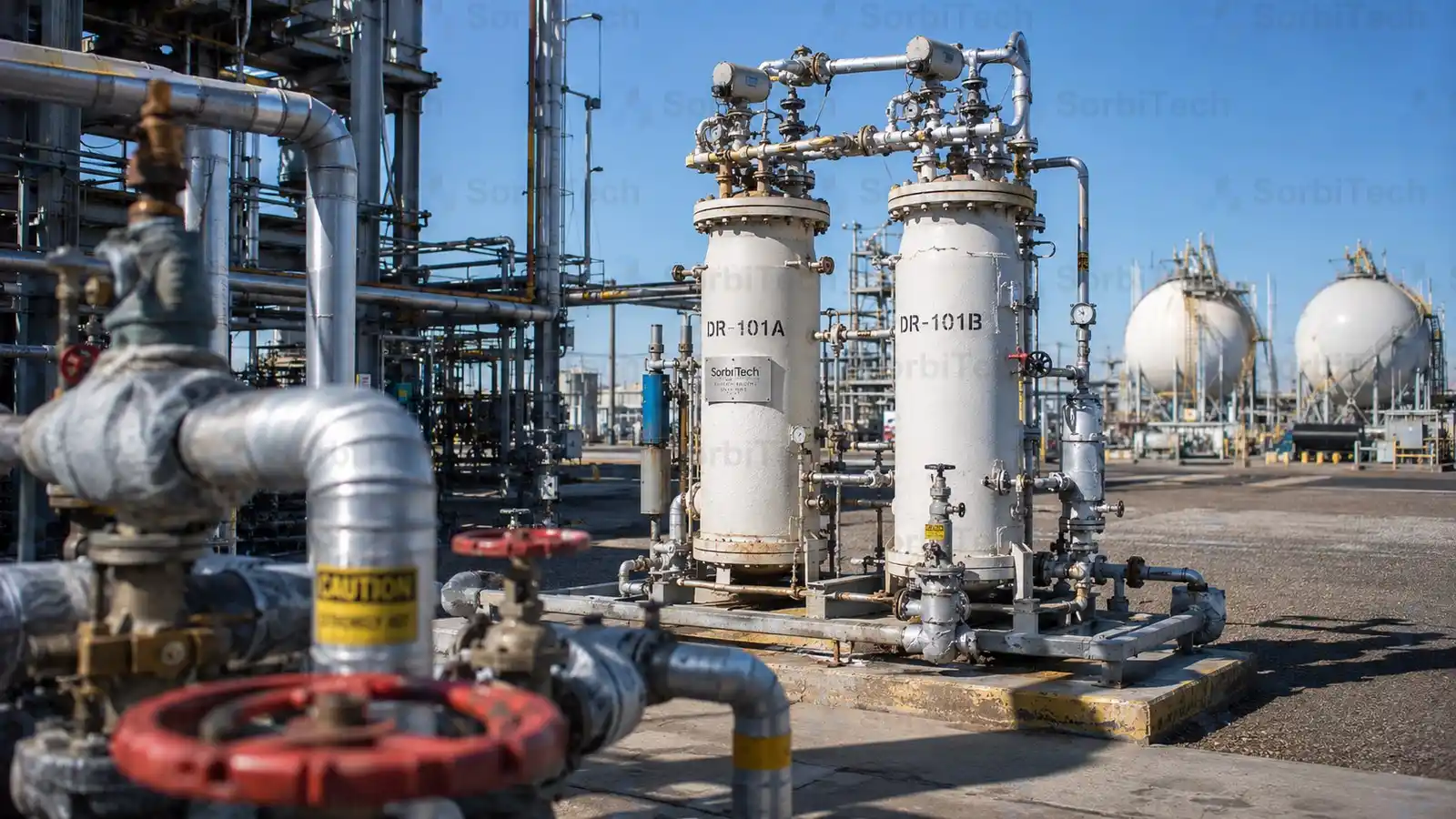 Process Duty
LPG and Propane Drying and Treating
Drying and sulphur removal from liquefied petroleum gas (LPG), propane, and butane streams using 3A molecular sieve and impregnated activated carbon to meet pipeline…
Process Duty
LPG and Propane Drying and Treating
Drying and sulphur removal from liquefied petroleum gas (LPG), propane, and butane streams using 3A molecular sieve and impregnated activated carbon to meet pipeline…
Media Used in This System
-
01
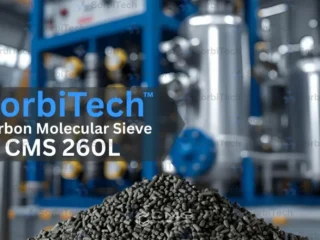 Adsorbent
Carbon Molecular Sieve CMS 260L
Affordable carbon molecular sieve. 1.2 to 1.8 mm pellets, sub 10 Angstrom pore, 95 to 99.9 percent N2 from compressed air at 7 to…
Water Cap.
Intolerant of liquid water, feed must reach ISO 8573 class 1.4.1 %
Adsorbent
Carbon Molecular Sieve CMS 260L
Affordable carbon molecular sieve. 1.2 to 1.8 mm pellets, sub 10 Angstrom pore, 95 to 99.9 percent N2 from compressed air at 7 to…
Water Cap.
Intolerant of liquid water, feed must reach ISO 8573 class 1.4.1 %
-
02
 Adsorbent
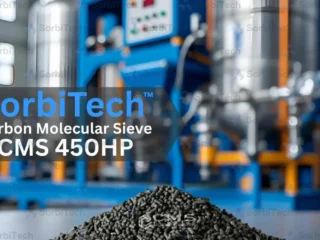
Carbon Molecular Sieve CMS 450HP
Ultra high purity carbon molecular sieve. 99.99999 percent (7N) N2, selective O2 and CO2 capture, 1.0 to 1.6 mm pellets, minimal fines, deoxo polishing…
Water Cap.
Feed must reach ISO 8573 class 1.4.1, deoxo polishing recommended for 7N %
Adsorbent
Carbon Molecular Sieve CMS 450HP
Ultra high purity carbon molecular sieve. 99.99999 percent (7N) N2, selective O2 and CO2 capture, 1.0 to 1.6 mm pellets, minimal fines, deoxo polishing…
Water Cap.
Feed must reach ISO 8573 class 1.4.1, deoxo polishing recommended for 7N %
-
03
 Adsorbent
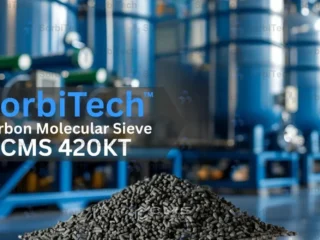
Carbon Molecular Sieve CMS 420KT
High efficiency carbon molecular sieve. Higher oxygen affinity under 7 to 12 barg, 1.2 to 1.8 mm pellets, Snowstorm Filling compatible, ASTM D4058 attrition…
Water Cap.
Feed must reach ISO 8573 class 1.4.1 %
Adsorbent
Carbon Molecular Sieve CMS 420KT
High efficiency carbon molecular sieve. Higher oxygen affinity under 7 to 12 barg, 1.2 to 1.8 mm pellets, Snowstorm Filling compatible, ASTM D4058 attrition…
Water Cap.
Feed must reach ISO 8573 class 1.4.1 %
-
04
 Adsorbent
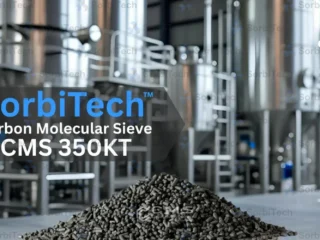
Carbon Molecular Sieve CMS 350KT
Rapid adsorption carbon molecular sieve. 40 to 90 second cycle at 7 to 10 barg, up to 99.99 percent N2, 1.0 to 2.2 mm…
Water Cap.
Moisture at supply below 1.0 percent, feed must reach ISO 8573 class 1.4.1 %
Adsorbent
Carbon Molecular Sieve CMS 350KT
Rapid adsorption carbon molecular sieve. 40 to 90 second cycle at 7 to 10 barg, up to 99.99 percent N2, 1.0 to 2.2 mm…
Water Cap.
Moisture at supply below 1.0 percent, feed must reach ISO 8573 class 1.4.1 %
-
05
 Adsorbent
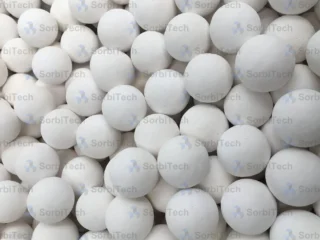
Activated Alumina Impregnated
Promoter loaded activated alumina for hydrogen sulphide, chloride, and Claus tail gas guard duty.
Form
3–5 mm spheres · 1.6–3.2 mm spheres
Adsorbent
Activated Alumina Impregnated
Promoter loaded activated alumina for hydrogen sulphide, chloride, and Claus tail gas guard duty.
Form
3–5 mm spheres · 1.6–3.2 mm spheres
-
06
 Adsorbent
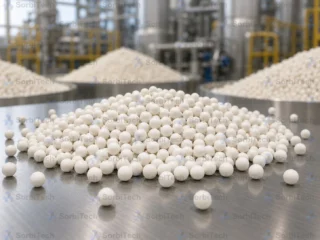
Activated Alumina Drying Grade
High capacity activated alumina for compressed air dryers, gas dehydration, and heatless desiccant systems.
Water Cap.
≥ 20 %
Adsorbent
Activated Alumina Drying Grade
High capacity activated alumina for compressed air dryers, gas dehydration, and heatless desiccant systems.
Water Cap.
≥ 20 %
Industries Served
-
01
 Sector
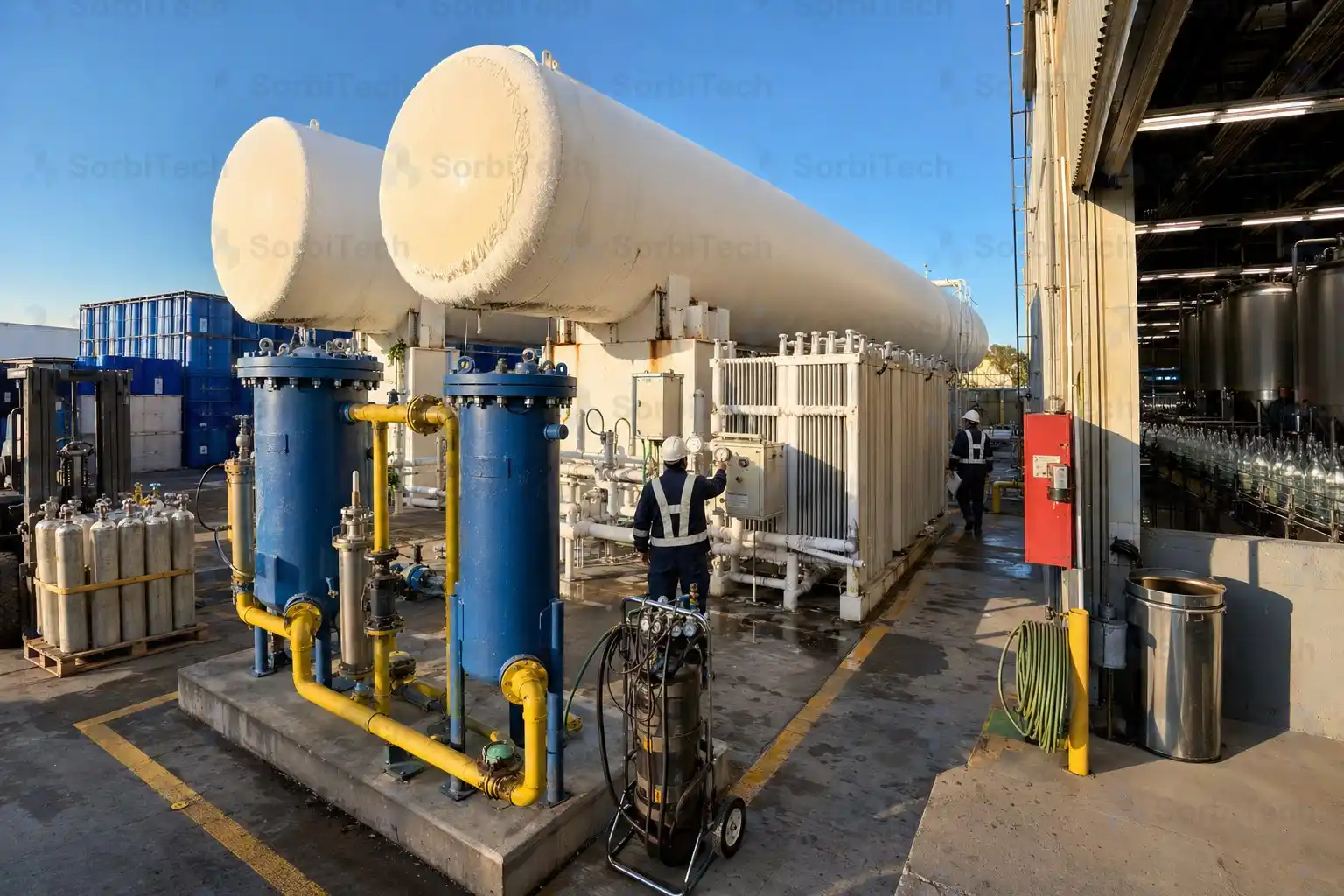
Food & Beverage
Sugar decolorization, edible oil bleaching, beverage CO₂ purification, and food grade adsorbent media for the food and beverage processing industry.
Sector
Food & Beverage
Sugar decolorization, edible oil bleaching, beverage CO₂ purification, and food grade adsorbent media for the food and beverage processing industry.
-
02
 Sector
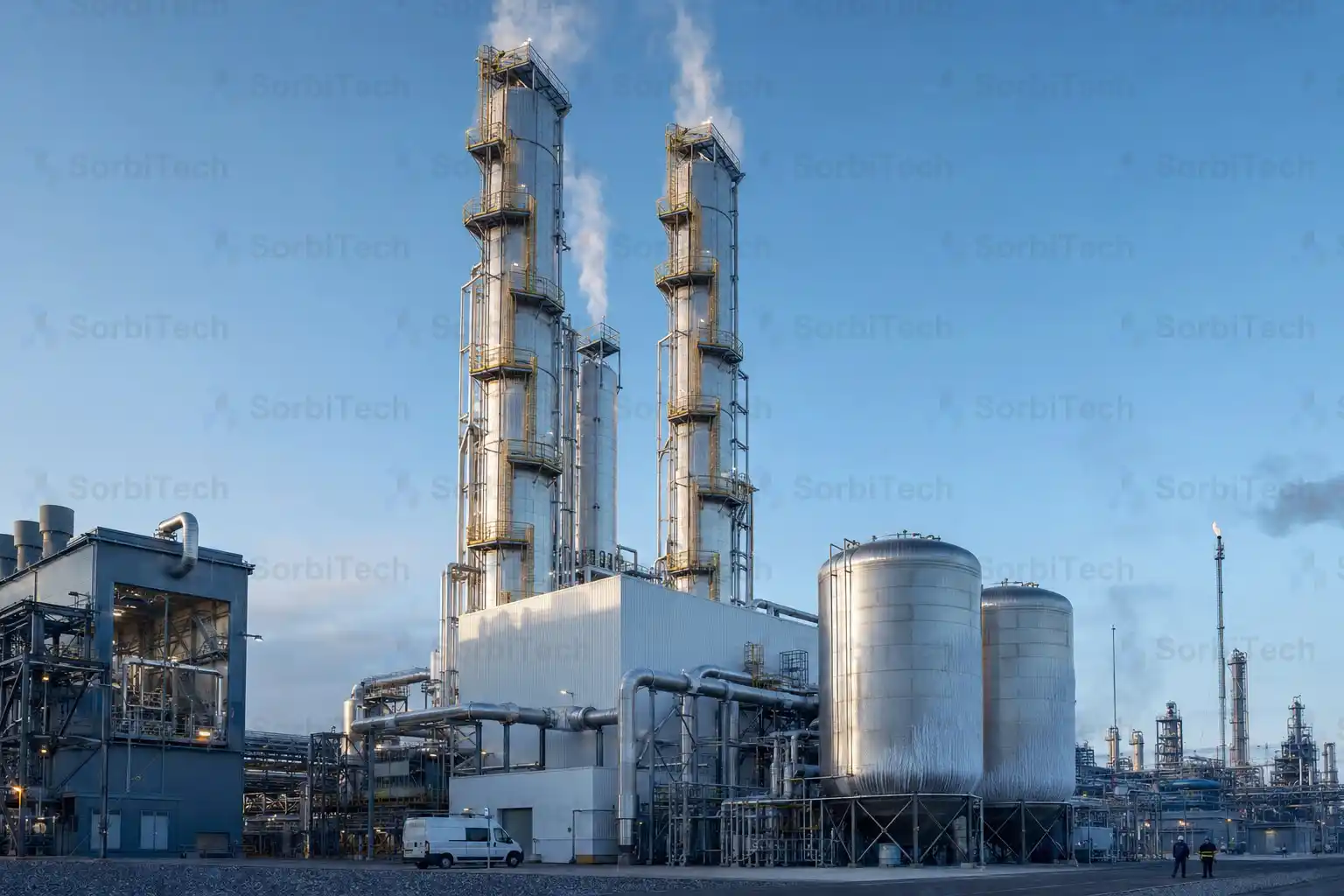
Industrial Gas & Air Separation
Molecular sieves and carbon molecular sieve plus PSA/TSA systems for nitrogen and oxygen generation and cryogenic air separation pre purification.
Sector
Industrial Gas & Air Separation
Molecular sieves and carbon molecular sieve plus PSA/TSA systems for nitrogen and oxygen generation and cryogenic air separation pre purification.
Discuss Your Engineering Requirements
Our engineers review your duty conditions and recommend the right configuration.